


12-Week-Old Puppy Schedule: Daily Routine, Training, and Milestones

By
Woofz Team Updated on |Reviewed by
Woofz TeamA settled 12-week puppy schedule helps cut accidents and calm evening chaos. And it turns training into a habit. Here is the routine hour by hour. Plus, how it shifts from the 8-week phase and where the milestones land.
What Changes at 12 Weeks
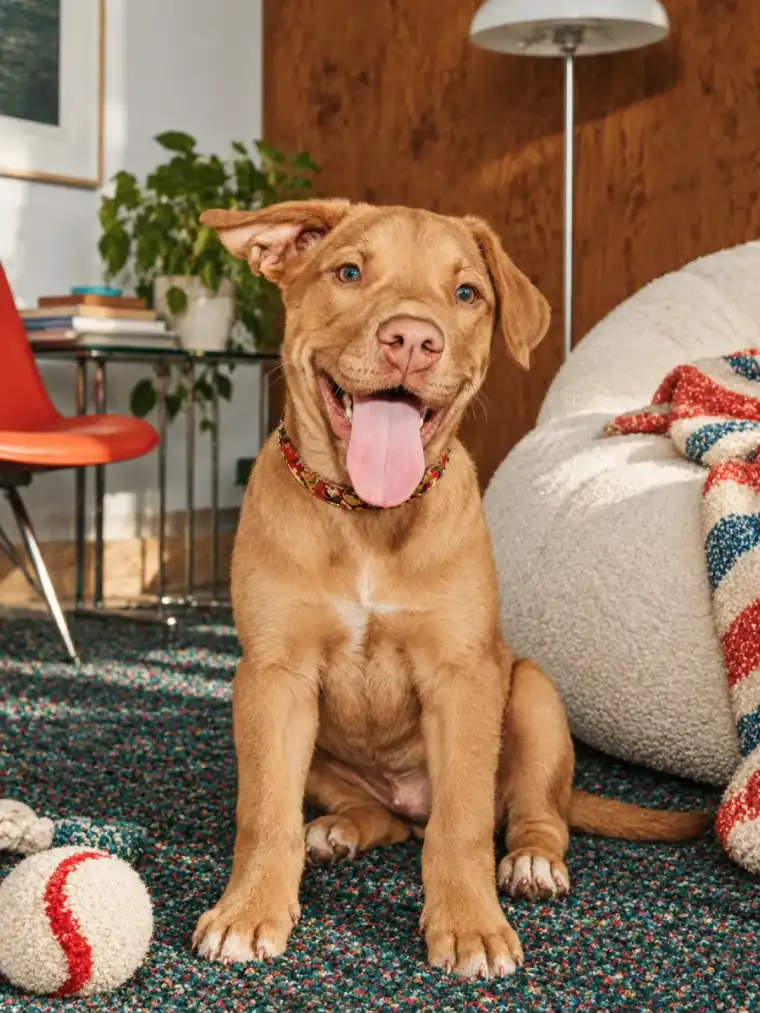
By 12 weeks, your pup is not a jelly bean any more. Puppy sleep drops slightly. Bladder control stretches. Awake windows lengthen. The socialization period is deep in its prime age. It's one of the most impactful ages in a dog's life. First thing in the morning, fresh energy fills the house. Behavior shifts. Life starts to feel like a routine.
Puppies still sleep a lot at 12 weeks, often around 16 to 18 hours a day. Down from 18 to 20 at 8 weeks. That is a little less sleep and more awake time for training, play, and calm exposure. Real sleep still runs the day. A tighter training schedule pays off now.
Bladder control tracks the AKC rule of thumb: roughly one hour per month of age. At 12 weeks, about three hours between each potty break while awake. Some puppies at this age can hold it overnight. Others still need a potty trip. First potty break of the day still comes first thing in the morning.
Still on the 8-week phase? Our 8-week puppy schedule has that routine.
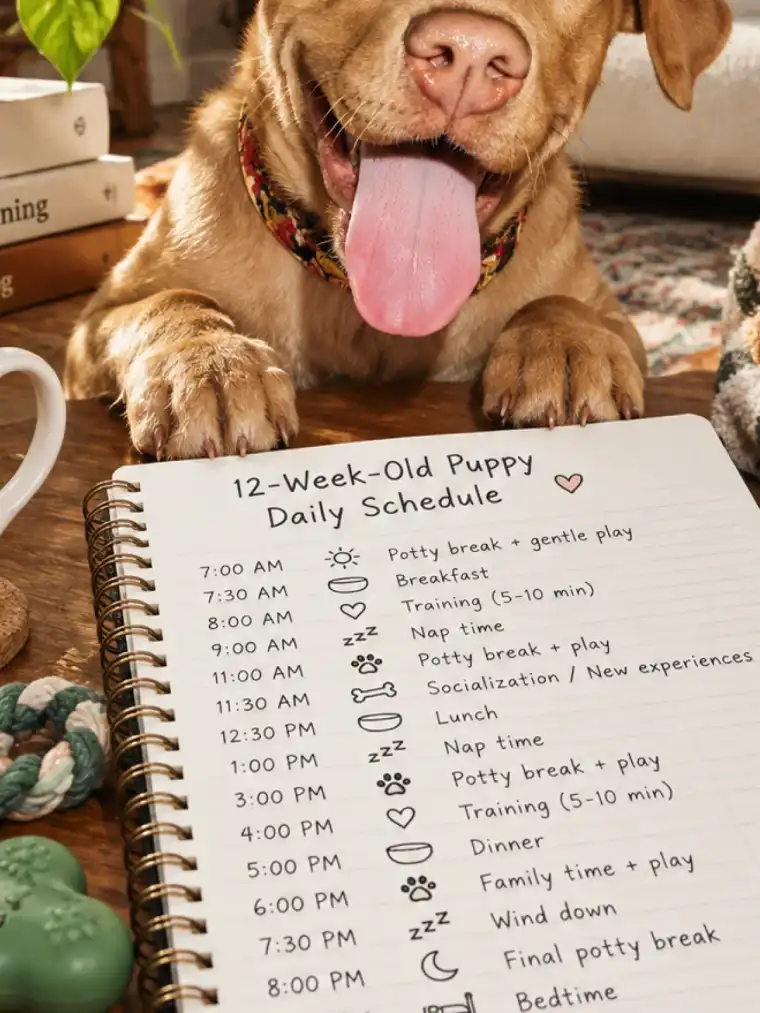
Sample 12-Week Puppy Schedule (Hour by Hour)
This puppy schedule is a template. Adjust it to your puppy's needs, routine, and energy.
Time | Activity |
|---|---|
6:30 | Wake, first thing outside for a potty break. |
6:45 | Breakfast in a bowl, then potty time. |
7:15 | Playtime and a short training session on basic commands. |
8:00 | Nap in the crate (60 to 90 minutes of sleep). |
9:30 | Wake, potty break, calm play. |
10:00 | Enrichment: chew toy, sniff walk in the garden. |
10:45 | Nap in crate or pen. |
12:30 | Lunch feed, potty time, gentle handling. |
1:00 | Short training session with treats, one basic command. |
2:00 | Nap in crate. |
4:00 | Potty break, a short leash walk once vaccinations are complete. |
5:00 | Socialization outing or a puppy class if enrolled. |
6:00 | Dinner feed, potty time, family time. |
7:30 | Wind-down: settle on the mat, chew, dim lights. |
8:30 | Last potty break, into the crate for bedtime. |
3:00 | Optional overnight potty trip (fading out for many puppies). |
The pattern to hold: wake, potty, feed, play, train, nap. Repeat.
Morning Routine
First thing in the morning, carry your 12-week-old puppy straight to the potty spot. No toys. Praise the moment they poop outdoors.
Come back in. Serve breakfast in the same bowl and spot. About fifteen minutes to eat, then bowl up. Puppies usually poop after eating, so head back outside 5 to 15 minutes later.
Then a short playtime and a five to ten-minute training session on one basic command. Sit is a fine first cue if you have not started training your dog. Back to the crate for a real nap.
Midday and Nap Windows
Between meals, alternate short play with real nap time. An overtired puppy tends to nip harder and have more accidents. Spot the sleepy signals: yawns, sudden biting, sniffing at nothing, staring into space.
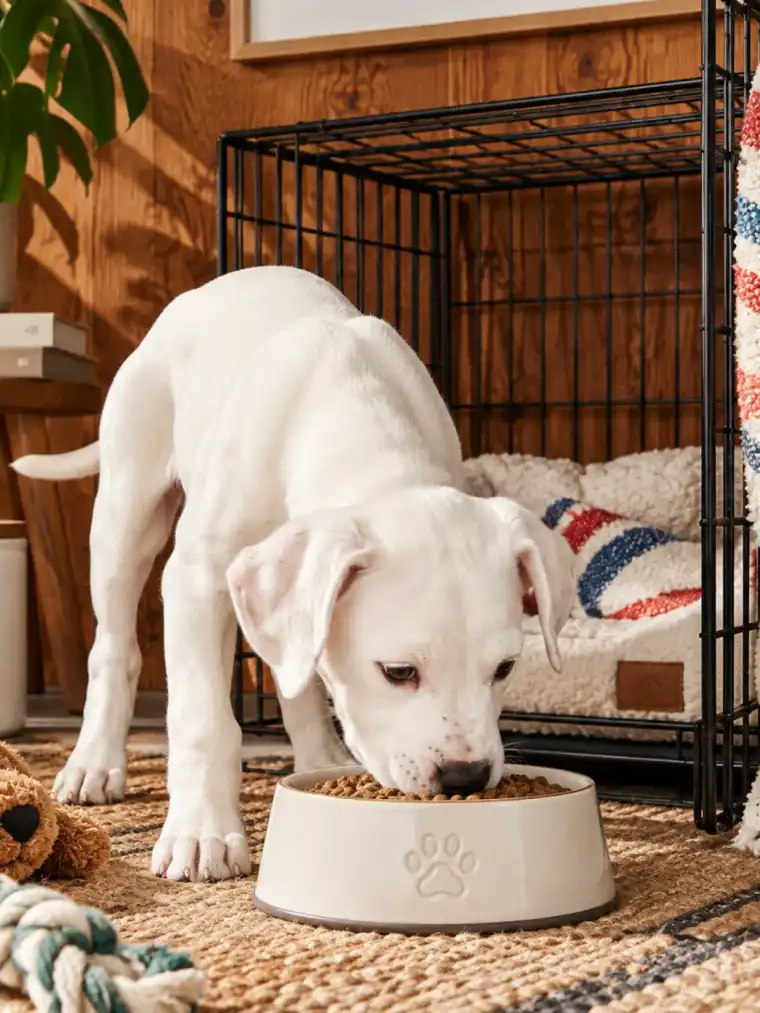
Feed lunch. Potty break, same routine as morning. Another five to ten-minute session on a cue like “look at me.” Practice name recognition too. Then 60 to 90 minutes of day sleeping in the crate.
If vaccinations are complete, mid-afternoon suits a short leash walk or a first group class. Keep sessions short and gradually increase them week by week.
Evening and Overnight
Serve dinner about three hours before bed so digestion settles. Feed in the same spot.
In the early evening comes the witching hour: zoomies, sharp biting, barking. Overtired puppy, missed nap. The fix is rest and calm chewing, not more play. If the biting is a daily battle, our stopping puppy biting guide has the plan.
Take one last potty break 10 to 15 minutes before bedtime. An empty bladder buys longer stretches of sleep. A steady bed time also helps consolidate that sleep.
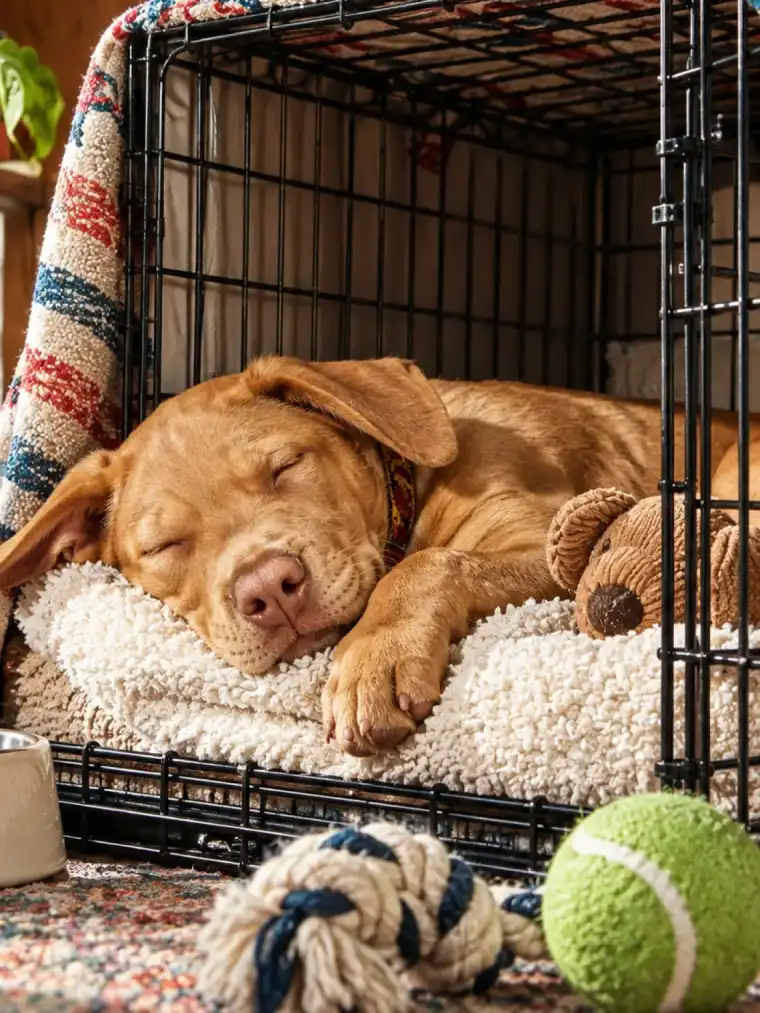
Many puppies at 12 weeks start sleeping through the night, roughly 6 to 8 hours in the crate. A real jump from the 8-week phase, where overnight sleep is broken by one or two potty trips. Some puppies need one overnight potty trip until 16 weeks. Normal age behavior, not a training failure. Set an alarm the first few nights and see what your pup does. Carry them out quietly. No talking, no play. Praise softly.
For your first night at home, our first night with a puppy guide has the plan.
Feeding Schedule at 12 Weeks
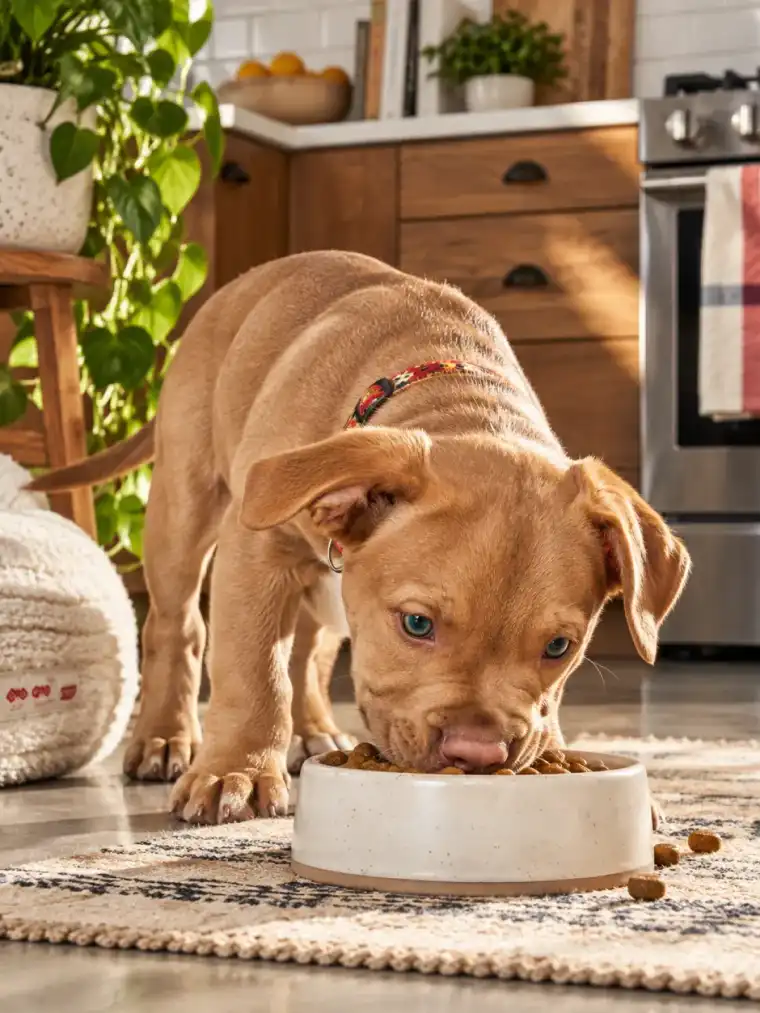
At 12 weeks, many puppies still eat four meals a day. Some start a three-meal-a-day routine around this age.
A sample 12-week-old puppy feeding routine looks like this:
-
Three meals a day, roughly 7am, 12pm, 6pm;
-
Age-appropriate puppy food (same brand as 8 weeks, if working);
-
Fresh water while awake, up two hours before bed;
-
Do not leave food down more than 15 minutes;
-
Do not free-feed at this age.
Puppies need different food amounts by age, breed, and body condition. Check the bag for a starting portion, then adjust with your vet.
Potty Training at 12 Weeks
Potty training runs on repetition, not scolding. Start the moment you bring home a puppy. Keep the same routine at 12 weeks. Progress here is measured in weeks. Accidents indoors are common. Normal at 12 weeks.
Take your 12-week-old puppy out every two to three hours while awake. Adjust for your puppy's signals and routine. Add a potty break immediately after each of these five moments:
-
After every nap: potty break;
-
After every meal or drink: potty break;
-
After playtime with the family: potty break;
-
After a chewing session: potty break;
-
Coming out of the crate: potty break.
Same door, same outdoor spot every time. Say a short cue like "go potty" as they start. Reward immediately with treats and praise the moment they poop outdoors.
If you are seeing regression or accidents ticking back up, our puppy potty training guide has the deep-dive method.
Crate Training at 12 Weeks
Your crate is a nap tool, not a punishment. At 12 weeks, most puppies will settle for two to three hours of crate time during the day. Overnight, they may sleep 6 to 8 hours.
Introduce the crate positively. Feed meals inside. Reward calm settling with a chew. Never use it as timeout for biting or bad behavior. That link poisons the crate.
Short daytime crate time works better than long stretches. If your puppy whines after a full nap and a fresh potty break, they need to come out. For help setting up crate training, our guide has the full intro.
12-Week Puppy Training Milestones
By 12 weeks, your pup can start training on real basic commands and hold small amounts of focus. A short daily training schedule beats one long session on the weekend. Short training sessions of 5 to 10 minutes work far better than one long block. Aim for three to five short sessions across the day.
Realistic milestones for a 12-week puppy training schedule:
-
Name recognition;
-
Sit on cue with a lure or hand signal;
-
Loose-leash walking indoors and in the garden;
-
Recall in a quiet indoor space;
-
Settling on a mat for short periods;
-
Crate entry for a nap.
Use positive reinforcement to teach every cue. Treats, praise, and calm play are how puppies thrive during training. Never teach with fear or force. Reward the try, do not scold the miss.
For a structured puppy training intro, our seven basic dog commands guide covers the ones to start teaching first. If you have not started formal obedience training, this stage can be the moment.
Socialization at 12 Weeks
The first 3 months are the primary socialization period. Keep giving your puppy safe, positive exposure as they grow. AVSAB's socialization position statement points to weeks 3 to 14 as the sensitive period. Some of the biggest gains come before 12 weeks, with exposure work continuing to 16 weeks.
Socialization at this age should focus on positive exposure to new experiences. That means:
-
New people, all kinds of humans (adults, kids, hats, uniforms;)
-
New surfaces (grass, tile, gravel, wet lawn);
-
New sounds (traffic, vacuum, doorbell, low-volume hairdryer);
-
A new environment or two (a friend's kitchen, a car park). Each new environment builds confidence;
-
Vaccinated adult dogs in low-risk settings.
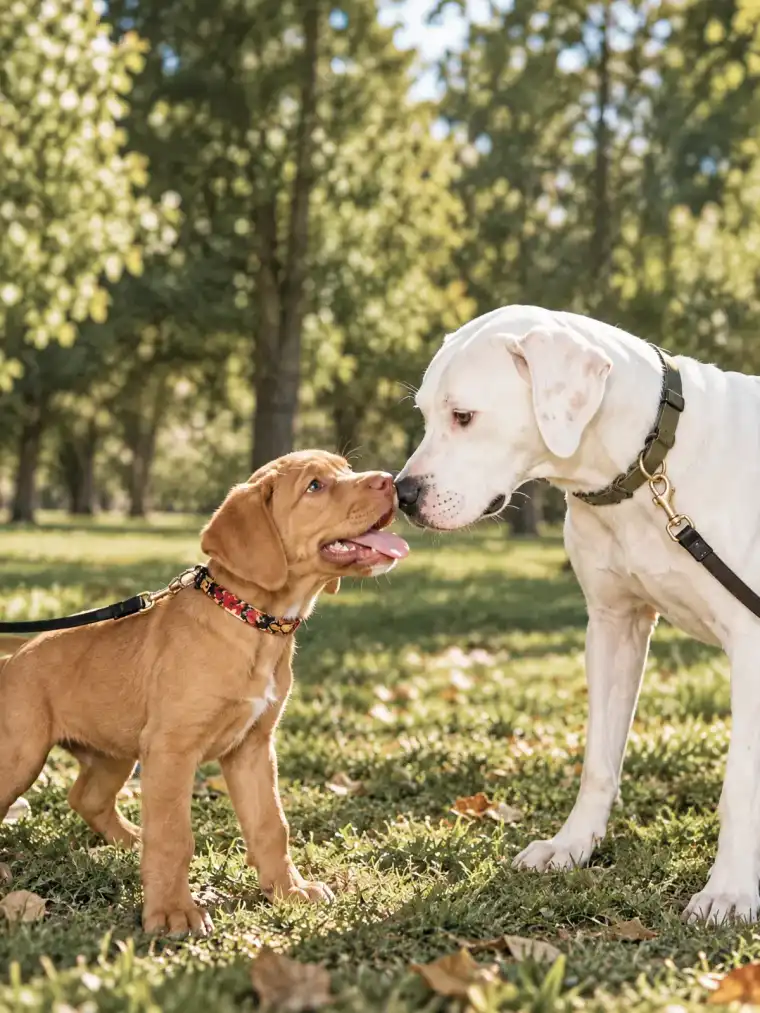
Avoid high-risk areas like dog parks or busy pet stores until the pup is fully vaccinated. Your vet confirms the timeline. A well-run puppy class is one of the safest places for early dog-dog socialization. Choose one that requires age-appropriate vaccines and follows good hygiene practices.
Our puppy socialization guide has the full checklist. Socialization done well turns a nervous pup into a happy, well-adjusted dog.
Exercise at 12 Weeks
Exercise at this age is about mental stimulation as much as physical exercise. Puppy joints and growth plates are still soft. Avoid high-impact exercise: no long runs, no repetitive fetch, no jumping off furniture.
A commonly cited guideline is the "5-Minute Rule": 5 minutes of activity per month of age, twice daily. For a 12-week-old puppy, around 15 minutes twice a day of structured exercise. This puppy exercise rule comes from breeder and Kennel Club guidance rather than AAHA or AVSAB. Treat it as a rough guideline, not a strict rule. Free play in a safe garden counts differently.
Short leash walks are fine once the pup's vaccinations are done. Sniff walks beat distance. The last post-meal walk of the day is often the calmest. For pace and duration by dog age, our dog walking routine grows with your dog.
Teething and Biting
Around 12 weeks, adult puppy teeth come in. Puppies chew everything: shoes, hands, chair legs, cables, any nearby humans. Normal, not naughty behavior. Redirect to appropriate chew toys and rotate them so novelty stays.
Daily brushing of teeth and paws is worth starting now, gently, as a handling habit. Reward tolerance with treats. Short, calm sessions.
For sharp play biting on hands around the house, use a calm "ow" and disengage. Give the puppy a legal chew instead. Puppy teething peaks at about four to six months. So this stage is a warm-up.
Build Your Own 12-Week Routine in 5 Steps
Solid puppy routines separate a settled home from chaos.
1. Anchor the fixed points. Wake time, bedtime, three meal times. 2. Add potty breaks. After every wake, every meal, every playtime, every chew. 3. Slot in naps. 60 to 90 minutes after each awake window. 4. Book training sessions. Three to five short blocks of 5 to 10 minutes across the day. 5. Reserve family time and one social outing. One intentional new exposure per day.
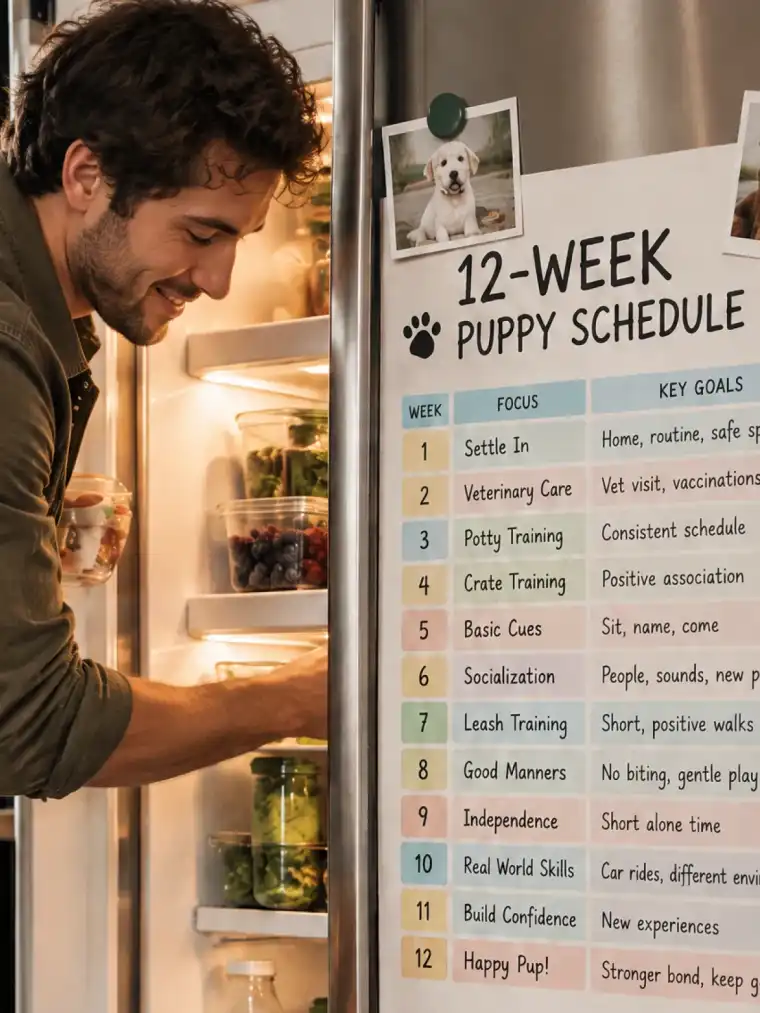
Print it. Stick it on the fridge. It will shift in two weeks. Life with a puppy.
How the Schedule Shifts from Here
Your 12-week schedule is a stepping stone, not a lifetime plan.
-
16 weeks: most puppies sleep through the night. The main socialization window is winding down. But keep giving your puppy positive new experiences. Vet visits every 3 to 4 weeks per AAHA.
-
4 months: three meals a day continues, adult feeding starts to settle in. Longer walks safe once fully vaccinated.
-
6 months: two meals a day. Bladder waits 4 to 6 hours. Sleep drops toward 12 to 14 hours a day, still more sleep than adult dogs.
-
12 months: adolescence may still be in full swing. Consistent training pays off. Your dog looks like a dog, not a puppy anymore.
Every pup at all ages benefits from short training sessions, structured nap time, and calm exposure. As your dog ages, the schedule loosens. Routine, rest, and play patterns hold.
Answers to the Most-asked Questions
What month is hardest with a puppy?
Many first-time owners say months 4 to 6 are the hardest. Adult teeth come in fully, adolescence starts, energy levels spike, and previously reliable cues wobble. The 12-week stage is easier by comparison.
How often should a 12-week-old puppy go out?
Every two to four hours while awake, plus after every meal, nap, playtime, and chew. Overnight, most puppies at 12 weeks go 6 to 8 hours, some need one overnight potty trip to 16 weeks.
Can I leave my 12-week-old puppy alone for 2 hours?
Sometimes yes, with prep. The AKC notes puppies at 12 weeks can generally hold their bladder around three hours. 2 hours in a safe crate or pen with a chew is workable. Make sure the pup has recently pottied, eaten, and had a calm nap first.
What should a puppy be able to do at 12 weeks?
At 12 weeks, expect name recognition and the start of sit on cue. Loose-leash walking indoors and a reliable indoor recall are also good goals. Add crate settling and potty training to the list. It gives your puppy a foundation for future training.
Where Woofz Fits In
A schedule on paper is easy. Sticking to it (when to wake, when to feed, when to walk) is where any new puppy owner drowns.
Woofz gives your new puppy or older pet a personalized daily plan. You will get a lesson library of basic commands and behavior work. And a training schedule that fits between meetings and school runs. Training, care, and guidance in one app.
For a schedule that fits your puppy across ages and life at home, take the free Woofz puppy quiz. It will take just a couple of minutes.
Small habits, done daily, turn 12 weeks of chaos into a settled dog. Your puppy will not be perfect. Your schedule will not be either. Both will get there.