


8-Week-Old Puppy Schedule: Simple Daily Routine That Works

By
Woofz Team Updated on |Reviewed by
Woofz TeamA steady 8-week-old puppy schedule means fewer accidents and a calmer house. Here is your new puppy's routine, hour by hour, and how it changes as the pup grows.
What an 8-Week-Old Puppy Actually Needs
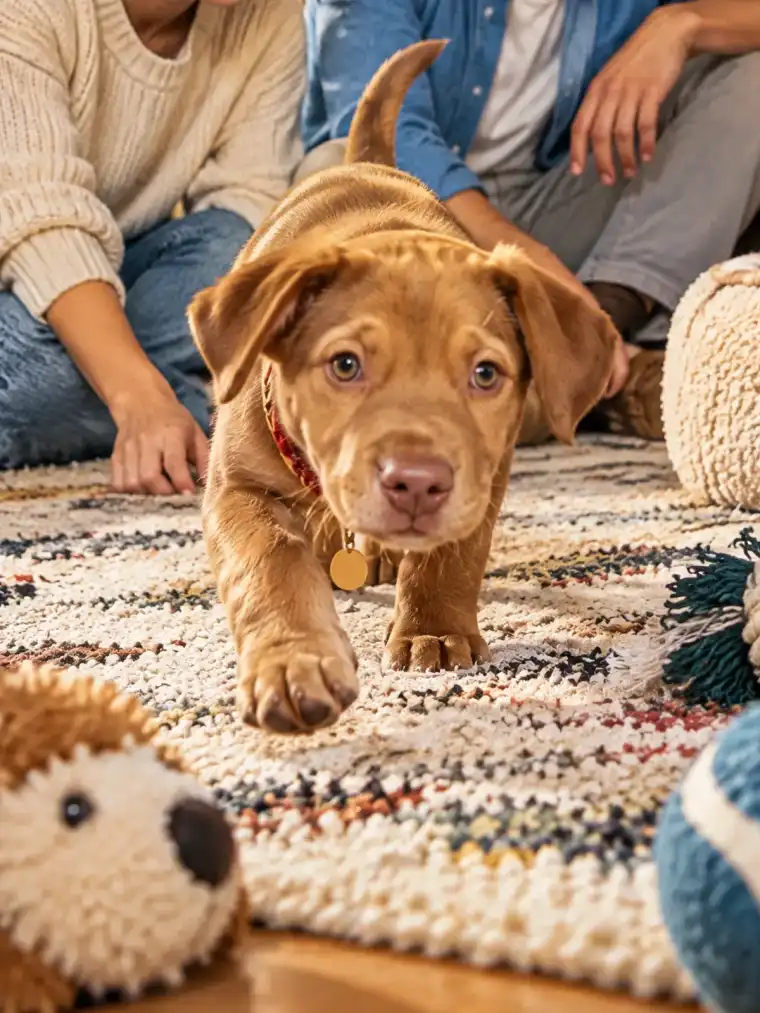
At 8 weeks old, your puppy may be a sleepy sponge. Per the American Kennel Club, puppy sleep runs 18 to 20 hours a day. That much puppy sleep fuels growth. That can leave roughly 4 to 6 waking hours, often split into short bursts between naps.
Bladder control is minimal in young puppies. Expect a potty break every 1 to 2 hours while awake, plus overnight trips as needed. The AKC recommends four small meals a day of puppy food until about 3 months. Regular meals help anchor the routine.
Sample 8-Week-Old Puppy Schedule (Hour by Hour)
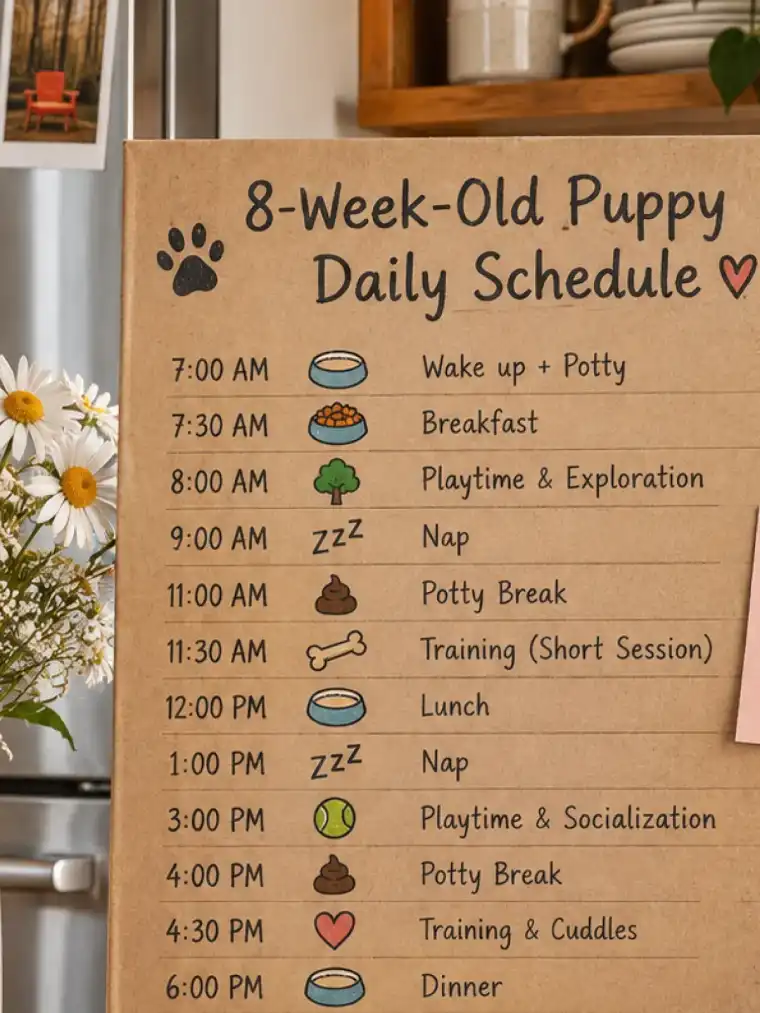
This sample puppy schedule can be a good starting point. Keep the sequence the same. Clock times can slide.
Time | Activity |
|---|---|
6:30 | Wake, potty break (first thing outside) |
6:45 | Breakfast meal in the bowl, then potty time |
7:15 | Playtime, short training session, family cuddle |
8:00 | Naps in the crate (1 to 2 hours of sleep) |
10:00 | Wake, potty break, supervised play |
11:00 | Naps in the crate |
12:30 | Lunch meal, potty time, gentle handling |
1:00 | Training session with treats, chew toy |
2:00 | Naps in crate or pen |
4:00 | Potty break, short walk, garden playtime |
5:30 | Dinner meal, potty time |
6:00 | Family time, calm play, settle on the mat |
7:30 | Naps in crate (heads off overtired evening chaos) |
9:30 | Small fourth meal, quiet time |
10:00 | Last potty break, bedtime, into the crate |
2:00 | Overnight toilet break |
The pattern to hold: wake, potty, eat, play, naps. Repeat all day.
Morning Routine
Carry your 8-week-old puppy to their potty spot the second they wake. No toys yet. Straight outside. Praise the moment they go.
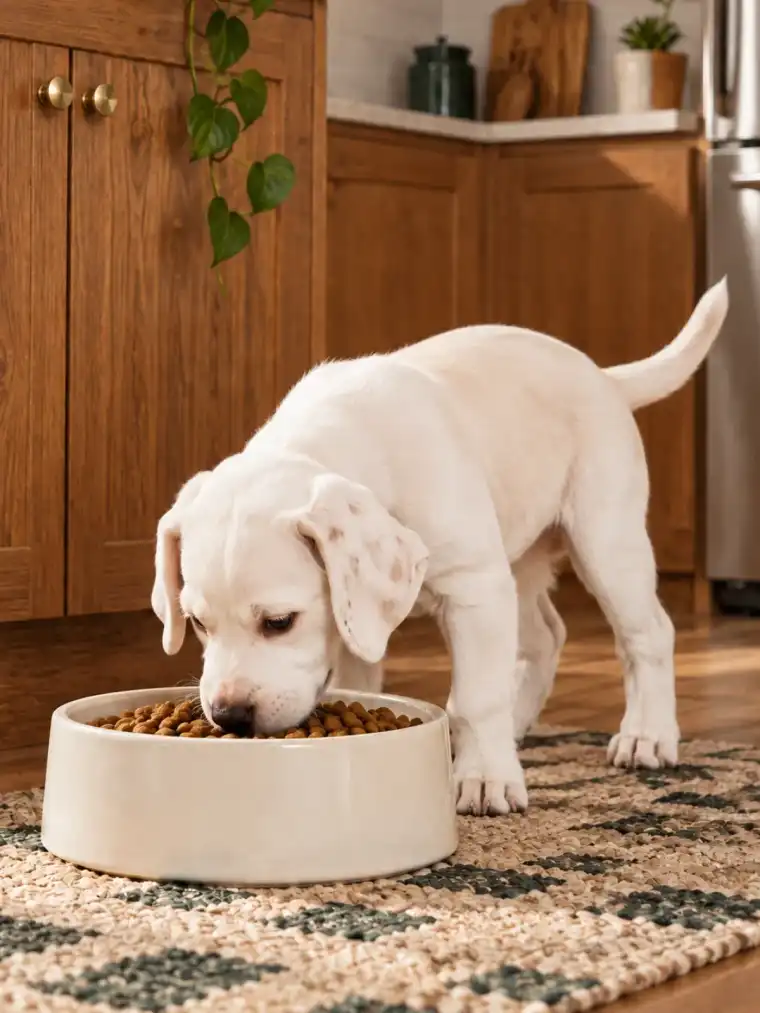
Feed breakfast in the same bowl, same spot. Puppies almost always poop after eating, so plan a second potty trip 5 to 15 minutes after eating. That habit helps prevent morning accidents in the house.
Then a short window: playtime, short training sessions with treats, family time. Back to the crate for naps.
Afternoon and Mid-Day Naps
Between meals, alternate short playtime with real naps. An overtired pup may nip harder and has more accidents.
Feed lunch. Potty break. Five-minute training session on one command. Then settle in the crate or pen for 1 to 2 hours of sleep.
Around 4 pm, a short on-leash walk or supervised play in the garden. No long runs, no repetitive fetch. Growing puppies have soft joints. Keep exercise short and gentle for now.
Evening and Overnight Potty Breaks
Feed dinner a few hours before bedtime so there’s time for a potty trip afterward.
In the early evening comes the witching hour: zoomies, sharp biting, barking. Overtired pup, missed a nap. Rest can help more than adding another big play session. Pop the pup in the crate with a chew, dim the lights. If biting is a daily battle, our stopping puppy biting guide has the fix.
Take one last potty break 10 to 15 minutes before you turn in. A final potty break can help your puppy settle for the night.
Set an alarm for a middle-of-night toilet break. At 8 weeks, many puppies still need one or more overnight potty trips. For some, nighttime breaks start fading around 12 to 16 weeks. Carry the pup out quietly. No talking, no play. Praise softly. For your first night, our first night with a puppy guide has the plan.
Crate Training Schedule for an 8-Week-Old Puppy
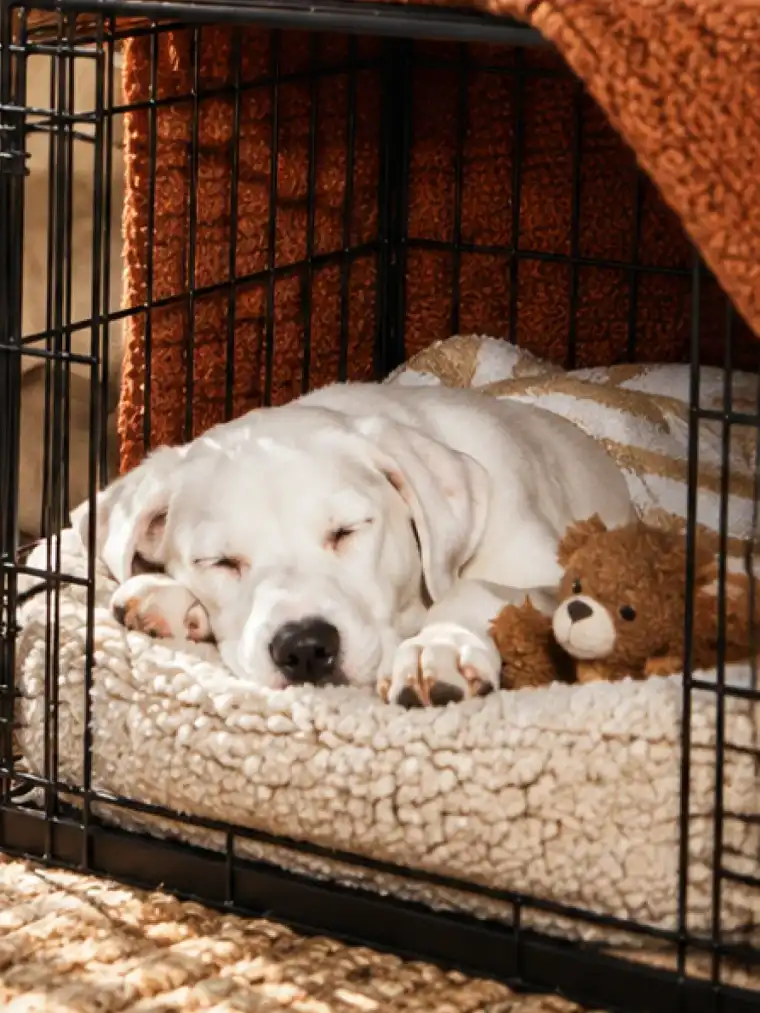
Your crate is a nap tool, not a punishment. In the beginning, use it for daytime naps and overnight sleep next to your bed.
Short crate time works better than long stretches. Two hours is a fair daytime maximum for a new pup. If they whine after a nap and a full potty, they need to go out, not more crate time.
For crate setup, our crate training a puppy guide covers the first month.
Potty Training and Frequent Toilet Breaks
Toilet training runs on repetition, not scolding. Toilet training progress at this age is usually in weeks, not days. Take your 8-week-old puppy out every 1 to 2 hours while awake (adjusting, if needed, for your pup), plus immediately after these five moments:
-
Waking up from any nap
-
Eating a meal or drinking from the water bowl
-
Playtime or energetic interaction
-
Chewing sessions
-
Coming out of the crate
Same door, same small outdoor spot every time. Say a short cue like "go potty" as they start their business. Reward immediately with treats and praise. Bladder control at 8 weeks is roughly one hour per month of age, though every puppy is different.
Our full puppy potty training guide has the deep-dive method.
Feeding Schedule and Rest
The AKC feeding schedule: four meals a day up to 3 months, three from 3 to 6 months, two from 6 months on. Regular meals help keep energy levels steady between naps.
An 8 week old puppy feeding routine looks like this:
-
4 meals daily, spaced through the day
-
If possible, keep the same puppy food the breeder used at first; if you switch, do it over 7 to 10 days
-
Keep fresh water available, and rely on a final potty break, not water restriction, to prepare for bedtime
-
Do not leave food down more than 15 minutes
Key Principles for Good Schedule
The key principles below matter more than perfect clock times.
- Consistency beats precision. Same order every day. If breakfast slides 30 minutes, fine. Skipping the post-nap potty break is not.
- Match awake windows to the pup. 30 to 60 minutes of playtime, then rest. Yawns, sudden biting, getting fussy: sleepy signals.
- Build naps into the plan. Pups rarely choose their own bedtime. Setting schedules for nap time and rest makes life easier.
- Short training sessions. Three to five minutes with treats, a few times a day, usually works better than one long session.
Build Your Own 8-Week Routine in 5 Steps
1. Anchor the fixed points. Wake time, bedtime, 4 meal times. 2. Add potty breaks. After every wake, every meal, every playtime, every chew. 3. Slot in the naps. 1 to 2 hours of sleep after each awake window. 4. Create short training sessions. Three to five minutes after morning and lunch potty time. 5. Reserve family time and calm play. Create one block in the evening before the witching hour hits.
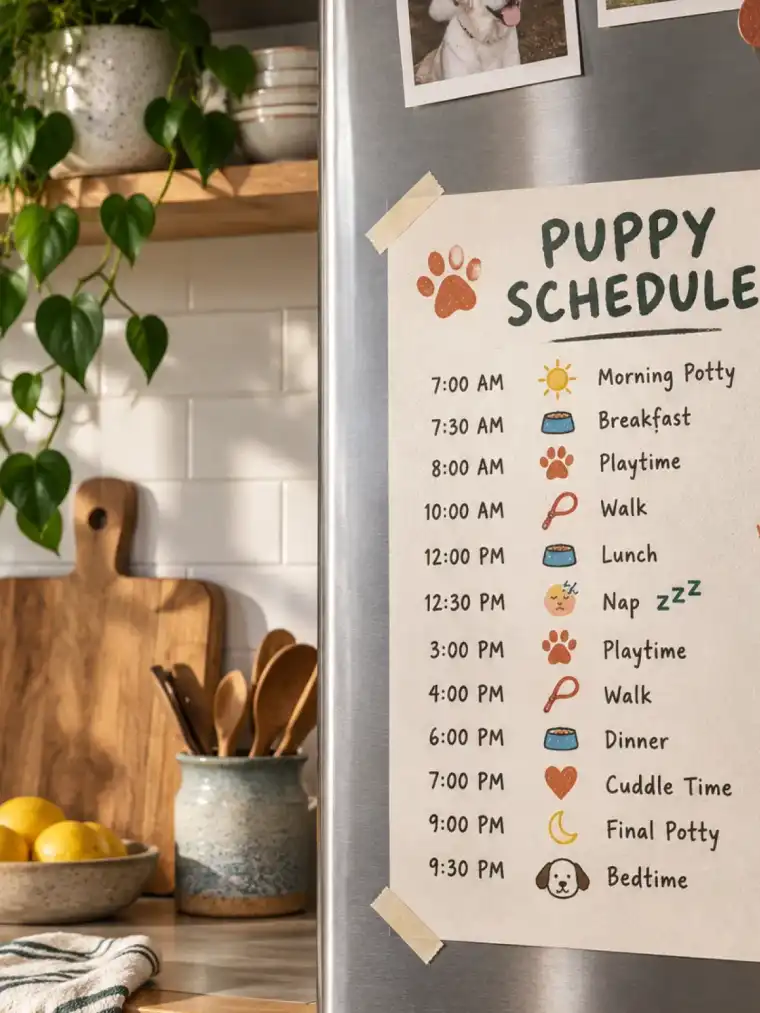
Print it. Stick it on the fridge. It will change in two weeks. Fine.
How the Schedule Changes as Your Puppy Grows
Your 8 week old puppy schedule is a template, not a lifetime plan. The wider dog walking routine grows with your dog.
-
10 to 12 weeks: potty intervals usually stretch to 2 to 3 hours. Vet visits every 3 to 4 weeks per AAHA. Start short, low-impact walks when your vet says your puppy is ready.
-
16 weeks: most pups start sleeping through the night. Real training on basic commands takes off.
-
4 months: 3 meals a day; feeding routine starts to settle. Leash walks safe once vaccinated.
-
6 months: 2 meals a day. Bladder control may stretch to 4 to 6 hours. Sleep shifts toward the adult pattern. Your dog starts looking a lot more like a dog, not a puppy.
The first three months are the key socialization period, according to AVSAB. Keep giving your puppy safe, positive experiences with new people, dogs, surfaces, and sounds as they grow. Our puppy socialization guide has the how-to.
Answers to the Most-Asked Questions
What is the 10-10-10 rule for puppies?
There is no single official veterinary definition of the term. Two versions circulate. Potty version: 10 minutes outside in a 10-foot area, 10 minutes close indoor supervision, on repeat. Rhythm version: 10 minutes training, 10 minutes play, 10 minutes rest. Both point at short cycles.
Can an 8 week old puppy go all night without peeing?
Usually no. Bladder control at this age is a couple of hours. Some puppies still need one or more overnight toilet breaks, fading by 12 to 16 weeks with a consistent wake-up schedule.
Can I leave my 8-week-old puppy alone for 3 hours?
Not a good idea. The AKC notes pups up to 10 weeks cannot hold their bladder more than an hour. Arrange a sitter, trusted friend, or appropriate puppy-care drop-in instead.
What time should I put my 8-week-old puppy to bed?
Pick a bedtime that works for your household and keep it reasonably consistent. Pattern: last meal a few hours before, calm wind-down, one final potty break, into the crate.
Where Woofz Fits In
A schedule on paper seems easy. Sticking to it (when to wake, when to walk, when to head outside) is where new puppy owners may drown.
Woofz gives you a personalized daily plan for your dog, a lesson library, and short routines that fit between meetings and school runs.
For a schedule that fits your puppy's age and life at home, take the free Woofz puppy quiz. Under 2 minutes.
Small habits, done daily, turn a chaotic first week into a calm second month. Your puppy is not perfect. Your schedule will not be either. Both get there.