


When To Start Training a Puppy? Realistic Timeline

By
Woofz Team Updated on |Reviewed by
Woofz TeamYou start training a puppy the day you bring them home, usually around 8 weeks old. Training your puppy does not need a course or an hour of your day. You just need to know what to work on at each stage and how to keep it going.
Short version. The longer version, the one that helps you raise a confident adult dog, is below.
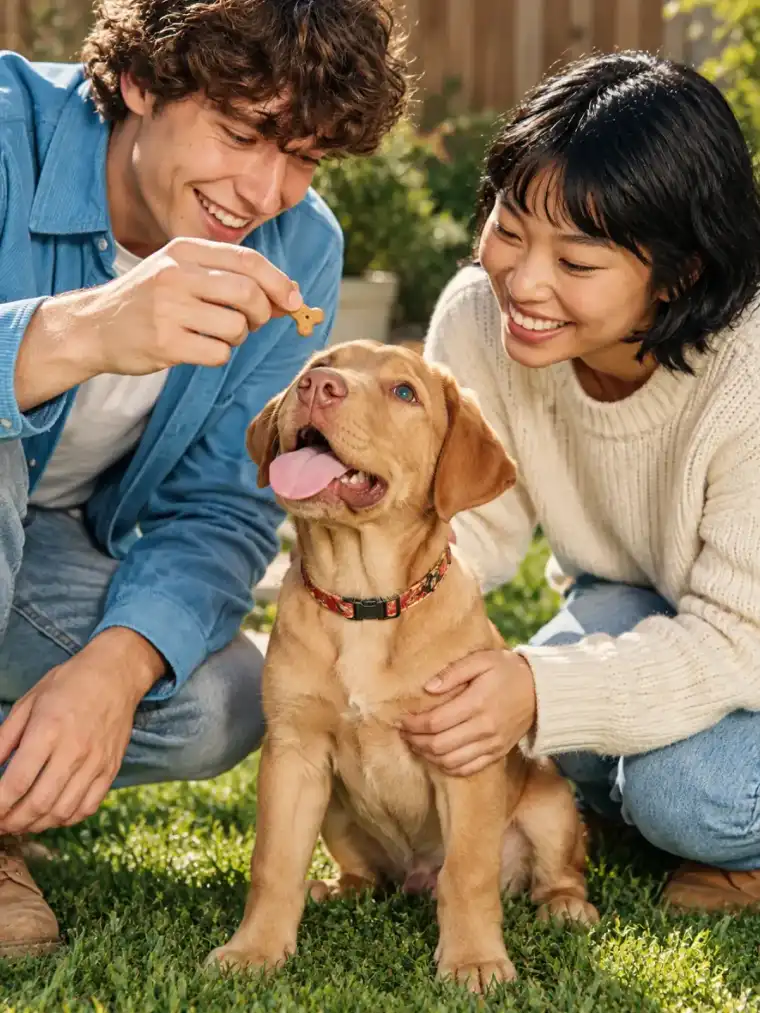
Quick Answer: Training Starts the Day Your New Puppy Comes Home
If you bring your new puppy home at 8 weeks old, that is when basic puppy training starts. Not "when the puppy grows up." Not "after the shots." The moment they walk in.
The reason is biology. Puppies learn faster and form deeper associations between 3 and 16 weeks old than at any other point in a puppy's life. This is a sensitive socialization period. You can still teach your puppy new things later, but it’s harder to make up for those early positive experiences.
Two anchors. The American Veterinary Society of Animal Behavior says the first three months are the primary window for socialization, and positive exposure during this time is the standard of care, even before vaccinations are complete. The 2019 AAHA Canine Life Stage Guidelines tell vets to cover socialization from 2 to 12 weeks with every new puppy owner: handling, bite inhibition, safe exposure to sounds, textures, and other dogs.
Miss that window and you are not doomed. You may just have more catching up to do later.
Why 6- to 16-Week Window Changes Everything
Between 6 and 16 weeks, three things happen at once. Your new puppy soaks up what is normal, tries new things without a strong fear response, and wires long-term consequences to the experiences you set up now.
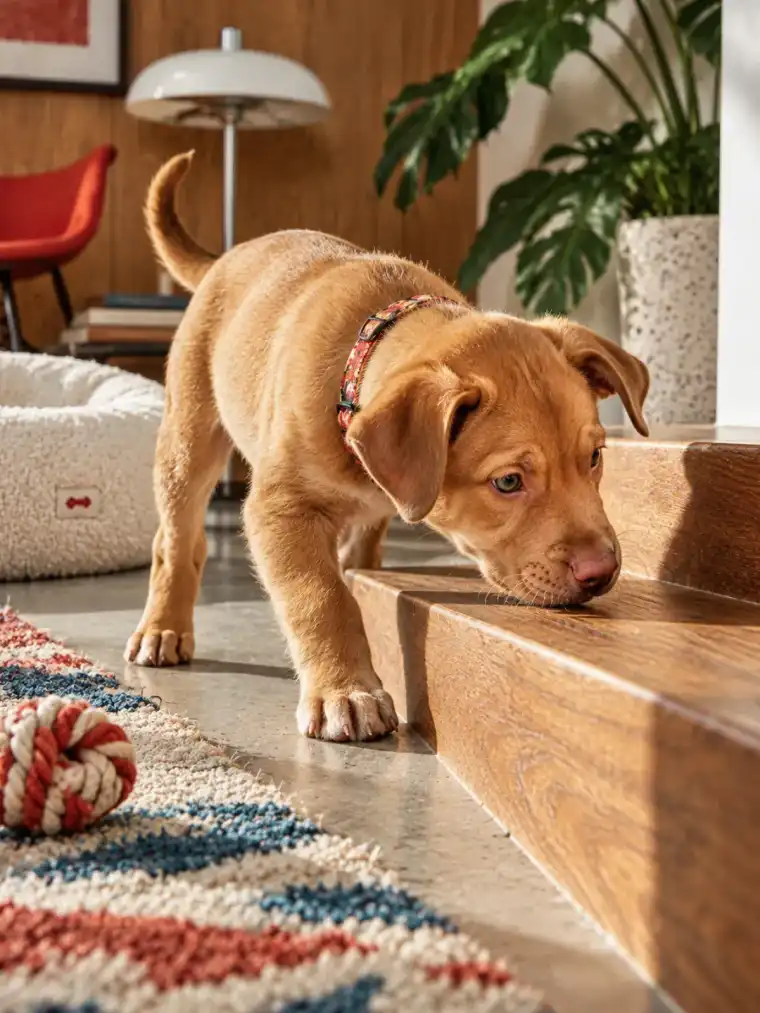
The same puppy who barks at a bicycle at 6 months old often would have found bicycles unremarkable at 10 weeks. Not stubbornness. Timing.
When we talk about when to start training a puppy, we mean two overlapping tracks. Early training builds emotional resilience: your puppy learns the world is safe. Basic cues teach a shared language: sit, come, and their name predict good things. Both start together.
Puppy Training Timeline: What to Work On, and When
Use this puppy training timeline as a puppy training schedule, not a deadline. Every puppy grows at their own pace, and some breeds mature slower than others.
0 to 8 Weeks: Breeder Foundations for the New Pup
Before you meet your puppy, the breeder is doing the first round of socialization. In these early days, a good breeder handles the puppies daily, exposes them to household sounds, and lets them meet different people. Ask what your pup has already been shown. You pick up where the breeder left off.
8 to 12 Weeks: Start Basic Cues, Potty Training, Crate Training
This is where basic puppy training begins. Your puppy's new home is exciting, and every day brings opportunities to teach. Focus on four things.
Name and eye contact. Say your puppy's name in a happy voice. When they look at you, offer rewards. Over a few days, the same word means "look at me."
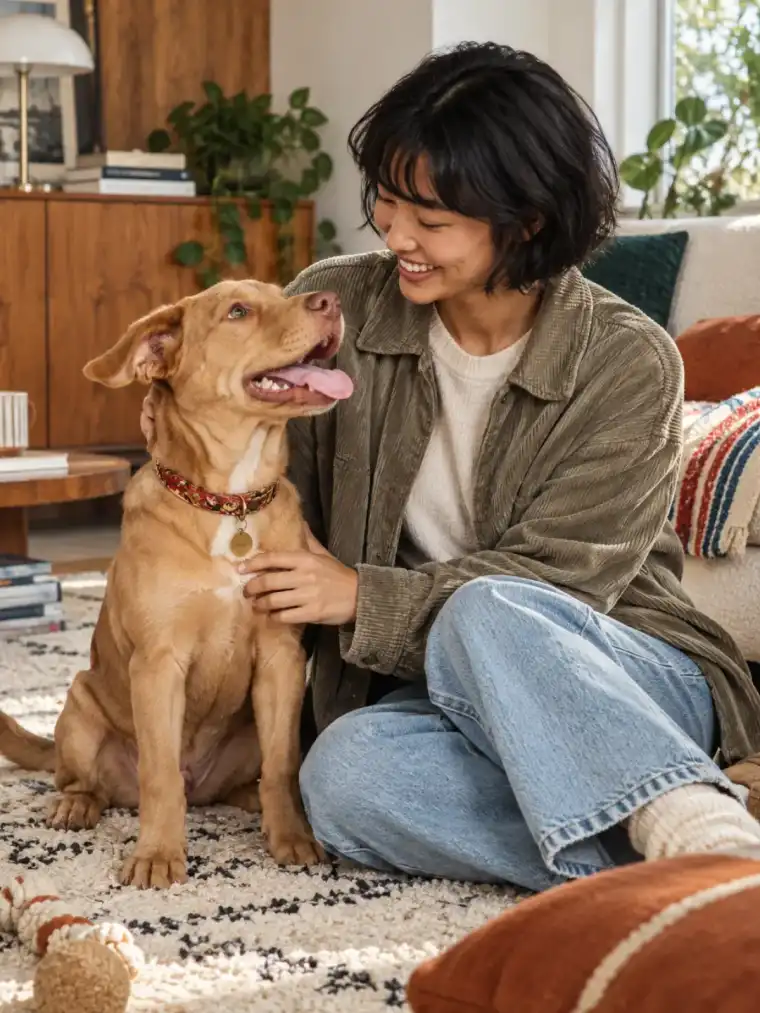
Basic cues. Sit is the classic first because dogs already do it and you just name it. Down and come follow. Our guides on how to teach sit and how to teach come walk through each cue.
Potty training. Puppy potty training starts on day one. Take your puppy out after meals, naps, and play. Reward the moment they finish outside. Frequent potty breaks are the whole game. Full protocol: our how to potty train a puppy guide.
Crate training. Crate is a good place, not a punishment. Feed meals inside. Let your pup walk out on their own. Our crate training tips break it into small steps.
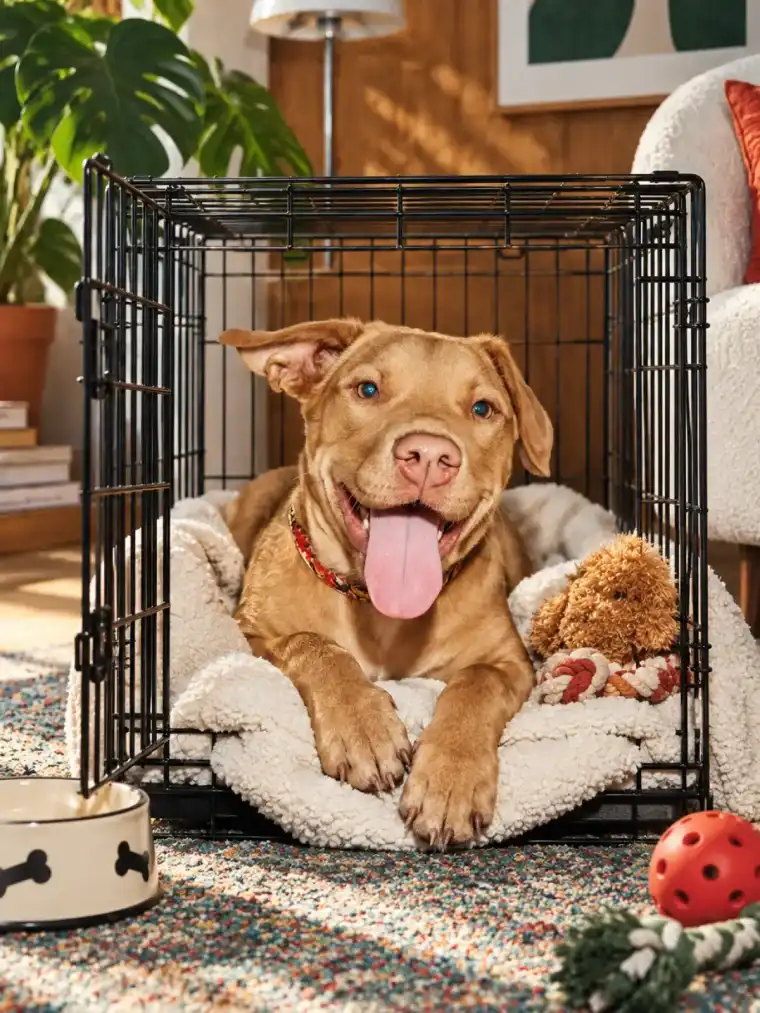
You are also helping your puppy learn bite inhibition. Puppy teeth are sharp, and pups learn how hard is “too hard” through feedback. Redirect nipping to a chew toy. Our guide on how to stop a puppy from biting has the steps.
12 to 16 Weeks: Socialization in Different Environments
Priority shifts here. You are not just teaching cues. You are showing your puppy the world.
Positive exposure to different environments is one of the highest return uses of your time. Car rides. The vet lobby. Grass, gravel, tile, metal grates. Umbrellas opening. A hair dryer at low volume.
AVSAB notes that behavioral problems, not infectious disease, are the leading cause of death in dogs under three years old. That is why vets say start socialization early, in controlled new environments. Our puppy socialization guide covers where to go and how to read your puppy when they are overwhelmed.
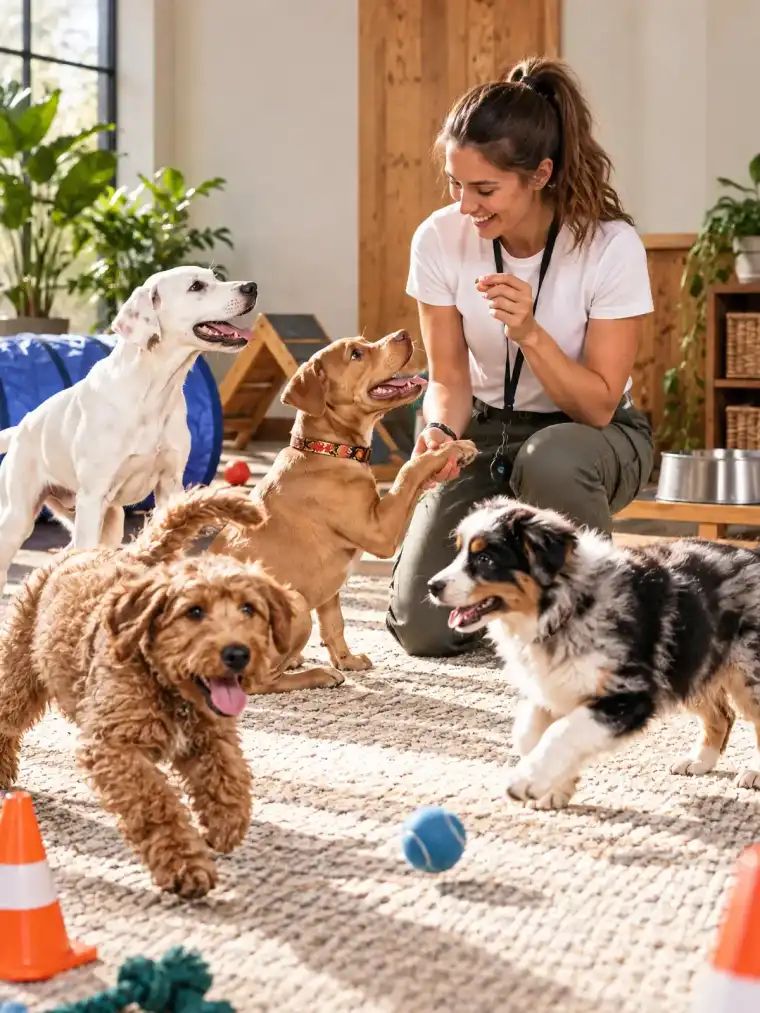
This is also when puppy training classes make sense. Good puppy training classes are more social lab than lecture, giving your puppy safe contact with other dogs and a coach to catch what you miss.
4 to 6 Months: Impulse Control and Leash Training
Your dog is bigger and more distractible now. Impulse control is next: teaching your puppy to pause, look, and choose instead of react.
A few drills. Sit before you put the food bowl down. Wait before you open the front door. "Leave it" with a covered treat on the floor. Each is a simple exercise. Daily reps add up.
Leash training belongs here too. Not heel work, just the basics: no pulling to the end, no lunging at other dogs. Our guide to training your dog on the leash covers the stop and reward technique.
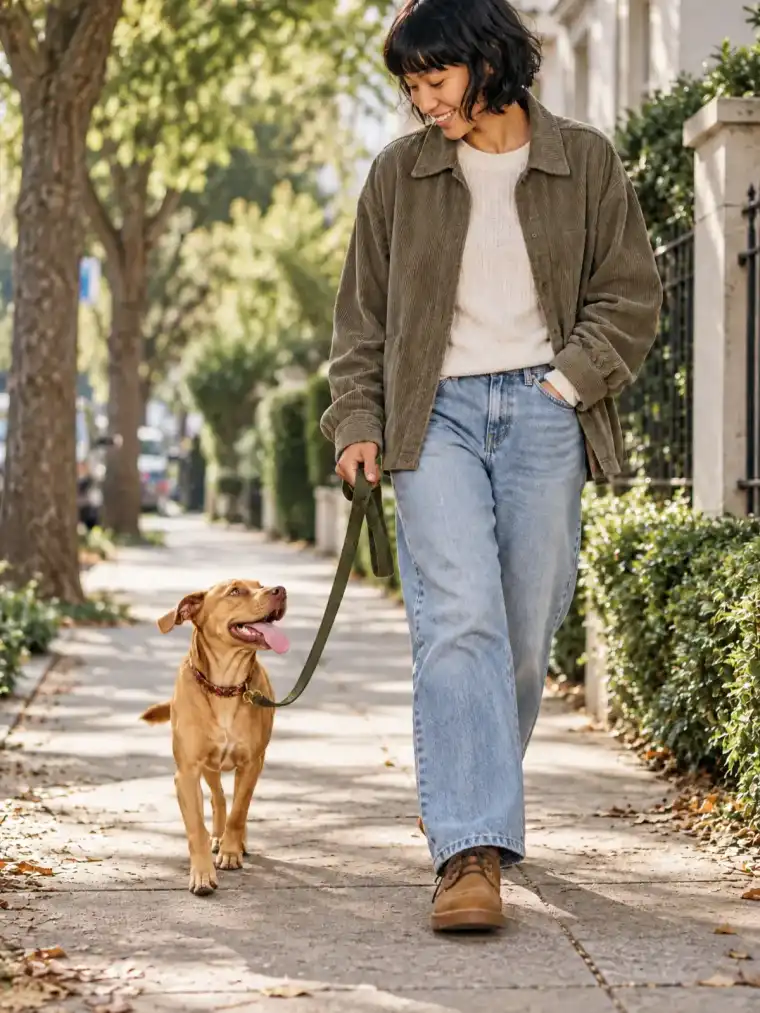
Stay progresses here too. Longer duration, more distance, mild distractions. Our guide to teaching a dog to stay shows how to build these variables one at a time. guide to teaching a dog to stay
6 to 12 Months: More Advanced Training and Good Manners
You do not have a small puppy anymore. You have a teenager. Reliable cues fall apart. Every squirrel is a crisis.
The work here is reinforcement, not restart. Keep rewarding good behavior. Adolescent dogs test everything, and marking good behavior holds the line. Practice cues in new environments. Add more advanced training as your dog's focus holds: longer stays, off leash recall in safe areas, polite greetings.
Do not swap in harsh corrections just because adolescence is hard. Correcting devices, prong collars, and dominance-based handling techniques are not shortcuts. The 2021 AVSAB position on humane dog training reviewed the research and recommends reward based methods for all training.
What to Teach an 8-Week-Old Puppy First
Questions readers usually search here are the same ones trainers hear on the phone. What works, in order:
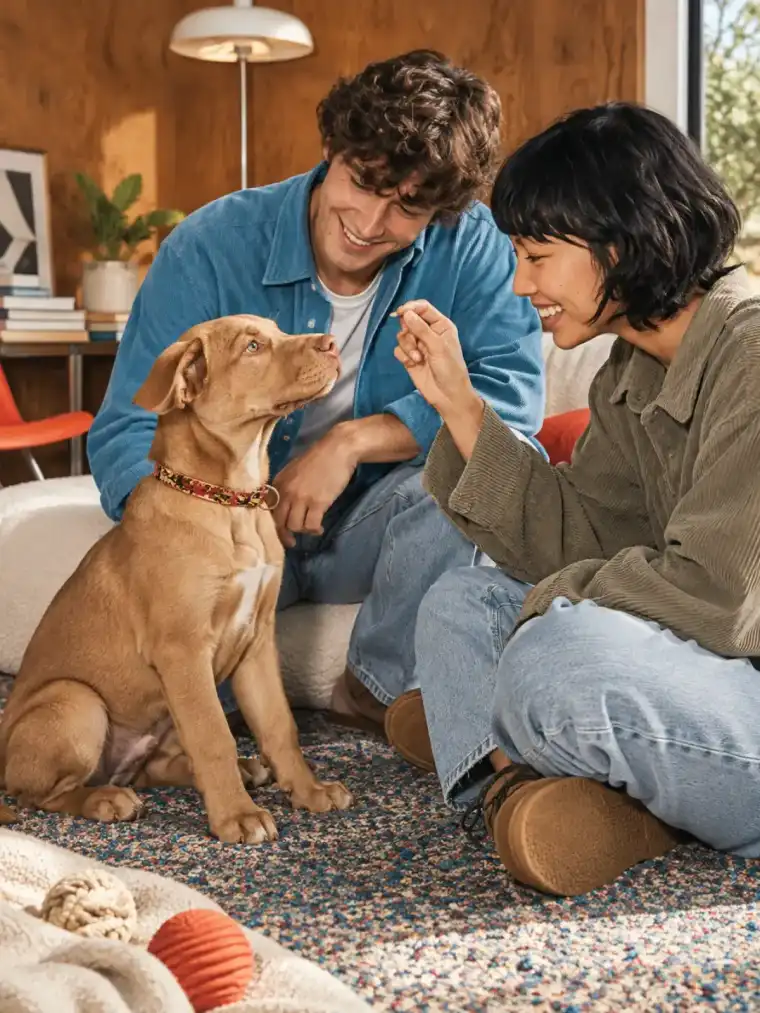
Name and eye contact. Before any cue, your pup needs to check in. Reward every look.
Sit. Easy to lure and easy to build on. Sit becomes your default polite behavior at home and out in the world.
Come when called. Indoors, short distances, high-value rewards. Never call your pup for something they will not like.
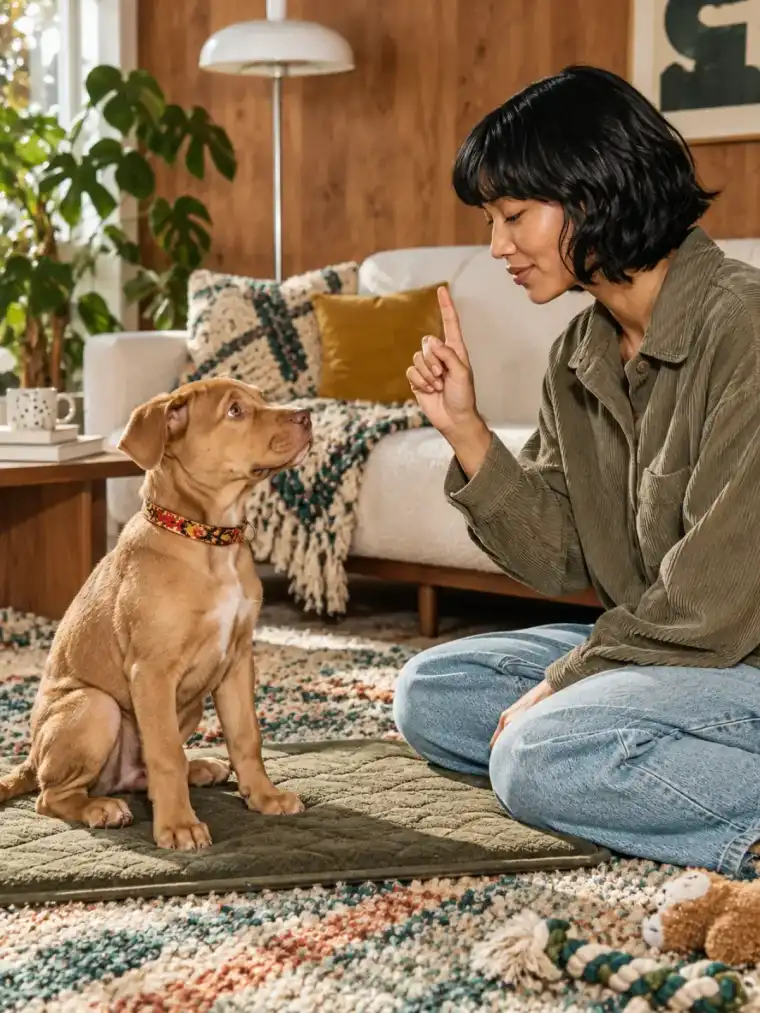
A calm settle. Teaching your puppy to lie on a mat and relax while you cook is one of the really useful good manners habits at home.
Everything else builds on those four. For the full 7 basic dog commands, we teach sit, down, stay, come, heel, leave it, and drop it in the order trainers introduce them. Our 8 week old puppy schedule fits these around feeds, naps, and potty breaks.
Puppy Training Tips That Actually Work in Real Life
You do not need a perfect setup. You need daily reps. These puppy training tips make a huge difference in the first six months of a new pup's life.
Use Positive Reinforcement (Not Corrections)
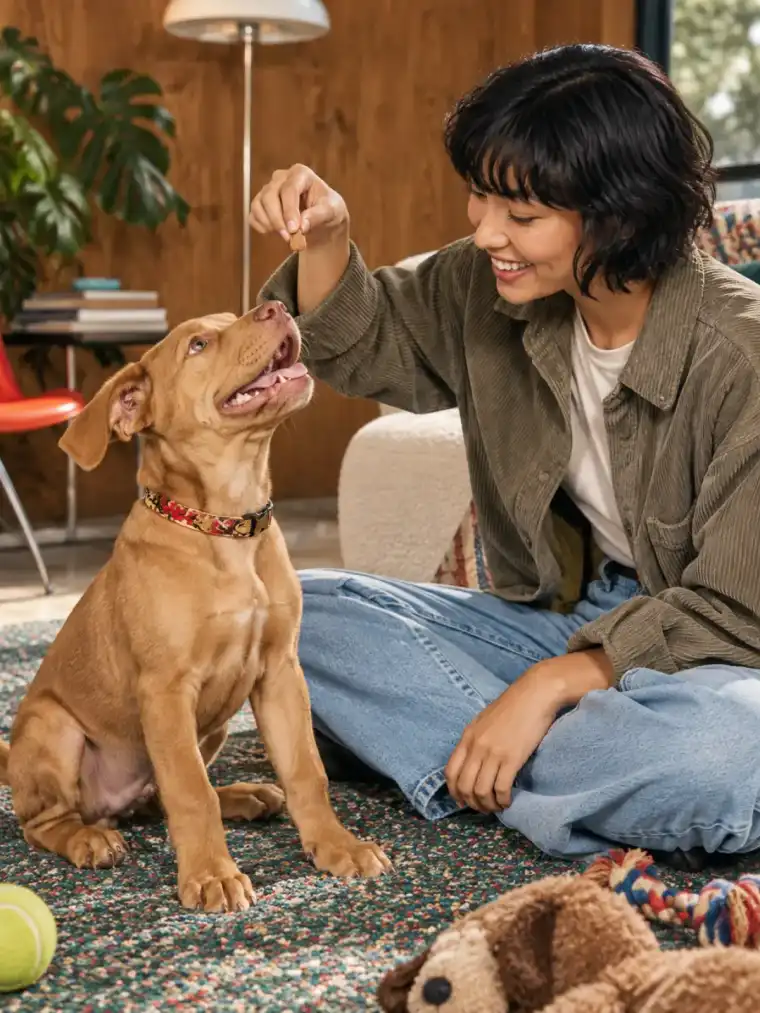
Positive reinforcement is a science-backed approach recommended by veterinary behavior organizations. Rewards work by strengthening the desired behaviors you want to see again. That is the mechanic behind positive reinforcement: a treat, a piece of kibble, praise, a quick game of tug.
Whole model. Puppy sits, reward. Puppy comes when called, reward. Puppy chews the toy, reward. Not permissiveness. Teaching your puppy what to do, then paying them for it.
If timing is where you struggle, our clicker training guide explains the mechanics. For a broader look, our overview of dog training methods walks through the research.
Keep Training Sessions Short
Adult humans overestimate how long a puppy can focus. The AKC recommends that training sessions run 5 to 10 minutes each and end on a positive note. That is plenty for most young puppies before they lose focus.
Five short training sessions a day beat one long session. That is the puppy training schedule that sticks. Sit while the coffee brews. Come during a hallway walk. Leash manners for one minute at the front door. Small, often, playful.
Practice in Different Settings
A cue that works in your kitchen does not automatically work in the park. Dogs generalize slowly. Once your pup knows a cue at home, practice it in the yard, on the sidewalk, in a friend's living room, in the vet's lobby.
The step many pet parents skip. It is why a dog who "knows sit" freezes when a stranger asks for "sit" outside. Practice widely, and reliability builds confidence for both of you.
Stay Consistent With One Cue Word
Pick one word per behavior. Not "sit, sit down, park it." Just sit. Puppies tend to learn faster when the same word predicts the same action and the same reward. Get the whole household on the same script.
When to Begin Training in a Class
Many trainers recommend enrolling between 8 and 12 weeks of age, while the socialization window is wide open. Look for a well-run class that follows appropriate vaccination and illness-prevention protocols.
A good puppy training class does more than teach obedience. It is a controlled space where your puppy meets other puppies, other people, and unfamiliar sounds while a pro watches.
Look for a trainer who uses reward based methods. Skip anyone who talks about being "the alpha," uses shock collars, or promises to fix behavior in three sessions. Force free credentials: CPDT-KA, KPA-CTP, IAABC. For more serious behavior issues like aggression, resource guarding, or separation anxiety, look for a qualified behavior professional or veterinary behaviorist.
Working with a coach helps catch the small things you might miss alone: how you hold the leash, when you mark the correct behavior, whether your reward timing is off by a second.
What About Older Dogs? Is It Ever Too Late?
You do not have to begin training a puppy at 8 weeks for the dog to turn out well. Rescued a 2-year-old? You can still teach almost everything on this page.
What changes is speed. An older dog carries habits and sometimes fear responses that a young age puppy does not. Our guide on how to house train an adult dog shows how to rebuild a solid foundation of good habits at any age.
Right track at any age: reward what you want, manage or redirect what you do not, keep it short and positive.
Puppy Training FAQs
What Is the First Thing You Should Train a Puppy On?
Teach their name first, then sit. Name recognition gives you attention before you cue anything else, showing excitement in your voice so your puppy wants to check in. Sit is often the easiest to lure and fastest to reward, which makes it the entry point to obedience training and to the perfect pup routine you are building.
What Is the 7-7-7 Rule for Puppies?
The 7-7-7 rule is a trainer heuristic, not a clinical guideline. The common version says a puppy should meet 7 different people, walk on 7 different surfaces, and visit 7 different locations by a certain age (versions vary between 7 and 12 weeks old). A useful checklist for early socialization, but what matters is the underlying idea: varied experiences that build a positive association with the world during the sensitive period.
Can I Leave My 8 Week Old Puppy Alone for 3 Hours?
No. According to the AKC's guidance on leaving a puppy alone, puppies under 10 weeks old typically cannot hold their bladder more than an hour. Between 10 and 12 weeks, many manage about 2 hours. From 3 months on, the rule of thumb is one hour per month of age, up to about 6 hours for an adult dog. Three hours is a long stretch for an 8-week-old puppy and makes accidents much more likely. It also gives you less opportunity to gradually teach alone time.
How Long Does Basic Puppy Training Take?
Depends what you count as "done." Basic commands, simple commands like sit, come, down, stay, can look reliable in 2 to 4 weeks of daily practice at home. Housetraining usually takes 4 to 6 months. Impulse control and off-leash reliability keep developing through your dog's first year. Our how long puppy training takes walks through realistic timelines.
Ready to Start Training Your Puppy?
You do not need to figure this out alone. Tell us about your dog and we will build you a plan based on their age, breed, and what you are working on today.
Take the free Woofz quiz and get a puppy training plan built for your dog →
Related: tips for first time puppy owners if this is your first, preparing for a puppy checklist if you are still shopping, expert guide to basic puppy training for the full schedule day by day.
Training your puppy is not a project with a deadline. It is a habit for your puppy and for you. Reward the try.
Sources
-
American Veterinary Society of Animal Behavior (AVSAB), Position Statement on Puppy Socialization.
-
American Veterinary Society of Animal Behavior (AVSAB), 2021 Position Statement on Humane Dog Training.
-
American Animal Hospital Association (AAHA), 2019 Canine Life Stage Guidelines.
-
American Kennel Club, Teach Your Puppy These 5 Basic Commands.
-
American Kennel Club, How Long Can a Puppy Be Left Alone?
How the Schedule Shifts From Here
Your 4-month-old puppy's schedule is one stepping stone through the life stages ahead. A four-month-old puppy who follows this pattern usually sails into month five without drama.
-
5 months: two meals for many breeds. Longer awake windows. Sleep drops toward 14 to 16 hours.
-
6 months: twice-daily meals for nearly all breeds. Bladder waits 4 to 6 hours. Sleep drops toward 12 to 14 hours.
-
9 months: adolescence peaks. Consistent training pays off. Recall may temporarily disappear as many young dogs test boundaries.
-
12 months: small breeds close to full-grown. Large and giant breeds still growing.
Any 4-month-old puppy schedule loosens as your puppy grows, but the pattern of routine, rest, and play holds. Adult dogs run on twice-daily meals and a walk or two. Puppies get there.
Answers to the Most-asked Questions
What month is hardest with a puppy?
Many owners say months 6 to 9 are the hardest. Adolescence peaks, previously reliable cues wobble, energy spikes, testing behaviors are common. Puppies push harder here than as a young puppy. Four months may feel easier, but early adolescent behaviors can already start showing up.
How much bigger will a puppy get after 4 months?
Depends on puppy's breed. Puppies grow at different rates by breed and individual. Small breeds are usually much closer to adult size by four months than large or giant breeds. Large and giant breeds have much more growing left to do.
What should a puppy be doing at 4 months?
By four months, many puppies are working on skills like these: name response, sit, and recall on a long line. They can also practice loose-leash walking in quiet spaces and settling in the crate. Potty training should be coming along as well. Adult teeth are erupting. Adolescence is on the horizon for puppies at this age. Many puppies can hold their bladder for around four hours during the day.
What time should a 4-month-old puppy go to bed at night?
A consistent bedtime between 9 and 11 pm works for most households. Exact time matters less than consistency for puppies at this age. Aim for 8 to 10 hours in the crate overnight and dinner three hours earlier.
Where Woofz Fits In
A schedule on paper is easy. Sticking to it (when to feed, potty, train, nap) is where most new puppy owners drown. That's especially true between 12 weeks and 6 months. Puppies raise the difficulty as their brains grow.
Woofz gives your puppy a personalized daily plan, a lesson library of basic commands and behavior work, and a training schedule that fits between meetings and school runs. Training, care, and guidance in one app for the whole puppy's routine.
For a schedule that fits your furry friend's breed, age, and real life at home, take the free Woofz puppy quiz. Two minutes.
Small habits, done daily, turn four months of testing into a settled young dog. Puppies pay you back in the second half of the first year. Your puppy will not be perfect. Your schedule will not be either. Both will get there in the end.