


Free Dog Training Apps: What You Actually Get for $0

By
Woofz Team Updated on |Reviewed by
Woofz TeamDisclaimer: This article is for general information and isn't a substitute for professional dog-training or veterinary advice. Pricing and product features are based on publicly available information and may vary by plan, platform, region and over time. Comparisons are for informational purposes only. Please check the respective app developers' websites for the latest information. Third-party trademarks and products are mentioned solely for comparison purposes and do not imply affiliation or endorsement.
You typed free dog training app into a search bar, and now you're staring at a wall of results that all shout the same word. Some mean it. Some mean $0 for seven days, then $99 a year. Big difference.
This guide separates genuinely free apps from free trials and shows what a $0 download actually gets you in each. Not a ranking of the best app, because that depends on your dog. Just a straight look at what hides behind the word, so you can start training today.
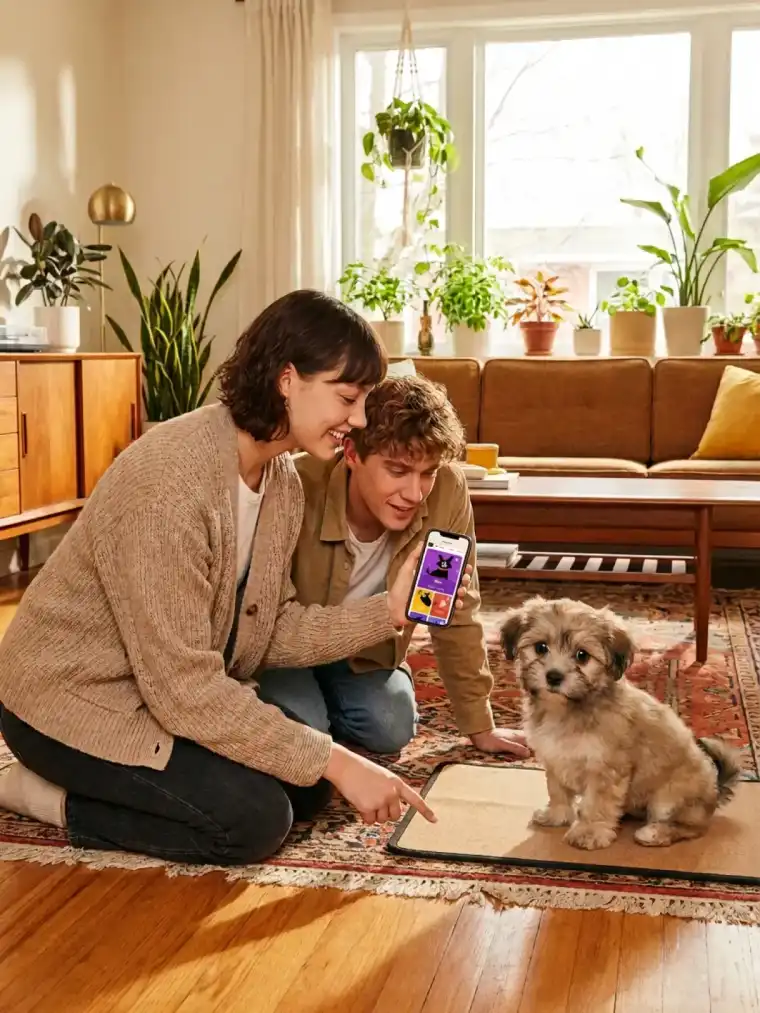
Key Takeaways
-
"Free" splits three ways: genuinely free forever, freemium (a free tier plus a paid upgrade), and trial-only, where you pay to keep using it.
-
You can get started on core skills: sit and stay, recall, loose-leash walking, crate and potty training, at $0 with the right dog training app.
-
A genuinely free dog training app like Leave It has no subscription. Pupford gives you a 30-day puppy training course at no cost. Most big names are freemium.
-
Free apps give owners a starting point, not a replacement for a professional dog trainer when you face aggression, severe anxiety, or bites.
-
The easiest place to start costs nothing: a short daily habit. A few minutes counts more than a perfect half-hour you never actually do.
What "Free" Really Means in a Dog Training App
A free dog training app is a mobile app you download at no cost that guides you through reward-based exercises, usually with short videos, daily lessons, and progress tracking. That's a simple version. The messy part is what happens after you open it, and there are three kinds.
Genuinely Free (no subscription, ever)
You download it, use everything, never pay. Rare, but real. Built by councils, universities, or welfare groups, so the library is smaller, but no paywall waits for you.
Freemium (a free tier plus a paid upgrade)
The common model. A working free tier gives you a slice of the lessons, then a subscription unlocks the full library and chat support with trainers. Many dog owners run for months on a no-cost version alone.
Trial-only (you pay to keep using it)
The model that causes the most confusion around the word “free.” The app installs at no cost, the first days cost nothing, then you're charged if you continue. Read the fine print before you subscribe.
What You Can Train for $0
Quite a lot. The everyday skills that make life with a dog easier are what no-cost content often covers pretty well.
Core Commands and Basic Cues
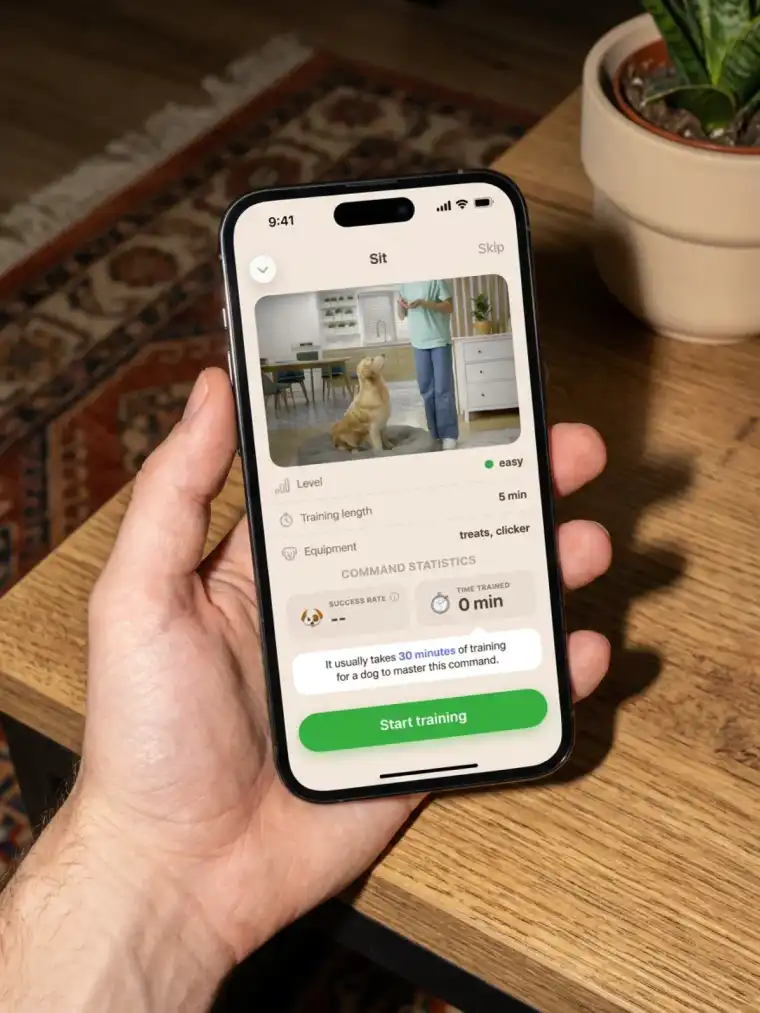
Every decent dog training app starts with the same foundation: sit, down, stay, come, and a solid leave it. These are all skills you can work on without paying for a trainer or subscription, although some apps may put their lessons behind a paywall. Follow short videos, hand over a treat, and you can start teaching a dog to sit in a single short session. Start with our 7 basic dog commands.
Leash Walking
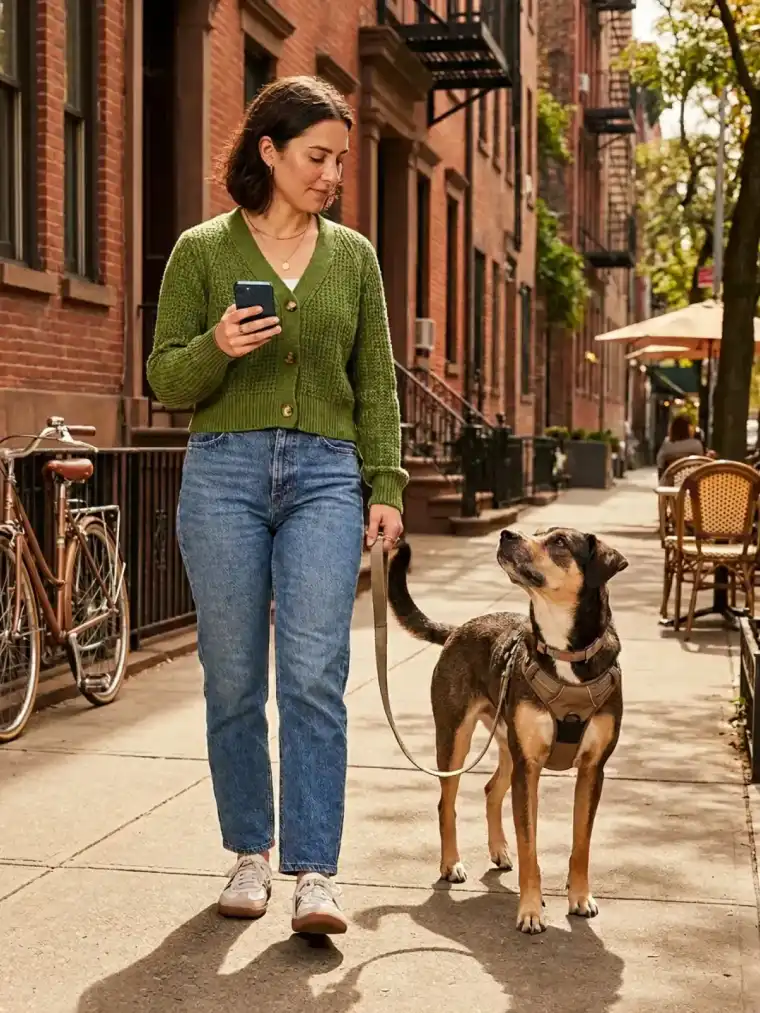
Loose-leash walking is one of the most common skills owners work on, and you can start practicing it at home at no cost. Reward the moment the lead goes slack, keep it calm. Here's how to train your dog to walk on a leash.
Crate, Potty, and New-puppy Basics
A crate can give your dog a safe, comfortable space and can be useful during house training. Neither is locked behind a subscription in many apps. See crate training a puppy and potty training a puppy. If you have a puppy, early socialization is just as important as learning the basics. This kind of basic training is the core of any good puppy training app.
Method That Works
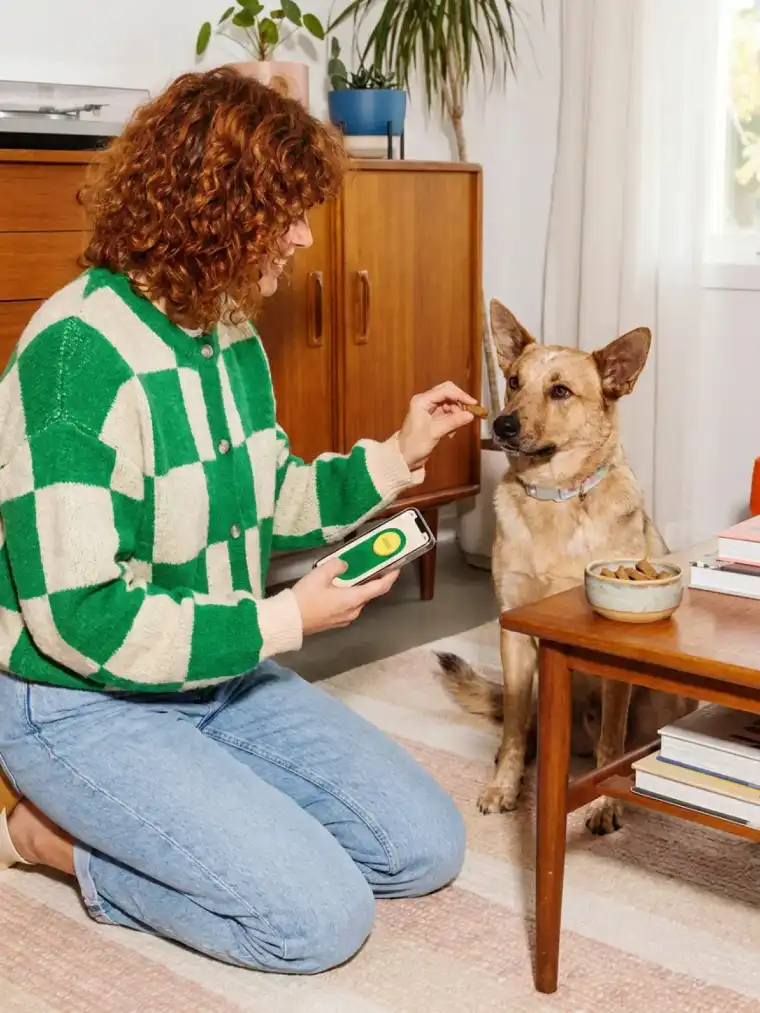
Whatever app you pick, look for reward-based training. The training approach matters more than the logo. The American Veterinary Society of Animal Behavior recommends reward-based methods for all dog training and advises against aversive methods like shock and prong collars because of the welfare risks. It also says there is no evidence that aversive methods are more effective than reward-based training.
Positive reinforcement, in plain terms, means rewarding what you want more of, and it's the standard the science backs. A clicker and treats put you on solid ground, the way good apps and certified trainers both build on positive reinforcement. See clicker training for dogs for the timing.
Short Sessions, Done Often
One 2011 study looked at training frequency and session length and found that both can make a difference to learning and memory. But there’s no magic formula, and more practice isn’t necessarily better practice. In everyday life, a few focused minutes on the couch or a quick round on a walk can also be easier to fit in than one long session. That's where a good puppy training app can help: it gives you a simple structure to follow and a reason to keep coming back.
How Do I Train My Dog at Home for Free?
You train your dog at home for free by picking one skill, breaking it into small steps, rewarding the behavior you want, and practicing in short daily sessions. No paid plan required. Here's the loop:
- Pick one skill. Sit, recall, or crate comfort. Just one to start.
- Grab a marker and rewards. A clicker, if your app has one, or a clear “yes,” plus small treats.
- Break it down. Reward the first tiny piece of the behavior, then build.
- Keep it short. A few minutes, once or twice a day. Stop while your dog still wants more.
- Practice in real life. Ask for the cue before a meal, before the door opens, on a walk.
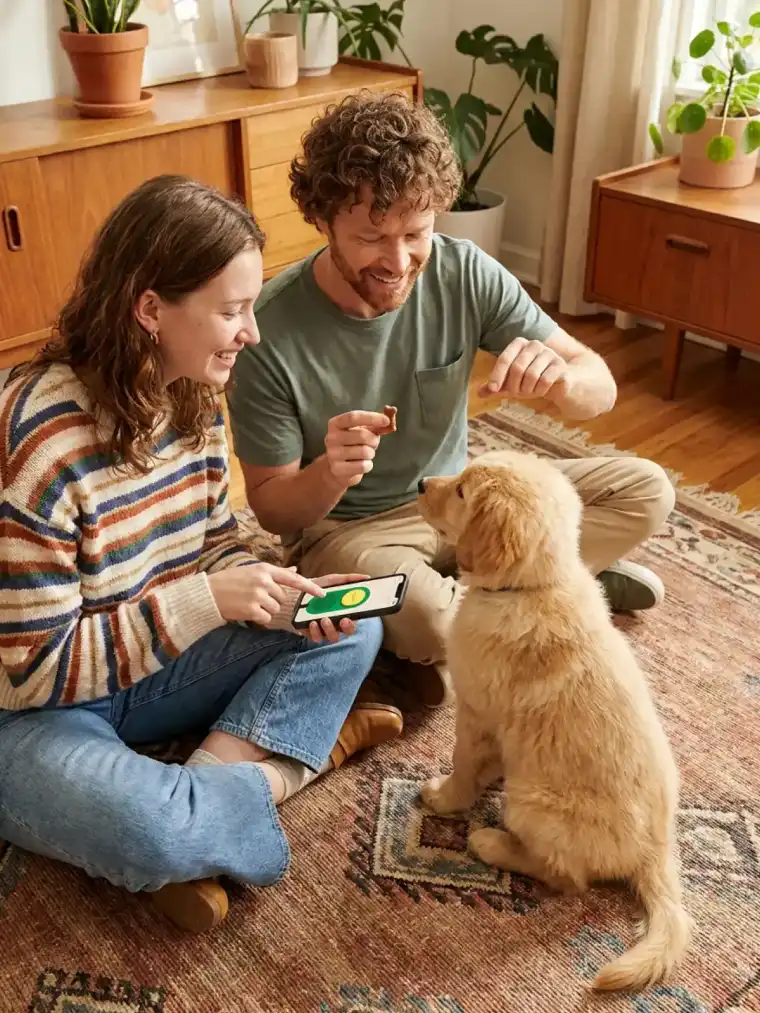
A free dog training app makes this easier by handing you daily lessons and reminders so you're not guessing what to teach next. For a realistic timeline, see how long it takes to train a puppy.
What to Look For in a Dog Training App
Before you judge any app by its star rating, check these key features. They help dog owners tell a helpful app from a menu of paywalls.
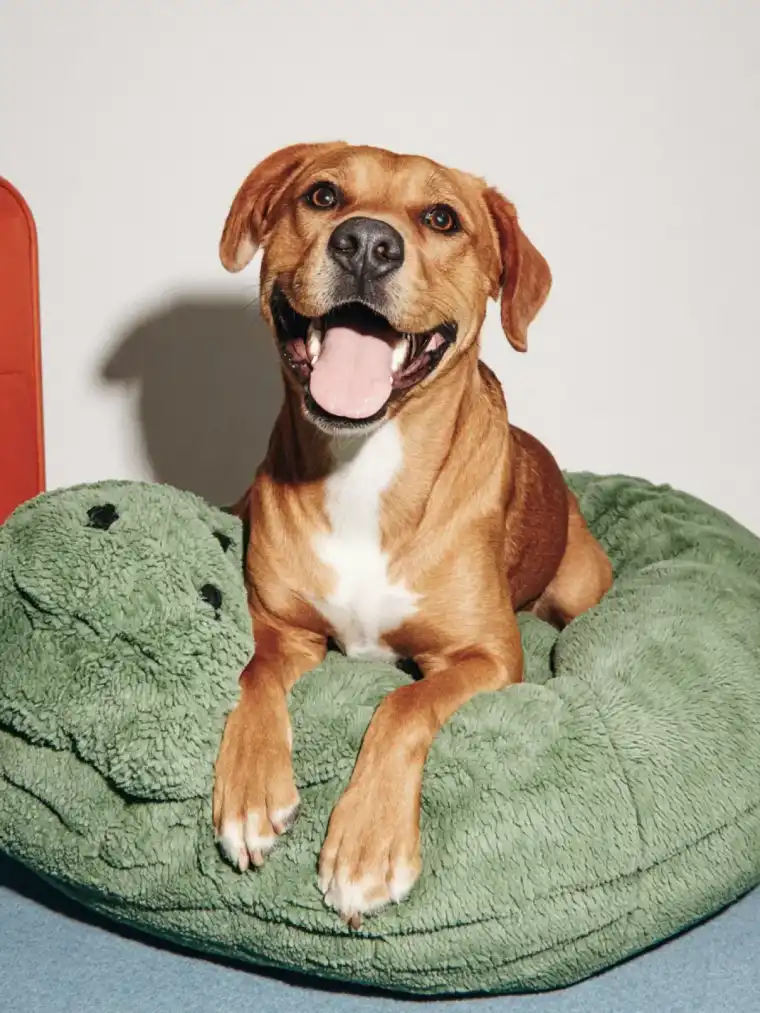
-Training approach: reward-based, positive reinforcement only. If an app leans on corrections or dominance talk, close it.
- Trainer credentials: look for named certified trainers, professional trainers, and the trainers behind the content. Good apps list their trainer credentials openly, since trainer credentials tell you who wrote the advice.
- Progress tracking: daily lessons, streaks, and reminders can make it easier to keep track of your practice. That's where habits form.
- A real free tier: not one lesson, then a wall. Test whether the $0 version is genuinely usable before you sign up.
- Dog-safe guidance: look for apps that flag when a problem is beyond a screen and steer serious cases to a professional.
- Billing transparency: trial length, price after, and how to cancel should be easy to find.
Honest Breakdown, App by App
Here's what your $0 buys in the dog training apps people search for most. Each app's key features come down to short videos and daily lessons. Prices change often, so treat the numbers as a snapshot and check the app store before you subscribe.
Leave It (genuinely free)
The rare app that's completely free, with no subscriptions or hidden fees, developed by Griffith University with professional dog trainer Ryan Tate and other trainers. Included at $0: every module, step-by-step videos, an audio clicker, and progress tracking. Paid: nothing, there is no paid tier. Best for: recall and everyday walking basics, no billing.
Pocket Puppy School (free with in-app extras)
Pocket Puppy School lists itself as a free dog training app on the App Store, built on positive reinforcement. Included at $0: access to the app's free training content, with optional paid features. Paid: a few optional extra features. Best for: first-time puppy owners on a budget.
Pupford (a 30-day course at no cost)
Pupford's 30 Day Perfect Pup course is free forever with no credit card, created by well-known dog trainer Zak George. It's a structured 30-day puppy training program. Included at $0: the whole 30-day plan, with short videos on basic training, crate training, and leash walking, plus a clicker. Paid: Academy+ adds 20-plus courses from certified dog trainers, nutritionists, and veterinarians, with monthly, yearly, or lifetime access. Good fit for: a guided 30-day plan for a new puppy.
Puppr (freemium)
Is Puppr a free app? Partly. Puppr is free to download, with several trick lessons at no cost, but the full library and live chat with trainers sit behind Premium, $12.99 a month or $99.99 a year after a 7-day trial in the US. Included at $0: several trick lessons taught in looped videos, plus a clicker and support for multiple dogs on separate profiles. Good fit for: owners who mainly want fun trick training and advanced tricks.
Dogo (freemium)
Dogo pairs no-cost lessons with a subscription. One of its paid features lets you submit a training video and get feedback from trainers. Included at $0: starter lessons, daily tasks, quizzes, and short videos. Paid: the trainer feedback and most of the library, after a short trial. Good fit for: owners who want daily structure, with paid feedback later.
Zigzag (a limited free tier)
Zigzag was developed around structured puppy development, with a roadmap of short lessons through adolescence and fear periods. Included at $0: three lessons a day plus the library and AI chat. Paid: unlimited lessons and 24/7 access to qualified trainers. Good fit for: new puppy owners who want a puppy training roadmap.
GoodPup (paid, trial only)
Is the GoodPup app free? No. GoodPup is one-to-one coaching, not a free library: a 7-day trial, then a paid weekly subscription for private video sessions with your own trainer and text access to pro trainers for extra support. Good fit for: owners who specifically want live coaching and are comfortable paying for one-to-one support.
Woofz (free to start, then upgrade)
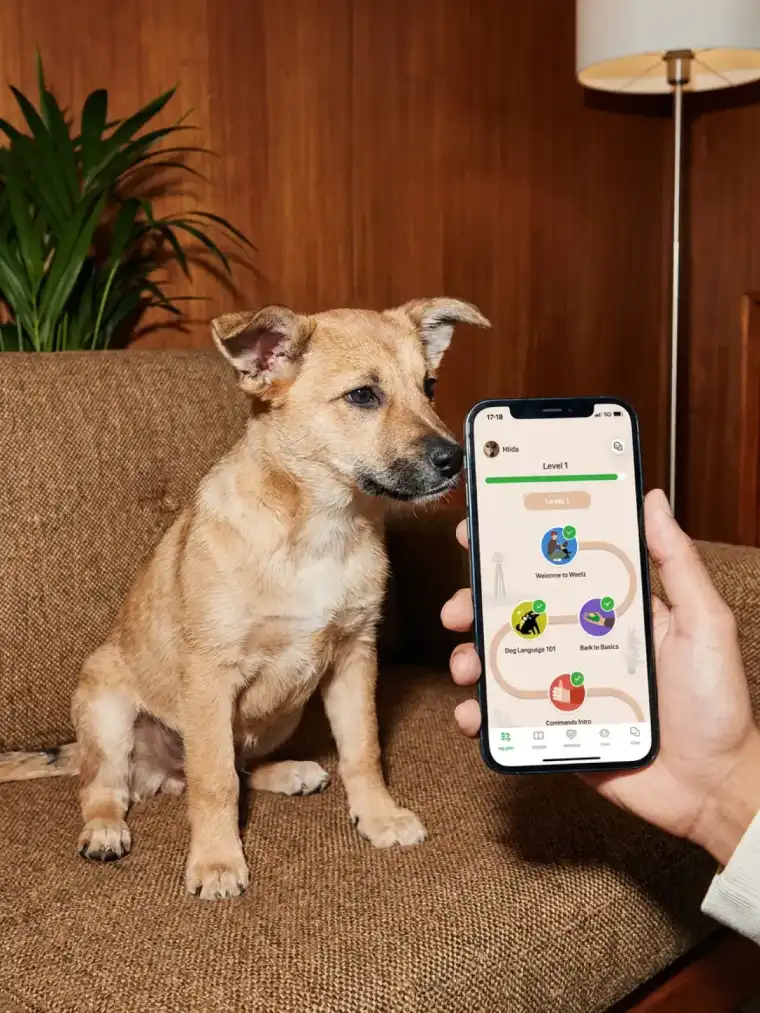
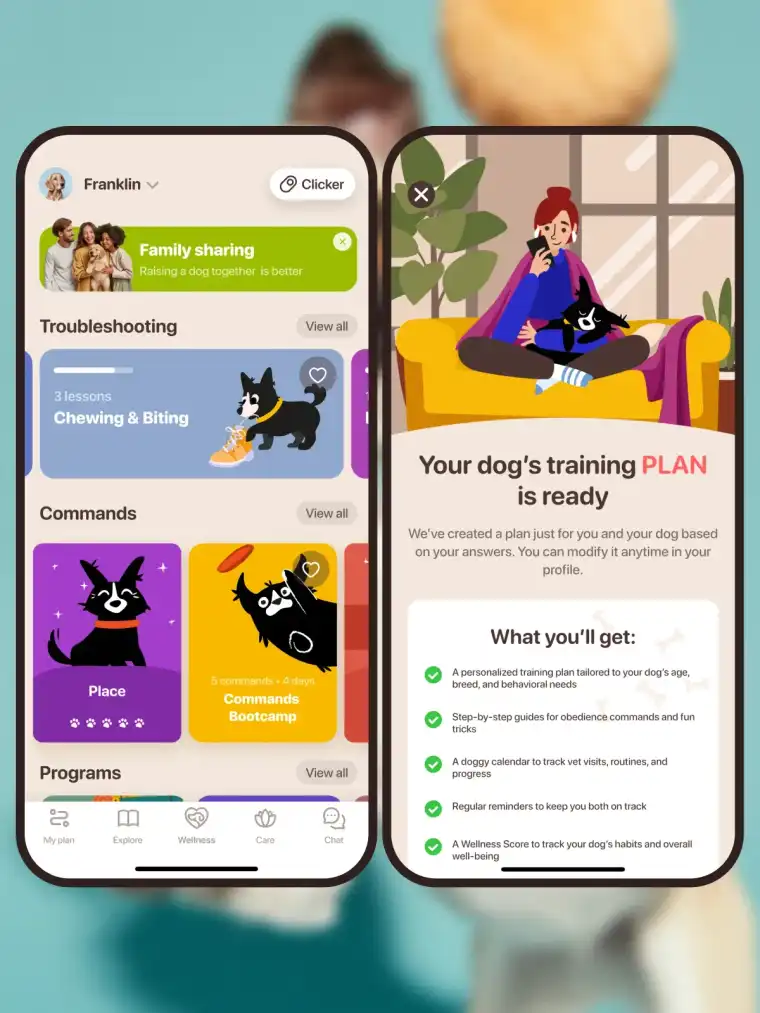
Woofz is a dog training app that's free to download and gives you a small but useful starting point, including a personalized My Plan based on a short quiz. Included at $0: the first level of My Plan, a small selection of basic commands, some early quizzes and training programs, support for multiple dogs, daily reminders, and wellness routines and daily logging.
Paid: the rest of My Plan, most commands, quizzes and practice content, most training programs, the Explore library, and Wellness Score and insights. Good fit for: dog parents who want to try a personalized training plan before deciding whether they want the full library.
The honest pitch: Woofz won't fix a serious behavior problem overnight, and it isn't a substitute for a trainer or vet. It gives you a clear next step and puts short training sessions into your daily routine.
You can take the free Woofz quiz to see what a starting plan looks like for your dog.
Free vs Paid: What $0 Actually Gets You
App | At $0 | Behind the paywall | Good fit for |
|---|---|---|---|
Leave It | Everything (no paid tier) | Nothing | Recall and leash basics |
Pocket Puppy School | Full beginner course | A few optional extras | First-time puppy problems |
Pupford | 30-day Perfect Pup course | Academy+ for complex issues | A guided 30-day starter plan |
Puppr | Several trick lessons | Full library, chat with trainers | Fun trick training |
Dogo | Starter lessons and daily tasks | Video feedback from trainers | Daily habit structure |
Zigzag | 3 lessons a day, library, AI chat | Unlimited lessons, live trainers | Puppy development roadmap |
GoodPup | 7-day trial only | Everything (paid weekly) | A one-off trial of live coaching |
Woofz | Lessons and a starter plan | Full personalized plan, Explore, Wellness Score, Insights (analysis) | A personalized place to start |
The pattern is clear. The genuinely free apps here keep things simpler, while freemium apps give you a useful starting point and save more content or support for the paid plan. A trial is a test drive, not a product you keep for free.
What You Give Up With a Free Dog Training App
A $0 app can absolutely get you started, but free usually means a smaller toolbox. You may get basic commands and guided lessons, while more advanced programs, deeper personalization, or a bigger content library sit behind a subscription.
The differences can look like this:
- Smaller content library: You may get the basics without specialized programs or more advanced training.
- Less personalization: Free content may be more general, with fewer options to tailor the experience to your dog's age, habits, and needs.
- Fewer extras: Progress tracking, reminders, quizzes, wellness content, or other features may be limited to paid plans.
- More upgrade prompts: Some apps use the free tier to introduce you to the paid version, so expect occasional reminders to upgrade.
- Trials aren't free plans: A seven-day trial gives you temporary access, not something you can keep using at $0.
The bottom line: free is a perfectly good place to start if your goal is basic training and you're happy doing the work yourself. If you want a bigger library, more personalization, or extra features, that's where a paid plan can earn its place.
Where Free Dog Training Apps Hit Their Limits
Apps, free and paid, are helpful for teaching skills and building routines. They're not good at reading your specific dog in a specific moment.

An app can walk you through the steps for separation anxiety in dogs or helping a reactive dog. It can't see the body language that tells a person when to push and when to back off. For serious cases, severe aggression, a bite history, resource guarding, or worsening reactivity, an app is a supplement, not the answer. Bring in a qualified behavior professional or veterinary behaviorist, and look for someone who uses reward-based methods.
No app fixes a behavior problem on its own, and any app promising guaranteed results in a set number of days is selling you the fine print. Realistic expectations are part of good training.
What Is the 3-3-3 Rule for Dog Training?
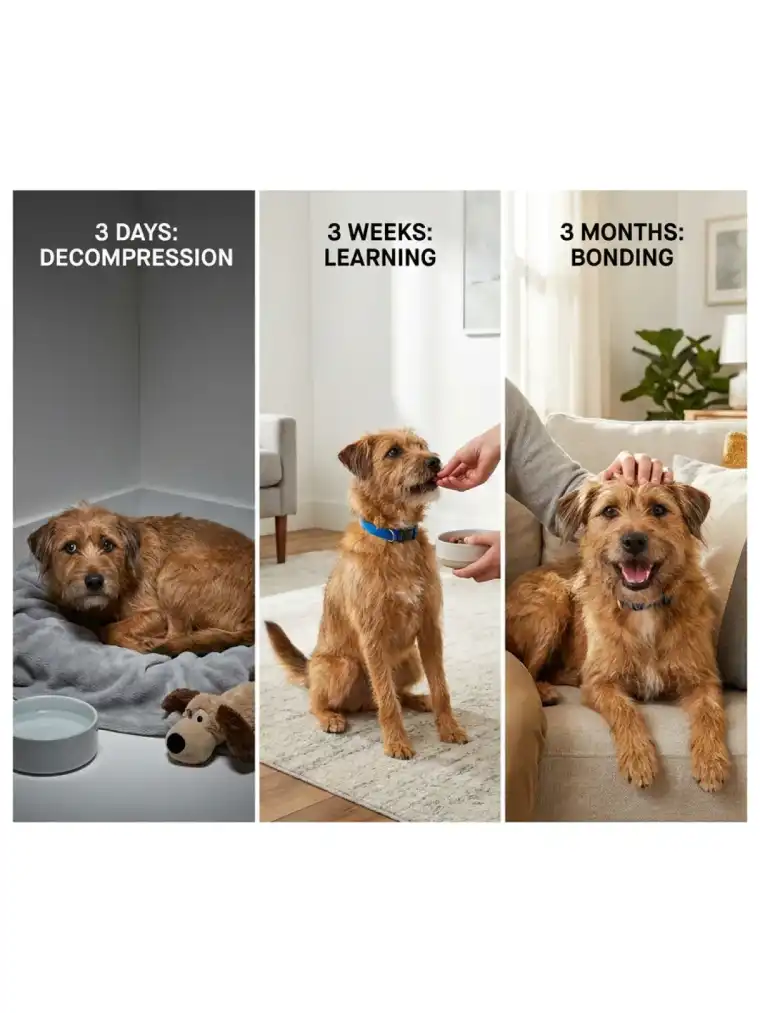
The 3-3-3 rule isn't really a training method. It's a guideline for a newly adopted or rescue dog's adjustment: roughly 3 days to decompress, 3 weeks to learn your routines, and 3 months to feel at home. Shelters and groups like the ASPCA use this 3-3-3 timeline to set realistic expectations for adopters.
Why it matters for training: when a dog first comes home, give them some time to take it all in. A little quiet, structure, and space can help, and you can ease into training as they start to feel comfortable. It's a rough map, not a rule every dog follows to the day. Our full 3-3-3 rule for dogs guide breaks down each phase.
How to Choose a Free Dog Training App for Your Dog
Skip the star ratings for a second and match the app to your situation.
- Match your dog's life stage: a new puppy needs socialization and structured puppy development; an adult or rescue needs adjustment time and confidence work first.
- Test the $0 tier: some apps give one lesson, then a wall. Others, like Leave It and Pupford's course, genuinely let you train at no cost.
- Check the trainer credentials: look for an app that tells you when a problem is beyond what an app can handle and points you toward professional help .
- Weigh cost against needs: a free plan may cover the basics now, with an upgrade waiting when you want deeper help.
- Want to compare more training apps? This page is about what's free. For an overall pick, see our comparison of the best dog training apps, which weighs the best dog training apps side by side.
For deeper foundations, see our ultimate dog training guide and dog training methods breakdown.
Pick the app whose free plan matches what you need this week, then start with one skill tonight. Your dog doesn't care which logo is on the screen. What matters is how you use the training time together.
Frequently Asked Questions
Sources
-
American Veterinary Society of Animal Behavior, Position Statement on Humane Dog Training (reward-based methods)
-
Demant, H. et al. (2011). The effect of frequency and duration of training sessions on acquisition and long-term memory in dogs. Applied Animal Behaviour Science
-
ASPCA Pro, Pet Adjustment Periods: The 3 Days, 3 Weeks, 3 Months Guide