


Best Dog Training Apps in 2026: Features, Training Methods & Pricing Compared

By
Woofz Team Updated on |Reviewed by
Woofz TeamDisclaimer: This article is for general information and isn't a substitute for professional dog-training or veterinary advice. Pricing and product features are based on publicly available information and may vary by plan, platform, region and over time. Comparisons are for informational purposes only. Please check the respective app developers' websites for the latest information. Third-party trademarks and products are mentioned solely for comparison purposes and do not imply affiliation or endorsement.
A good dog training app costs less than one hour with a private trainer, and it sits in your pocket for a 6 a.m. potty accident and a 11 p.m. barking. That is the appeal. The catch: every one of these apps calls itself the best, and most "best dog training apps" roundups rank whoever pays the biggest affiliate cut.
This one works differently. We looked at ten dog training apps using the same criteria: the training approach behind the lessons, who created the content, what you pay after the trial, and where each app falls short. Woofz makes one of the apps here, so read the Woofz section with the skepticism it deserves and check it against the rest.
Here is the honest version for pet parents who want the truth, not a sales page.
Best Dog Training Apps at a Glance
Want a quick pick before a full breakdown? The right app depends on your dog's age and the problem you are fixing, so this is a "best for you" list, not a ranking.
-
Best for building a daily training habit: Woofz
-
Best for guided daily practice with trainer feedback: Dogo
-
Best for puppy development in the first year: Zigzag
-
Best for a free self-guided course: Pupford, with Puppr for tricks
-
Best for behavior support across every life stage: PawChamp
-
Best for trick training: Puppr
-
Best for live coaching with real trainers: GoodPup
Every app on this list uses positive reinforcement, so none will tell you to dominate your dog. That matters more than any feature.
What a Dog Training App Actually Does
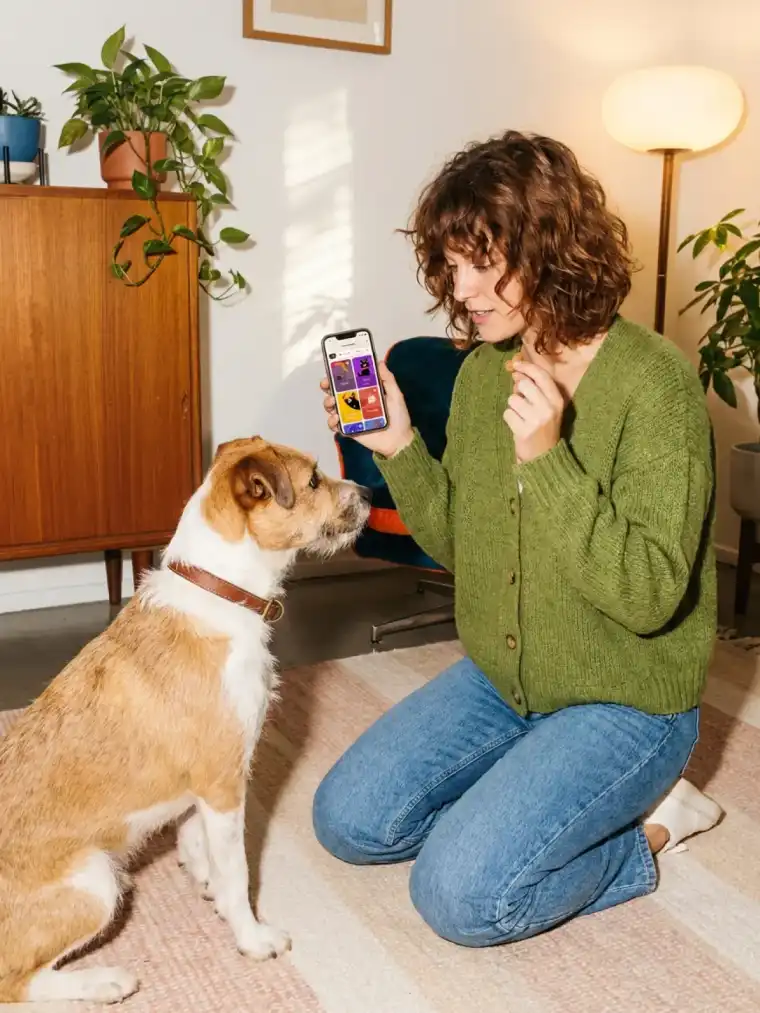
A dog training app is a mobile app that walks you through exercises, usually with short lessons, daily plans, and progress tracking, so you can teach behaviors like sit, stay, recall, and leash walking without booking a class. The good dog training apps break a big goal ("stop pulling") into small, teachable steps you practice for a few minutes at a time.
That is the honest ceiling. Dog training apps are strong at three jobs: keeping you consistent, showing the mechanics of a skill, and giving you a place to start. They are weak at one thing that matters. They cannot watch your dog and fix your timing in real time, which is what an in-person trainer buys you.
So treat a training app as structure plus reminders plus a video library, not a trainer living in your phone. For everyday manners, that structure is often enough. Set realistic expectations for a dog with a bite history, real aggression, or severe anxiety, an app is not enough, and the better dog training apps admit it.
How We Compared These Dog Training Apps
We did not score marketing pages. We focused on the same criteria for every app, weighted toward practical features rather than what looks good in a screenshot.
Training Methodology
Does the app use reward-based training, or lean on outdated "pack leader" ideas? Veterinary behavior experts recommend reward-based methods for all dog training, including behavior problems because the evidence shows they are safer and more effective than aversive methods. Every app here runs on positive reinforcement. Plenty of dog training programs online do not.
Trainer Credentials
Dog training is unregulated in the United States, so anyone can call themselves a dog trainer with zero qualifications. Yet, real trainer credentials exist. The CPDT-KA certification requires 300 logged hours and a proctored exam on learning theory, ethology, and dog-training techniques. When a training app names its certified dog trainers and lists their trainer credentials, that is a green flag. When it hides behind "created by experts," ask who. Real, qualified trainers put their names on the work.
Personalization and Progress Tracking
Does the plan adapt to your dog's age, breed, and goals, or is it one path for every dog? Personalized programs and progress tracking can make it easier to follow a structured routine.
Key Features to Look For
Beyond method and trainer credentials, the key features that matter are expert access (in-app chat or live video), how well the app teaches dog body language, pricing transparency, and daily-life coverage: crate work, toilet training, leash work, senior and rescue dogs. Short lessons and short sessions you run one-handed, with your puppy or dog in front of you, beat long detailed videos you forget.
Best Dog Training Apps in 2026 Compared
The apps below describe their training in terms like reward-based, positive reinforcement, and force-free. Where they tell you who is behind the training, we’ve included that too.
Prices and trial terms can vary by platform, location, promotion, and subscription length. Check the current checkout page before purchasing.
App | Best for | Training method | Expert access | Free option | Price information (US, 2026) |
|---|---|---|---|---|---|
Woofz | Daily training habits | Positive reinforcement | In-app chat, optional 1:1 video | Limited free version (3 or 7-day free trial or "7 days for $1") | ~$9.99/week or ~ $19.99/mo |
Dogo | Guided daily practice | Positive reinforcement | Video exam feedback from trainers | 7-day free access | ~$9.99/mo or ~$99.99/yr |
Zigzag | Puppy development | Positive reinforcement | 24/7 trainer chat | 7-day trial | ~$9.99/mo or ~$49.99/yr |
Pupford | Free self-guided courses | Positive reinforcement | Community and articles | 30-Day Perfect Pup, free | ~$99.99 lifetime access |
PawChamp | Behavior, all life stages | Positive reinforcement | 24/7 expert chat, AI support | Some free content | ~$9.99/week or ~$99.99/yr |
Puppr | Trick training | Positive reinforcement | Live chat (Premium) | Large free lesson set | $12.99/mo or $99.99/yr |
GoodPup | Live coaching | Positive reinforcement | Weekly 1:1 video + chat support | First week free | ~$29 to $34/week |
GoDog | Everyday basics plus health | Positive reinforcement | Trainer chat | 3-day trial | Subscription, varies |
Hundeo | Training plus general care | Reward-based | Basic support | Free basic tier | Free tier, then Plus |
EveryDoggy | Tricks and games | Force-free | Built-in clicker and whistle | Limited free tier | ~$14.99/month |
These dog training apps each have quirks a spec table hides. Here is what an app is like to live with.
Woofz: Best for Building a Daily Training Habit
Woofz is the app we build, so here is the fair version. It is a personalized dog training and care app aimed at everyday dog owners, especially first-time ones. You answer a short assessment about your dog, and Woofz builds a plan around your dog's age, needs, and goals.
The approach is holistic, so instead of focusing on just one behavior problem, it brings training, behavior, and everyday care together. The plan can also adjust as your dog's needs change, giving you plenty of flexibility rather than locking you into a one-size-fits-all routine. All of it uses positive reinforcement, with content built with the app's certified trainers.
What it does well. The habit design is the point. Woofz nudges you toward a few minutes of daily practice instead of a perfect thirty-minute session, and the app is user friendly. Its flexible personalization means you can focus on what your dog actually needs, while still having a clear path to follow. It covers troubleshooting for common behavior problems, a Commands Bootcamp, wellness routines, and a dog profile for multiple dogs.
Tradeoffs. The plan gives you structure without being completely rigid, which is useful when you're starting out or when your dog's needs change. The subscription offer can vary depending on your region and where you download the app: many users see a 3-day trial followed by a weekly subscription, while some may see a 7-day trial or a “7 days for $1” offer. The exact offer can differ between regions, the App Store, and Google Play, so check the trial length, renewal price, and billing terms shown at checkout before you subscribe.
Who it is for. New dog owners and busy dog parents who want a personalized plan, a clear next step, and an approach that looks at the whole dog rather than just one problem.
Start your dog's personalized Woofz plan here.
Dogo: Best for Guided Daily Practice With Trainer Feedback
Dogo is built around structured daily lessons. It has more than 100 guided lessons from potty and crate work through impulse control, obedience, and tricks, each with short demo videos, quizzes, and a built-in clicker. During sign-up, it suggests modules that match your goals.
What it does well. The standout is video exams. You record your dog doing a skill, submit it, and a Dogo trainer sends back feedback, the closest thing here to someone checking your homework without a live session. Progress tracking and daily streaks keep you honest.
Tradeoffs. The interface can feel busy, and playback occasionally hiccups. Pricing sits around $9.99 a month or roughly $99.99 a year after a week of free access.
Who it is for. Owners who want daily guided practice and a trainer glancing at their work.
Zigzag: Best for Puppy Development in the First Year
Zigzag is a puppy training app built for one job: raising a puppy through the first year of puppy training. The program is a week-by-week roadmap that adjusts to your puppy's age and breed, covering early puppy socialization, toilet training, crate training, and the adolescent chaos that follows.
What it does well. Zigzag stands out for the amount of research associated with its program and trainer credentials story. In a 2025 University of Lincoln study published in the journal Animals, higher use of the Zigzag app was associated with reduced severity across 19 of 21 common puppy behavior problems, including familiar-person aggression, house soiling, chewing, barking, and noise fear.
Two honest caveats: the study was an owner-reported survey funded by Zigzag, and the authors are explicit that it shows an association, not proof the app caused the change. It is the only app in this list for which we found a peer-reviewed study examining associations between app use and dog behavioral problems. And the only one with the 24/7 trainer chat that helps during a hard puppy week.
Tradeoffs. The puppy focus is a wall, as well as a strength. If your dog is an adult or a rescue with set habits, Zigzag has far less for you, and it does not cover health or general care.
Who it is for. New puppy owners who want an app with a science-informed plan through structured puppy development. Brought home an eight-year-old rescue? An app with broader life-stage coverage may be a better fit.
Pupford: Best for a Free Training Plan
Pupford is one option for owners looking for a free dog training course. Its 30-Day Perfect Pup course is a genuinely free puppy training app download taught by popular trainer Zak George, covering basic obedience, house training, crate work, and puppy socialization over 30 days.
What it does well. The free version includes a strong set of training lessons. Pupford Academy's paid tier adds 20-plus courses on tougher topics like reactivity, taught by certified trainers and other experts, with a lifetime access option around $99.99 that pays for itself if you add a second dog.
Tradeoffs. Onboarding does less personalization than the guided apps, so you steer yourself. Some lessons run long.
Who it is for. Self-directed owners who like a video library, plus anyone who wants to start puppy training for free.
PawChamp: Best for Behavior Across Every Life Stage
PawChamp is a broad one. It launched its app in early 2024 for the full arc of dog ownership: puppies, adults, seniors, and rescues, rather than one narrow slice. Developed with certified trainers and behaviorists, it pairs personalized training plans with round-the-clock expert chat and AI support, and its training approach leans into leash pulling, barking, biting, separation anxiety, and reactivity.
What it does well. Life-stage coverage and fast expert access. If you want one app that follows your dog from a new puppy to a senior, PawChamp is aimed at you.
Tradeoffs. Its public user numbers are inconsistent between its own pages, so judge it on your own trial, not the marketing. Pricing can climb: about $9.99 a week, a first month near $19.99 that renews around $49.99, or about $99.99 a year. Its app-store reviews show the same post-trial billing surprises that trip up owners across this category.
Who it is for. Owners who want behavior help that does not expire when the puppy phase ends.
Puppr: Best for Trick Training
Puppr is a fun one, and more capable than "fun" suggests. It has 80-plus lessons taught by celebrity trick trainer Sara Carson and the Super Collies, with step-by-step videos and a built-in clicker, all on positive reinforcement.
What it does well. A large chunk of content is a free download, and the app's trick training library is the best here for spin, shake, and the flashy stuff. Premium adds live chat support with pro trainers. A great app for keeping puppy training playful.
Tradeoffs. It skews toward tricks and basic cues over deep behavior work, so a serious reactivity case is not its lane. Premium runs $12.99 a month or $99.99 a year after a 7-day trial.
Who it is for. Owners who want an app with a strong free tier and love tricks, and puppy owners building basic cues on a budget.
GoodPup: Best for Live Coaching
GoodPup is not really an app-only product. You get a weekly, live, one-on-one video training session with a certified trainer, plus chat support between sessions, all through the app. The first week is free.
What it does well. Real human coaching on your real dog. A trainer watches your timing, corrects it live, and builds training plans around your problem, something self-guided apps generally cannot provide: real-time observation and feedback from a trainer. Its certified trainers use positive reinforcement methods.
Tradeoffs. Price. GoodPup runs roughly $29 to $34 a week. The price is higher than self-guided apps because the subscription includes one-on-one coaching with a trainer rather than access to a lesson library alone.
Who it is for. Owners who want the accountability and professional oversight of a private trainer at a lower price than in-person training sessions.
Three More Dog Training Apps Worth Knowing
GoDog blends everyday training lessons with a health diary and a walking tracker, plus a free clicker and whistle, on a short trial. A good app if you want light training and dog care in one place.
Hundeo folds training and tricks together with enrichment games and nutrition content across 500-plus lessons, on reward-based methods, with a free basic tier before Hundeo Plus. Good if you want general care for your furry friend alongside training.
EveryDoggy offers 70-plus guided videos and games with a built-in clicker and whistle on force-free methods, with a limited free version and premium around $14.99 a month. A fit for owners focused on tricks and basics, rather than serious behavior work.
How Positive Reinforcement Training Works
Every app here runs on reward-based training, worth thirty seconds because it is why these dog training apps work.
Positive reinforcement means you mark and reward the behavior you want, so your dog repeats it. Ask for a sit, and the moment the rear hits the floor you mark it with a "yes" or a click, then a treat lands. Your dog learns the behavior pays, so it offers it more. No fear, pain, or intimidation.
This is not a soft or permissive style. The American Veterinary Society of Animal Behavior AVSAB recommends reward-based methods for all dog training, including behavior problems. Reward-based methods carry less risk to your dog's welfare than punishment.
Dog training apps fit it well: reward-based training rewards consistency, and a daily plan plus a reminder is exactly that. Ten focused minutes can be easier to fit into daily life than one long, frustrating session on Sunday. Our overview of dog training methods lays out the mechanics.
When an App Is Not Enough
Here is the limit, said plainly. A 2025 AAHA article gives dog training apps credit for providing structure, guidance, progress tracking, and access to professionals. The catch? Serious behavior problems still need a professional assessment.
If your dog shows real aggression, has bitten or nearly bitten, has strong resource guarding, shows compulsive behaviors, or has separation anxiety that is not improving, an app is a wrong first move. Serious aggression, severe anxiety, or compulsive behavior is a good reason to bring in a professional. That might mean your vet, a veterinary behaviorist, or a qualified reward-based behavior professional, depending on what’s going on.
A good app points you to a veterinary behaviorist instead of promising to fix it. Be suspicious of any program that guarantees results, claims to "fix" aggression, or promises to train your dog in a fixed number of days. Behavior does not run on a timer.
For a reactive dog who lunges and barks on leash, an app can support the daily training sessions between visits, but the plan should come from someone watching your dog.
Which Dog Training App Is Right For You?
Match the app to your situation, not to whoever ranked first.
-
Bringing home a new puppy and want a week-by-week plan? Zigzag, or Woofz if you want training and care together.
-
Want to train a dog for free first? Pupford's 30-Day Perfect Pup, with Puppr for tricks.
-
Need to build a daily habit and stop quitting after three days? Woofz.
-
Want a trainer to check your homework? The Dogo app and its video exams.
-
Have an adult dog or rescue with set habits? PawChamp, for all-life-stage coverage.
-
Working on a specific behavior and want live coaching? GoodPup.
-
Just want trick training? Puppr.
Whatever you pick, choose something that fits your life and your dog. A few minutes of regular practice is easier to work into real life than one big training session every now and then.
Frequently Asked Questions About Dog Training Apps
Sources
-
American Veterinary Society of Animal Behavior, Position Statement on Humane Dog Training
-
American Veterinary Society of Animal Behavior, Why You Need To Reward Your Dog in Training, According to the Experts
-
Certification Council for Professional Dog Trainers, CPDT-KA certification
-
Animals, 2025 (University of Lincoln; Mills et al.), "Educational Apps and Dog Behavioural Problem Prevention: Associations Between the Zigzag Dog-Training App and Behavioural Problems,"
-
American Animal Hospital Association, "How dog training apps can lead to better behavioral and medical outcomes," 2025
-
Pupford, 30-Day Perfect Pup with Zak George
-
Tech.eu, "Bootstrapped and thriving: How dog training app Woofz hit $20M ARR without VC funding," 2025