


Dog Training Apps With No Subscription: Are They Any Good?

By
Woofz Team Updated on |Reviewed by
Woofz TeamDisclaimer: This article is for general information and isn't a substitute for professional dog-training or veterinary advice. If your dog has bitten, shows aggression, or has a serious behavior issue, work with a qualified professional. Pricing, features, free content, and subscription terms are based on publicly available information and may vary by plan, platform, region, and over time. Third-party trademarks and products are mentioned for comparison only and do not imply affiliation or endorsement.
You're one tap from a paywall. Somewhere out there is a free dog training app no subscription needed. Here's the honest answer.
Short Answer for Busy Dog Owners
Free apps are good at some things and weak at others. For a new puppy learning the fundamentals, a free dog training app can carry you a long way. For a plan that adapts to your dog over months, many free apps run out of road.
What You Actually Get Without Paying
You don't need a subscription to find useful dog training content. Free options come in a few different forms, from structured courses and app lessons to standalone apps and videos.
Free Video Courses From Certified Dog Trainers
The best free dog training lives in structured courses. The Pupford app hosts 30 Day Perfect Pup, a course from Pupford Academy that costs nothing and needs no credit card. Daily videos, step by step, around basic obedience and house training. The dog trainers behind it use reward-based training.
Free Lessons Inside Freemium Apps
Most popular dog training apps use a freemium model. You get a free version with a slice of content, then paid lesson packs or a premium subscription open the rest. Puppr ships over 80 lessons and keeps some tricks free, with live trainer chat behind Puppr Premium. Zigzag gives you free content and a trial, then charges for unlimited lessons and its trainers.
Apps That Cost Nothing
A few apps run at no cost. Leave It offers free dog training with no subscription at all, built around recall and leash manners for calmer walks.
Free Videos and Resources Beyond Apps
Professional trainers post hundreds of free videos on YouTube, and free dog training courses turn up from charities, academies, and community groups. Useful content and quick tips are everywhere on YouTube.
Where No-Subscription Apps Fall Short
Here is the catch. Free rarely means complete.
The Content Ceiling
Most free dog training apps focus on the basics. Sit, down, a few tricks, maybe leash walking. Hit a real snag, like barking at the door, barking at visitors, or pulling on walks, and the useful content sits behind a premium subscription. Check the billing screen before you download, so a trial does not auto-renew.
The Library Does Not Know Your Dog
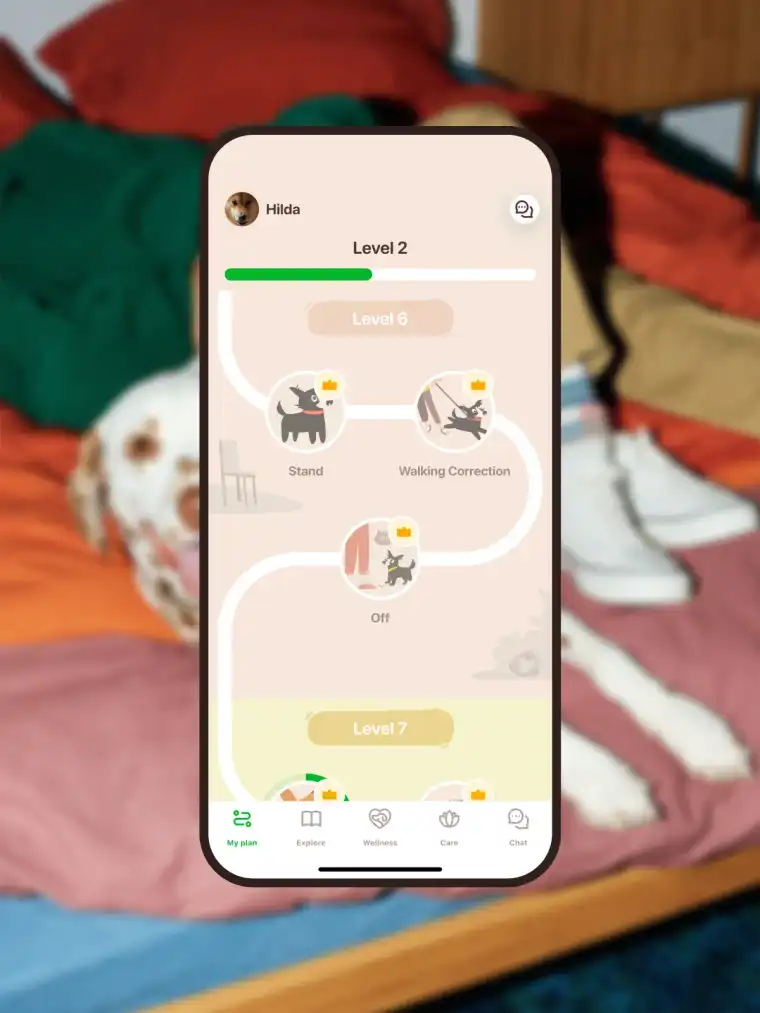
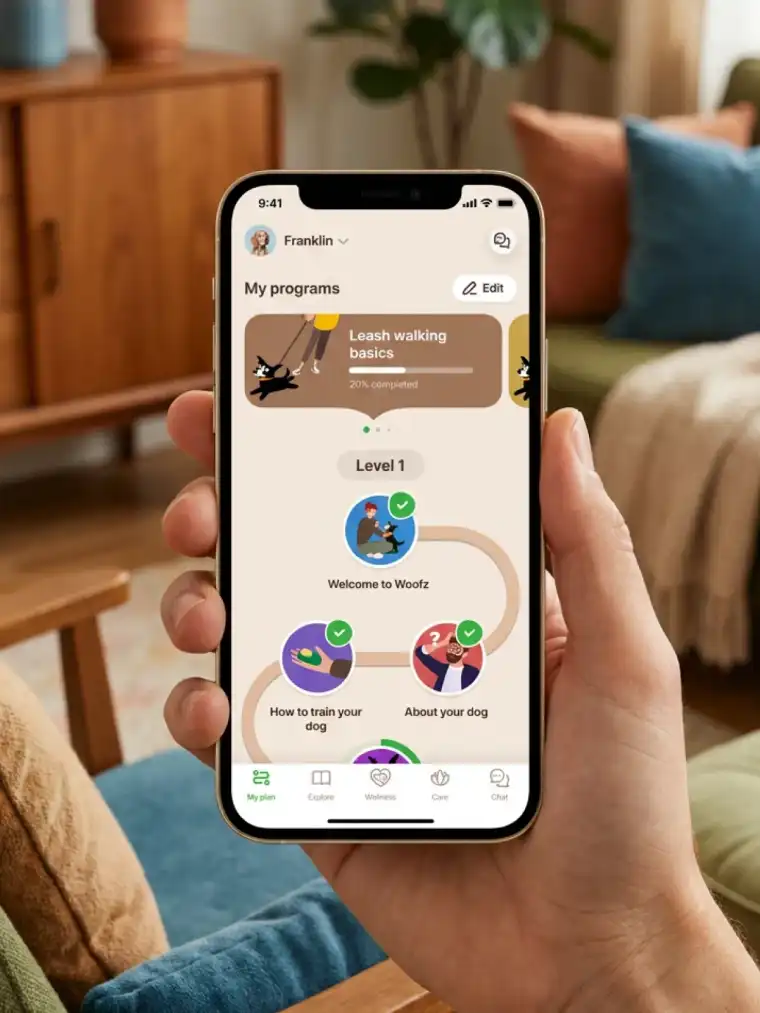
A static library does not know your dog. You decide what to teach next, on walks or at home. Many apps lock the good tracking too. Woofz, however, takes a different approach. Its smart personalization system adjusts the plan to your dog and what you want to focus on. As you go, it changes with you.
The Method Still Matters
A free dog training app worth keeping should share one thing: reward-based training. Veterinary behavior experts back positive reinforcement for all dog training, so skip any tool selling shock collars or "dominance."
When You Need a Trainer, Not an App
No app, free or paid, replaces a person who can watch your dog in the room. Some things need a qualified professional.
Aggression or a Bite History
Snapping or a bite history is not a job for a free lesson. Get professional guidance fast.
Resource Guarding
Resource guarding around food or toys can become serious. That's a job for a qualified professional, not an app.
Separation Anxiety
Real separation anxiety needs a structured, professional program. An app can support the fundamentals around it, not fix it.
For any of these, the safest move is to work with a qualified professional. A training app can help you build basic skills and stay motivated between sessions, but it isn't a replacement when safety is on the line.
How To Choose a Dog Training App
Free or paid, the same checklist holds for dog parents.

- Positive reinforcement, never punishment
- Guidance built around your dog's age and behavior
- Progress tracking so you see wins
- Clear, transparent trainer credentials
- Age-appropriate puppy training content and practical exercises
Miss these and price is beside the point. Our best dog training app breakdown lines up the popular dog training apps side by side.
Where Woofz Fits
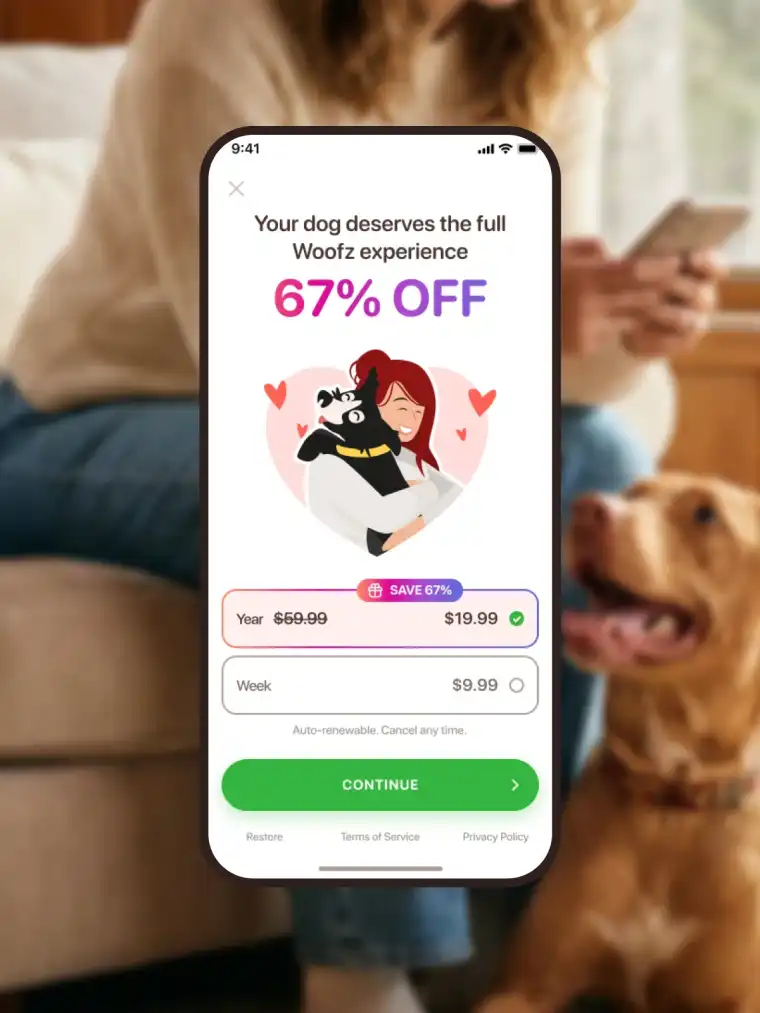
Woofz is not a fully free app, and it is not trying to be. You can start at no cost.
What Is Free in Woofz
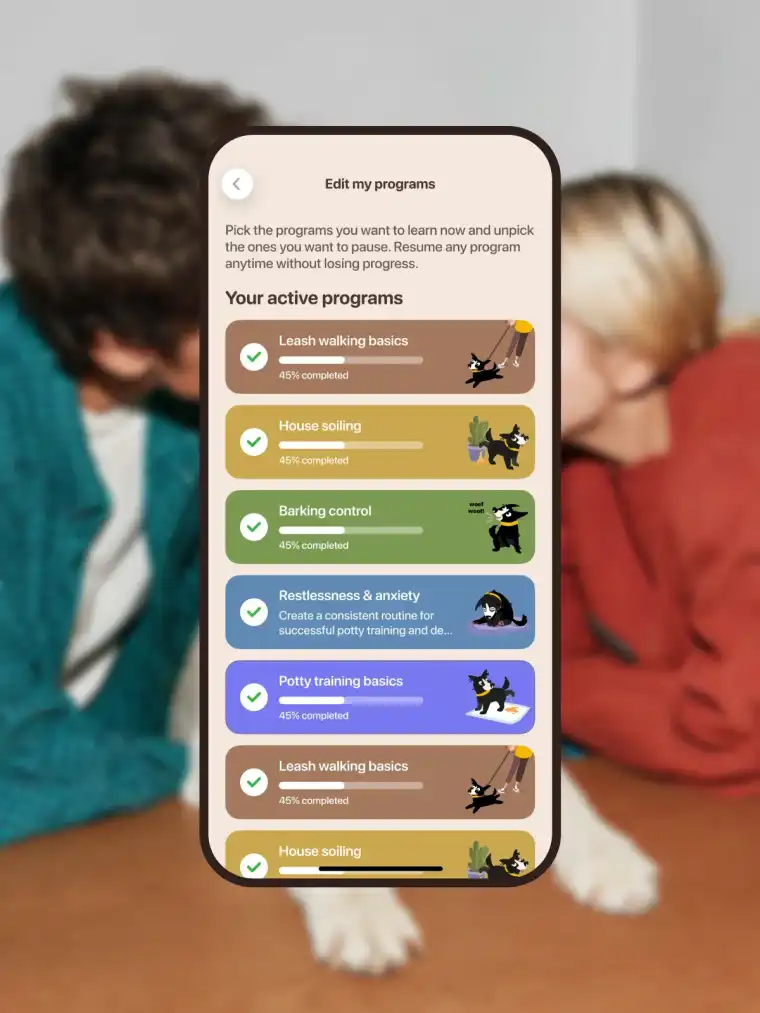
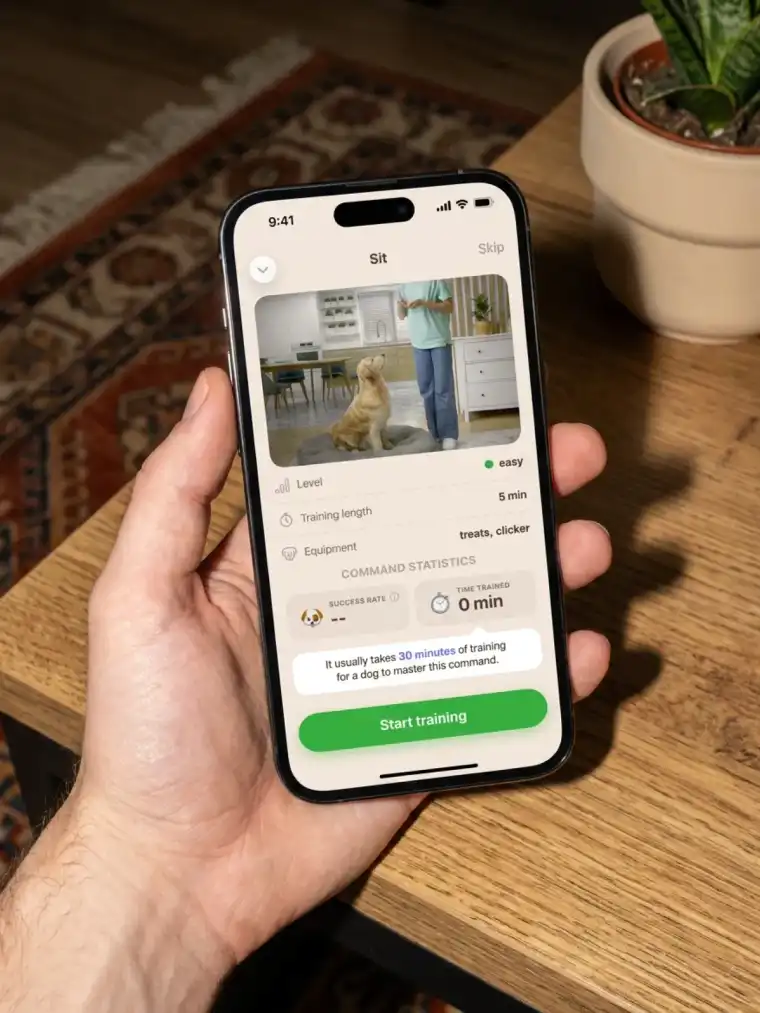
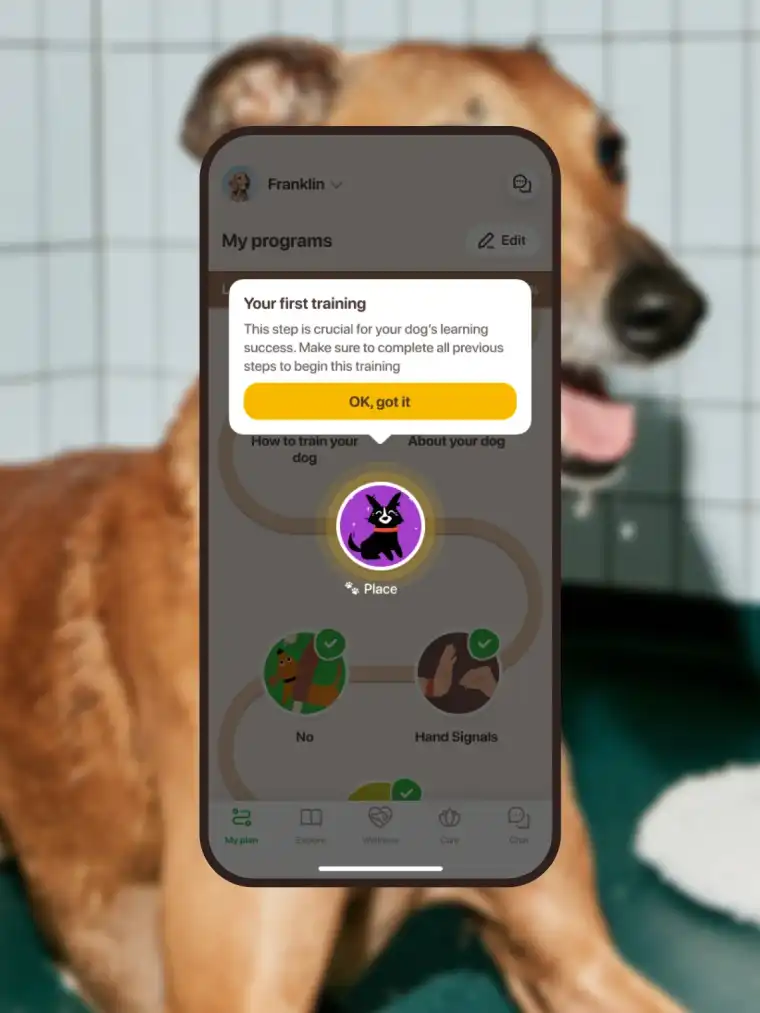
Download it, build your dog's profile, and you can get started with a personalized training plan, basic commands, quizzes, and some wellness and logging features at no cost.
What the Paid Side Adds
The paid tier adds more guidance as your training needs change, plus training and care tools in one app, from walks to health logging, and short flows that fit real life. Not magic. A clear next step, whether you chase basic training goals or work on an issue like your dog barking. Our cost of owning a dog guide is a helpful check for new dog parents.
FAQ
Is Pupford Really Free?
The Pupford app is freemium. The 30 Day Perfect Pup course from Pupford Academy costs nothing and needs no card, while extra lesson packs and features are paid. The free course gives you a strong start, while other Pupford content is paid.
Is Puppr a Free App?
Partly. Puppr keeps free trick lessons and training tips, but its full library and live trainer chat need Puppr Premium.
Is Zigzag Dog Training Free?
Freemium. You get free content and a 7-day trial, then a paid plan for unlimited lessons and 24/7 access to expert training coaches.
The Best App Is the One You Keep Opening
Free apps are worth a real try, especially for a new puppy and basic puppy training. Want guidance that grows with your dog through daily walks? Teach your dog something tonight, and download a free dog training app you will keep opening for life.

Sources
-
AVSAB, Humane Dog Training Position Statement (2021)
-
Pupford, 30 Day Perfect Pup (no course fee)
-
Puppr on Google Play (freemium, lesson count): https://play.google.com/store/apps/details?id=com.chinandcheeks.dogtrainer
-
Zigzag on the App Store (starter content, trial, subscription)
-
Leave It, Free Dog Training App & Tips
Pupford is the pick for owners who want to learn cheaply first. Its 30-Day Perfect Pup course, taught by dog trainer Zak George, is genuinely free with no credit card. Pupford Academy's paid tier adds video courses on tougher topics, taught by certified trainers, some of whom specialize in reactive and shy dogs, with a lifetime access option.
Why it fits reactivity. Owner education. Pupford Academy's certified dog trainers hold trainer credentials like CPDT-KA, and behavior-specific lesson packs help you understand what you are working with before you spend a cent. Strong foundations in impulse control, basic cues, and focus can support skills that may also be useful for a reactivity plan. Handy for basic obedience too.
Tradeoffs. Personalization is thin. You steer yourself, with no live trainer watching your specific reactive dog. Some daily lessons run long, and the trick training and advanced tricks content is a nice extra rather than reactivity help.
Who it is for. Self-directed dog parents who like a video library and want to start for free, ideally alongside a plan from a professional.
Woofz: Best for Building the Daily Practice a Reactivity Plan Needs
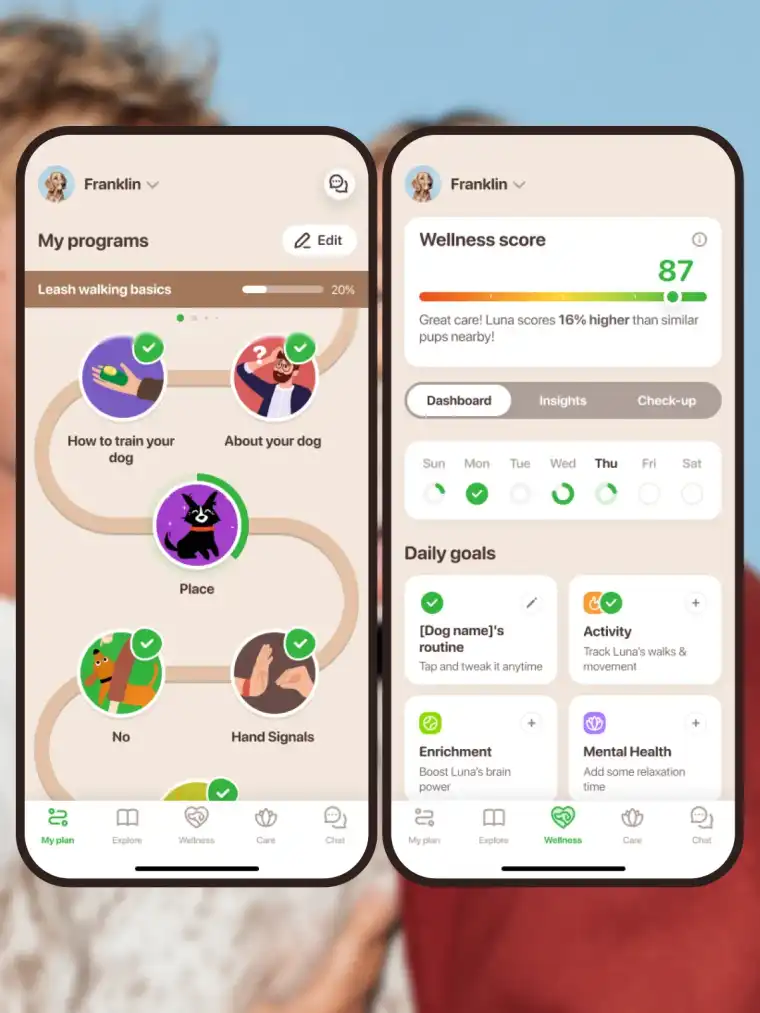
Woofz is the app we build, so here is the fair version. Woofz is a personalized dog training and care app for everyday owners, especially first-time ones. You sign up, answer a short assessment, and it builds a plan around your dog's age, needs, and training goals, all on positive reinforcement techniques, with content built alongside the app's certified trainers.
Here is the honest limit. Woofz does not fix reactivity, and it is not a substitute for a trainer or a behaviorist. What it does well is the part most reactive-dog plans die on: the daily practice.
Reactivity work lives or dies on consistency, and consistency is a daily habit building problem. Woofz nudges you toward a few focused minutes a day instead of a perfect thirty-minute session you skip when you are tired. It builds the foundation skills a DS/CC plan sits on, focus, name response, loose-leash basics, a reliable "look at me," across training levels that adapt as your pup improves. Plus wellness routines that help you keep an eye on patterns around your dog's stress and sleep.
Think of it this way. A professional builds the reactivity protocol. Woofz helps you actually run it, every day, between training sessions. That consistency is hard, which is why reactive-dog training can feel difficult to stick with.
Tradeoffs. The offer varies by region and platform, and between the App Store and Google Play. Many users see a 3-day trial then a weekly subscription, while some see a 7-day trial or a "7 days for $1" offer, so check the terms at checkout. The free version covers the first level and basic content, with a premium subscription unlocking the rest. And for a genuinely reactive dog, Woofz is a support layer, not the whole answer.
Who it is for. Owners and pet parents who want a structured daily plan and foundation skills to support the reactivity work a professional maps out.
How to Choose the Right Training App for Your Reactive Dog
Match the app to your situation, not to whoever ranked first. For a fuller comparison across every type of dog and popular dog training apps we did not cover here, see our roundup of the best dog training apps. For reactivity specifically, three questions sort it out.
Match the App to Severity
For mild, situational reactivity, like a pup who grumbles at skateboards, some owners may find a self-guided app useful for structure, practice, and trigger tracking. For more challenging cases, the lunging-and-barking kind, it can help to have a qualified professional in your corner, so look for apps that offer trainer feedback or live support like Dogo. Any bite history, real aggression, or a case getting worse skips apps as the primary tool and goes to a veterinary behaviorist first.
Match the App to Your Trigger
Dog-to-dog reactivity needs distance work and careful introductions, so trigger logging and threshold tracking matter most. Noise reactivity, like a pup who falls apart during fireworks, leans on desensitization guides and audio work. Leash reactivity overlaps heavily with loose-leash walking, so pick an app strong on both.
Match the App to Your Dog's Life Stage
A reactive puppy needs prevention and socialization, which points to Zigzag or Woofz. If your dog is already an adult or senior, look for an app that goes beyond puppy training and covers different life stages. PawChamp is one option. New dog owners and seasoned dog owners alike should let a newly adopted pup decompress before any training starts. Dog owners who rush this step often see more reactivity, so giving them time to settle may make the transition easier.
How to Use a Training App Without Making Reactivity Worse
Training apps can help you or help you rehearse the problem faster. How you use it decides which.
Start with management. Arrange walks so your pup rarely meets triggers head-on. Quiet routes, quiet hours, generous distance.
Work under threshold, always. If your pup is barking, lunging, or too wound up to take a treat, you are too close. Back up. The goal is a dog who notices the trigger and stays calm.
Watch for trigger stacking. Several triggers close together, without time to settle, pile up and lower tolerance. Log it and go home.
Log every training session fast, and read the trend weekly. Pair the app's daily lessons with calming groundwork between walks, especially if separation anxiety rides along with the reactivity. And use the in-app chat or video feedback the moment you feel stuck, which is the point of paying for chat support at all.
An app supports the plan. It is not the plan.
Frequently Asked Questions About Training Apps for Reactive Dogs
What is the best training for reactive dogs? Management first, then desensitization and counterconditioning below threshold, using positive reinforcement. You keep your pup far enough from the trigger to stay calm, pair the trigger with something good, and close the distance slowly over many sessions.
For moderate to severe cases or any bite history, the plan should come from a certified trainer or a veterinary behaviorist watching your dog, not from an app alone. Reward-based methods are the standard because aversive tools can deepen the fear and aggression driving the reactivity.
What is the highest rated dog training app? There isn't one dog training app that's highest-rated everywhere. Ratings can vary by platform, country, and when you check them. And a high star rating doesn't always mean an app is a good fit for a reactive dog. Look at the training method, trainer access, features, and recent reviews, too.
What is the 3-3-3 rule for dog training? The 3-3-3 rule is a guideline for rescue dogs settling into a new home: about 3 days to decompress, 3 weeks to learn your routine, and 3 months to feel at home. It matters for reactivity because a newly adopted pup needs to decompress before real training starts. It is a rule of thumb the rescue world uses to set expectations, not a schedule. Some dogs need longer.
What is the 7-7-7 rule for dogs? The Rule of 7s is more of an informal puppy socialization checklist than a scientific rule or set schedule. There are a few versions of it, but the basic idea is to let puppies experience different people, places, surfaces, and situations in a positive, age-appropriate way. It ties into reactivity because puppies who miss this early socialization are more likely to develop fear-based and reactive behavior later. Aim for variety and calm, positive exposure, not a rigid count.
Can an app fix a reactive dog? No, and a trustworthy one will tell you so. Dog training apps give you structure, a video library, reminders, and often chat support. They cannot watch your pup and correct your timing in the moment. For some mild cases, an app can offer a useful structure for daily practice. For a dog who scares you, it is a support tool alongside a professional.
Do I need a trainer or a behaviorist for my reactive dog? It depends on severity. Mild leash reactivity is often within reach of a certified, reward-based trainer. For fear-driven reactivity or resource guarding, look for a professional who has hands-on experience with behavior. Any real aggression, a bite that broke skin, or a case that may need medication belongs with a veterinary behaviorist, who can also rule out pain. Read our guide on how to calm a reactive dog for the groundwork you can start today.
A reactive dog is not a broken dog. Pick the app that keeps you consistent, respect the threshold, and bring in a human the moment your gut says to. The rest is quiet, patient reps.
Sources
-
American Veterinary Society of Animal Behavior, Position Statement on Humane Dog Training
-
American Veterinary Society of Animal Behavior, What Are Reward-Based Training Methods for Dogs (and Cats)?
-
Purina, How to Desensitize a Dog to Other Dogs: Stop Reactivity
-
Stellato et al., Effect of a Standardized Four-Week Desensitization and Counter-Conditioning Training Program on Pre-Existing Veterinary Fear in Companion Dogs, 2019
-
American College of Veterinary Behaviorists, ACVB
-
American Animal Hospital Association, How dog training apps can lead to better behavioral and medical outcomes, 2025
-
Certification Council for Professional Dog Trainers, CPDT-KA certification
-
Animals (University of Lincoln), Educational Apps and Dog Behavioural Problem Prevention: Associations Between the Zigzag Dog-Training App and Behavioural Problems, 2025
-
Pupford, 30-Day Perfect Pup with Zak George
-
WeRescue, The 3-3-3 Rule for Rescue Dogs: Adjustment Guide, 2025