


Best Dog Training Apps for Reactive Dogs: How to Choose One That Actually Helps

By
Woofz Team Updated on |Reviewed by
Woofz TeamDisclaimer: This article is for general information and isn't a substitute for professional dog-training or veterinary advice. If your pup has bitten, shows real aggression, or is getting worse, work with a qualified professional, not an app. Pricing and product features are based on publicly available information and may vary by plan, platform, region, and over time. Third-party trademarks and products are mentioned for comparison only and do not imply affiliation or endorsement.
Your pup spots another dog across the street and comes apart. Barking, lunging, spinning at the end of the leash. You are crossing the road, again, and the walk feels like a job. That is life with a reactive dog, and why you are here comparing dog training apps.
Here is the honest version up front. No app fixes reactivity. The best dog training app for reactive dogs is the one that keeps your daily practice consistent, tracks what sets your pup off, and connects you to a real person when the case needs one. Woofz makes one of the dog training apps below, so read it skeptically and check it against the rest.

What Makes a Reactive Dog Different From Generic Training
A reactive dog overreacts to specific triggers: other dogs, strangers, bikes, cars, or sudden noise. The behavior looks dramatic. Barking, growling, lunging, freezing. Underneath it is usually an emotion, not defiance.
Most general dog training apps focus on potty training, crate training, toilet training, and basic obedience for a new puppy. Useful for house soiling, teaching basic cues, some trick training, or shaping a desired behavior. Much less useful when your pup's problem is emotional, which is exactly the gap reactive dogs fall into.
Reactivity Is an Emotional Response, Not Disobedience
Reactivity usually comes from fear, anxiety, or frustration rather than aggression, and that distinction changes everything about the training process. Your pup is not ignoring commands to spite you. In the moment, the emotional brain has taken over, making it much harder for a dog to focus and learn.
This is why obedience-first dog training apps fall short here. A rock-solid sit in your kitchen does nothing when your pup is already three seconds into a meltdown on the sidewalk. Reactivity is a feelings problem first and a behavior problem second.
Threshold Is the Whole Game
Trainers talk about threshold: the distance or intensity at which your pup notices a trigger but stays calm enough to think. Under threshold, they can learn. Over threshold, you risk rehearsing the reactive response.
The core training approach for reactive dogs is desensitization and counterconditioning, often shortened to DS/CC. You keep your pup far enough from the trigger to stay relaxed, pair the trigger with something pleasant like high-value food, and slowly close the distance over many training sessions. Distance and timing matter just as much as the treats in your pocket. Repeated exposure that keeps pushing a dog over threshold may reinforce the reactive response or add to their stress.
Management comes first, before any training. Avoid a busy dog park at 5 p.m. Walk at quiet hours. Skip a walk if the neighborhood is chaotic. You are protecting the progress you are building. Set realistic expectations too because reactivity improves in weeks and months, not days.
When Reactivity Needs a Professional, Not an App
An app is the wrong first move for some dogs. If your pup has bitten or nearly bitten, shows real aggression, guards resources hard, or is spiraling despite your best effort, you need eyes on your dog.
That means a board-certified veterinary behaviorist (DACVB) or a qualified, reward-based behavior professional. Credential matching helps: mild leash reactivity can often be handled by a certified trainer, while severe aggression, a bite history, or compulsive behaviors call for a behaviorist who can also weigh medication. A vet visit rules out pain, which hides behind a surprising amount of "bad behavior."
A good app knows this line and points you across it. Be suspicious of any program that guarantees results or promises to fix aggression on a schedule. Behavior does not run on a timer.

Key Features the Best Dog Training App for a Reactive Dog Should Have
Most dog training apps miss the specialized needs of a reactive dog. When you compare dog training apps for reactivity, weigh these key features over polish.
Reward-Based Method and Training Methodology
The American Veterinary Society of Animal Behavior recommends reward-based methods for all dog training, including behavior problems because aversive tools carry real risk. For a reactive dog, those risks are acute: punishment and aversive methods can increase fear, anxiety, and aggression, the opposite of what a scared, over-aroused pup needs. The apps in this roundup present their training approaches as reward-based or focused on positive reinforcement.
Reward-based training focuses on reinforcing the behaviors you want rather than punishing the ones you don't.
Trainer Credentials and Real Trainer Access
Reactivity is nuanced, and a template cannot read your specific dog. The dog training apps that earn their price for reactive cases give you access to certified dog trainers through in-app chat, video feedback, or live sessions.
When an app names its certified trainers and lists real trainer credentials, that is a green flag. When it hides behind "built by experts," ask who. CPDT-KA credential is a professional certification with eligibility requirements and a proctored knowledge exam.
Trigger Logging and Progress Tracking
You cannot fix a pattern you cannot see. The best dog training apps let you log fast: the trigger, the distance, the intensity, the context. Over weeks, progress tracking turns a blur of good and bad walks into training progress you can read. That is how you see your dog's progress: calm at fifteen feet from a bike when last month it was thirty.
Desensitization Guides and Body-Language Teaching
Look for personalized programs and training plans built for reactivity, not repackaged obedience or a pile of random quick tips. Step-by-step desensitization guides. Short, easy to follow lessons and detailed videos because long clips cause cognitive overload. And content that teaches you to read your dog's body language, so you catch the stiff stare and closed mouth before the explosion.
Honest Limits
The best sign of a trustworthy app is that it tells you when to stop using it. A quality mobile app steers bite history and severe aggression toward professional oversight instead of promising to handle it.
How We Compared These Dog Training Apps
We did not rank marketing pages. We looked at each of these dog training apps through one lens: how well it supports a reactive dog and the owner doing the work. Training approach and whether it is reward based training. Trainer credentials and how you reach a human. Personalization and progress tracking for triggers. Price and trial terms come last, because a cheap app that rehearses panic is expensive. We kept the list to five options, plus our own app.
Best Dog Training Apps for Reactive Dogs Compared
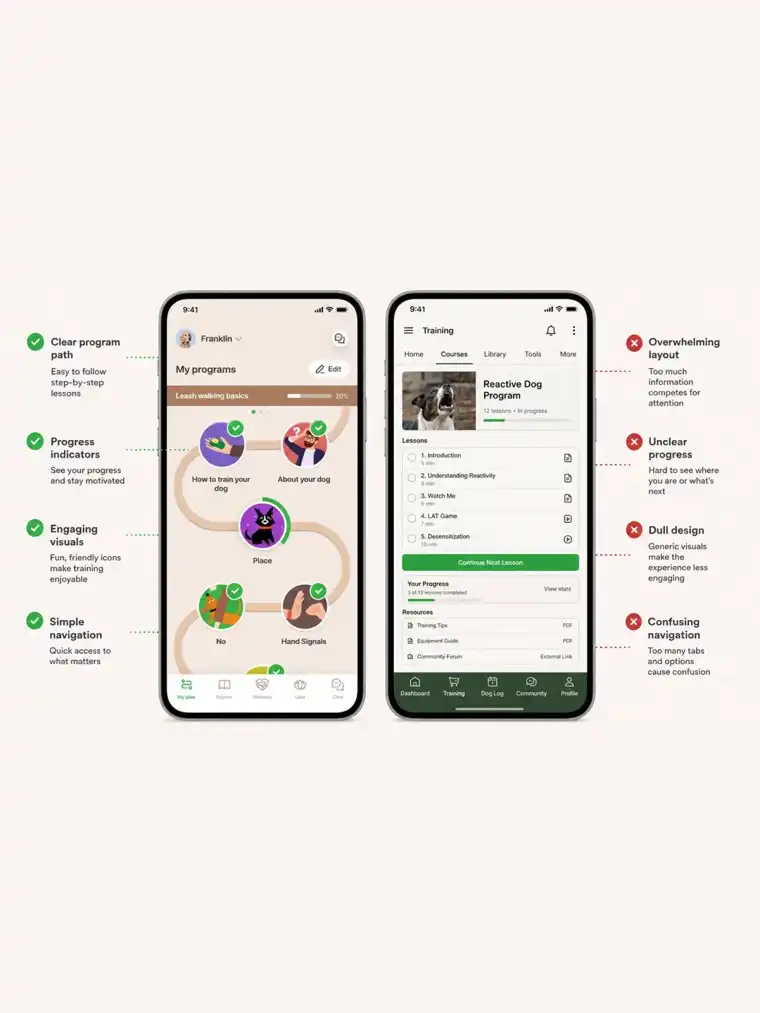
Prices and trial terms vary by platform, region, promotion, and subscription length. Check the current checkout page before you subscribe. Support and trainer access vary by plan and region.
App | Best for reactivity | Method | Expert access | Free option | Price (approx., varies) |
|---|---|---|---|---|---|
Mellow | Trigger and threshold tracking | Desensitization, counterconditioning, BAT/LAT-style work | No live expert access listed | Free tier + 7-day annual trial | ~$9.99/mo or ~$59.99/yr |
PawChamp | Behavior tracks, all life stages | Positive reinforcement | 24/7 in app chat, AI support | Some free content | ~$9.99/wk or ~$99/yr |
Dogo | Video feedback and threshold notes | Positive reinforcement | Trainer video review | 7-day free access | ~$9.99/mo or ~$99/yr |
Zigzag | Reactive puppies and prevention | Positive reinforcement | 24/7 trainer chat (Premium) | Free tier, 3 daily lessons | £9.99/mo or £39.99/yr |
Pupford | Owner education and a free start | Positive reinforcement | Community and articles | 30-Day Perfect Pup, free | ~$9.99/mo or ~$99.99 lifetime |
Woofz | Daily practice and foundation skills | Positive reinforcement | Chat support, optional 1:1 video sessions | Limited free version | ~$9.99/wk or ~$19.99/mo |
These dog training apps each have quirks a spec table hides. Here is what each is like for a reactive dog.
Mellow: Best for Tracking Reactivity and Thresholds
Mellow is built for reactive, anxious, and fearful dogs, not basic obedience. You log what happened, what set your pup off, and how intense the reaction was, then use that information to track patterns over time. The app also includes guided protocols, including threshold-distance work and BAT/LAT-style exercises.
Why it fits reactivity. This is Mellow's whole lane. Instead of burying reactivity inside a giant library of sit, stay, and tricks, it focuses on the stuff reactive-dog owners actually watch on a walk: triggers, distance, intensity, and whether your pup is coping better over time. The threshold tracking gives you a clearer picture of progress than trying to remember whether last Tuesday's walk felt better than this one.
Tradeoffs. Mellow is very new, so there is not much of a public track record yet, and it currently does not have enough App Store ratings for an overall rating. It is also iPhone-only, and there is no live trainer or behaviorist support listed inside the app. Mellow's approach includes desensitization, counterconditioning, and BAT/LAT-style work, but the company does not publicly make a blanket claim that the entire app follows a specific reward-based methodology.
Who it is for. Owners who already understand that reactivity takes time and want a structured way to log triggers, run behavior-focused exercises, and see patterns between training sessions.
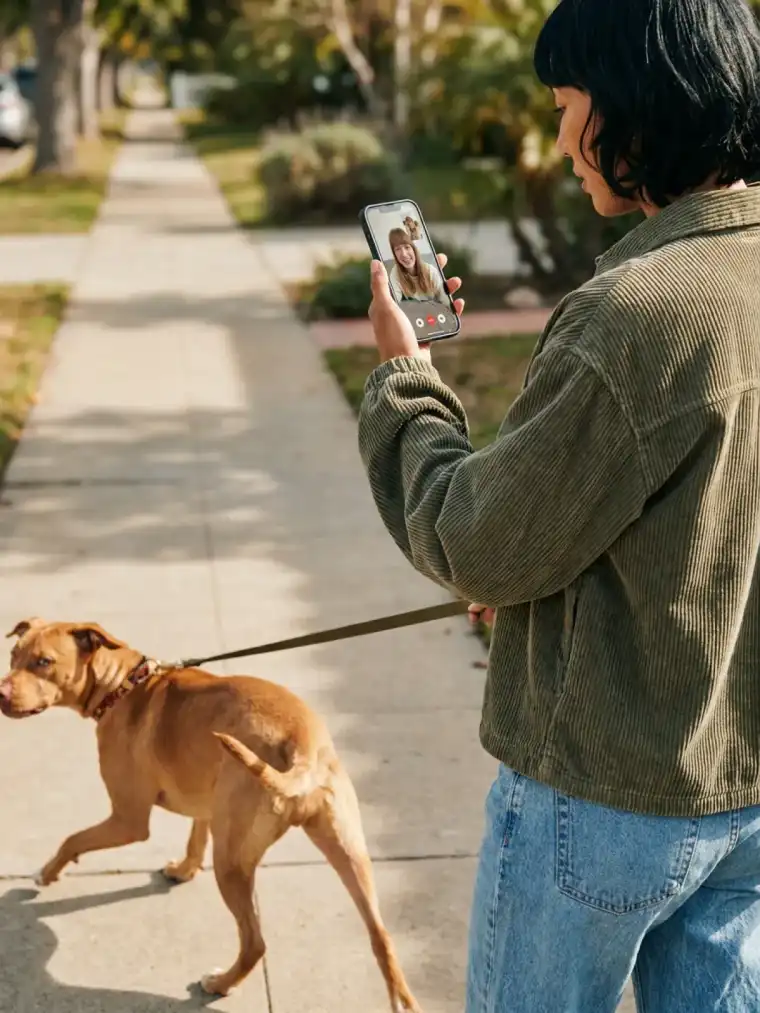
PawChamp: Best for Behavior Tracks Across Every Life Stage
PawChamp launched its mobile app in early 2024 for the full arc of dog ownership, puppies through seniors and rescues. It pairs personalized programs with round-the-clock expert chat and AI support, and it runs dedicated tracks for reactivity, separation anxiety, leash pulling, barking, and resource guarding.
Why it fits reactivity. Life-stage coverage and fast expert access. If you’re looking for support beyond the puppy years, PawChamp has programs for different life stages and behavior issues. PawChamp says its content is developed with certified trainers and behavior professionals.
Tradeoffs. PawChamp's public user numbers vary between its own pages, so judge it on your own trial rather than the marketing. Pricing can climb after the intro offer, so, as with many subscription apps, it is worth reading the trial and renewal terms before you sign up.
Who it is for. Owners who want behavior help that does not expire when the puppy phase ends, with a human reachable at odd hours.
Dogo: Best for Video Feedback and Threshold Tracking
Dogo is built around structured daily lessons with short demo videos, quizzes, and a built-in clicker. Its standout for reactivity is the expert review: you record your pup, submit it, and a certified trainer sends back specific, time-stamped feedback.
Why it fits reactivity. The video review is like homework checked without a live session. The app also includes progress features that can help owners keep track of training over time. Progress tracking and daily streaks keep you consistent, which is where reactive-dog training plans usually fall apart.
Tradeoffs. Some users may prefer a simpler interface, and the asynchronous format will not suit everyone.
Who it is for. Owners who want a trainer glancing at their work and clear data on their pup's triggers, without paying for live sessions.
Zigzag: Best for Reactive Puppies and Prevention
Zigzag is a puppy training app built for the first year, with a week-by-week program that adjusts to age and breed. A free tier gives puppy owners a few daily lessons plus AI chat, and Premium adds 24/7 access to qualified trainers and behaviorists. For puppy owners, the puppy training plan sequences puppy development week by week, so puppy training stays age-appropriate. Prevention is the point.
Why it fits reactivity. Puppyhood is a great time to build positive experiences and good habits that can help prevent reactivity later on. That is where Zigzag's structured puppy development plan comes in. It teaches fear periods, socialization, toilet training, crate training, and reading canine body language early, which can help build early socialization and good training habits.
In a 2025 University of Lincoln study published in Animals, higher use of the Zigzag app was associated with reduced severity across 19 of 21 common puppy behavior problems, including familiar-person aggression and noise fear. Two honest caveats: it was an owner-reported survey funded by Zigzag, and the authors say it shows an association, not proof the app caused the change.
Tradeoffs. The puppy focus is a wall as much as a strength. If your reactive dog is an adult or a rescue with set habits, this puppy training app has far less for you, and its puppy development content will not match your case.
Who it is for. Puppy owners who want to raise a resilient, less reactive adult through solid puppy development and early puppy training, and anyone doing prevention.
Pupford: Best for Owner Education and a Free Start
Pupford is the pick for owners who want to learn cheaply first. Its 30-Day Perfect Pup course, taught by dog trainer Zak George, is genuinely free with no credit card. Pupford Academy's paid tier adds video courses on tougher topics, taught by certified trainers, some of whom specialize in reactive and shy dogs, with a lifetime access option.
Why it fits reactivity. Owner education. Pupford Academy's certified dog trainers hold trainer credentials like CPDT-KA, and behavior-specific lesson packs help you understand what you are working with before you spend a cent. Strong foundations in impulse control, basic cues, and focus can support skills that may also be useful for a reactivity plan. Handy for basic obedience too.
Tradeoffs. Personalization is thin. You steer yourself, with no live trainer watching your specific reactive dog. Some daily lessons run long, and the trick training and advanced tricks content is a nice extra rather than reactivity help.
Who it is for. Self-directed dog parents who like a video library and want to start for free, ideally alongside a plan from a professional.
Woofz: Best for Building the Daily Practice a Reactivity Plan Needs
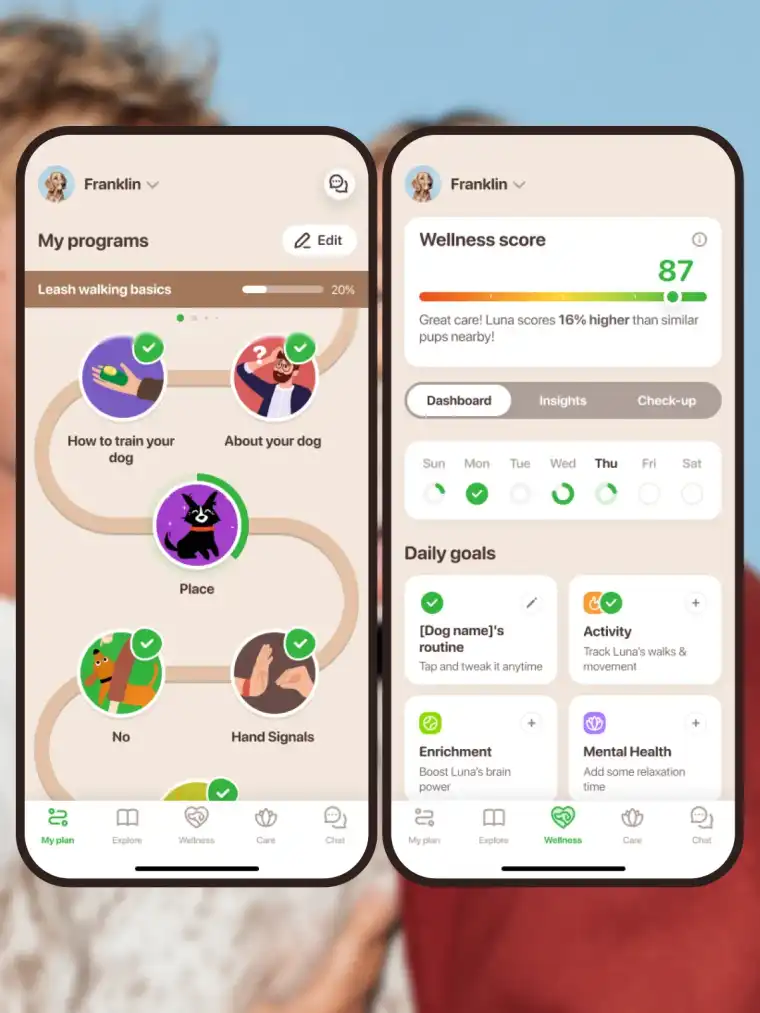
Woofz is the app we build, so here is the fair version. Woofz is a personalized dog training and care app for everyday owners, especially first-time ones. You sign up, answer a short assessment, and it builds a plan around your dog's age, needs, and training goals, all on positive reinforcement techniques, with content built alongside the app's certified trainers.
Here is the honest limit. Woofz does not fix reactivity, and it is not a substitute for a trainer or a behaviorist. What it does well is the part most reactive-dog plans die on: the daily practice.
Reactivity work lives or dies on consistency, and consistency is a daily habit building problem. Woofz nudges you toward a few focused minutes a day instead of a perfect thirty-minute session you skip when you are tired. It builds the foundation skills a DS/CC plan sits on, focus, name response, loose-leash basics, a reliable "look at me," across training levels that adapt as your pup improves. Plus wellness routines that help you keep an eye on patterns around your dog's stress and sleep.
Think of it this way. A professional builds the reactivity protocol. Woofz helps you actually run it, every day, between training sessions. That consistency is hard, which is why reactive-dog training can feel difficult to stick with.
Tradeoffs. The offer varies by region and platform, and between the App Store and Google Play. Many users see a 3-day trial then a weekly subscription, while some see a 7-day trial or a "7 days for $1" offer, so check the terms at checkout. The free version covers the first level and basic content, with a premium subscription unlocking the rest. And for a genuinely reactive dog, Woofz is a support layer, not the whole answer.
Who it is for. Owners and pet parents who want a structured daily plan and foundation skills to support the reactivity work a professional maps out.
How to Choose the Right Training App for Your Reactive Dog
Match the app to your situation, not to whoever ranked first. For a fuller comparison across every type of dog and popular dog training apps we did not cover here, see our roundup of the best dog training apps. For reactivity specifically, three questions sort it out.
Match the App to Severity
For mild, situational reactivity, like a pup who grumbles at skateboards, some owners may find a self-guided app useful for structure, practice, and trigger tracking. For more challenging cases, the lunging-and-barking kind, it can help to have a qualified professional in your corner, so look for apps that offer trainer feedback or live support like Dogo. Any bite history, real aggression, or a case getting worse skips apps as the primary tool and goes to a veterinary behaviorist first.
Match the App to Your Trigger
Dog-to-dog reactivity needs distance work and careful introductions, so trigger logging and threshold tracking matter most. Noise reactivity, like a pup who falls apart during fireworks, leans on desensitization guides and audio work. Leash reactivity overlaps heavily with loose-leash walking, so pick an app strong on both.
Match the App to Your Dog's Life Stage
A reactive puppy needs prevention and socialization, which points to Zigzag or Woofz. If your dog is already an adult or senior, look for an app that goes beyond puppy training and covers different life stages. PawChamp is one option. New dog owners and seasoned dog owners alike should let a newly adopted pup decompress before any training starts. Dog owners who rush this step often see more reactivity, so giving them time to settle may make the transition easier.
How to Use a Training App Without Making Reactivity Worse
Training apps can help you or help you rehearse the problem faster. How you use it decides which.
Start with management. Arrange walks so your pup rarely meets triggers head-on. Quiet routes, quiet hours, generous distance.
Work under threshold, always. If your pup is barking, lunging, or too wound up to take a treat, you are too close. Back up. The goal is a dog who notices the trigger and stays calm.
Watch for trigger stacking. Several triggers close together, without time to settle, pile up and lower tolerance. Log it and go home.
Log every training session fast, and read the trend weekly. Pair the app's daily lessons with calming groundwork between walks, especially if separation anxiety rides along with the reactivity. And use the in-app chat or video feedback the moment you feel stuck, which is the point of paying for chat support at all.
An app supports the plan. It is not the plan.
Frequently Asked Questions About Training Apps for Reactive Dogs
What is the best training for reactive dogs? Management first, then desensitization and counterconditioning below threshold, using positive reinforcement. You keep your pup far enough from the trigger to stay calm, pair the trigger with something good, and close the distance slowly over many sessions.
For moderate to severe cases or any bite history, the plan should come from a certified trainer or a veterinary behaviorist watching your dog, not from an app alone. Reward-based methods are the standard because aversive tools can deepen the fear and aggression driving the reactivity.
What is the highest rated dog training app? There isn't one dog training app that's highest-rated everywhere. Ratings can vary by platform, country, and when you check them. And a high star rating doesn't always mean an app is a good fit for a reactive dog. Look at the training method, trainer access, features, and recent reviews, too.
What is the 3-3-3 rule for dog training? The 3-3-3 rule is a guideline for rescue dogs settling into a new home: about 3 days to decompress, 3 weeks to learn your routine, and 3 months to feel at home. It matters for reactivity because a newly adopted pup needs to decompress before real training starts. It is a rule of thumb the rescue world uses to set expectations, not a schedule. Some dogs need longer.
What is the 7-7-7 rule for dogs? The Rule of 7s is more of an informal puppy socialization checklist than a scientific rule or set schedule. There are a few versions of it, but the basic idea is to let puppies experience different people, places, surfaces, and situations in a positive, age-appropriate way. It ties into reactivity because puppies who miss this early socialization are more likely to develop fear-based and reactive behavior later. Aim for variety and calm, positive exposure, not a rigid count.
Can an app fix a reactive dog? No, and a trustworthy one will tell you so. Dog training apps give you structure, a video library, reminders, and often chat support. They cannot watch your pup and correct your timing in the moment. For some mild cases, an app can offer a useful structure for daily practice. For a dog who scares you, it is a support tool alongside a professional.
Do I need a trainer or a behaviorist for my reactive dog? It depends on severity. Mild leash reactivity is often within reach of a certified, reward-based trainer. For fear-driven reactivity or resource guarding, look for a professional who has hands-on experience with behavior. Any real aggression, a bite that broke skin, or a case that may need medication belongs with a veterinary behaviorist, who can also rule out pain. Read our guide on how to calm a reactive dog for the groundwork you can start today.
A reactive dog is not a broken dog. Pick the app that keeps you consistent, respect the threshold, and bring in a human the moment your gut says to. The rest is quiet, patient reps.
Sources
-
American Veterinary Society of Animal Behavior, Position Statement on Humane Dog Training
-
American Veterinary Society of Animal Behavior, What Are Reward-Based Training Methods for Dogs (and Cats)?
-
Purina, How to Desensitize a Dog to Other Dogs: Stop Reactivity
-
Stellato et al., Effect of a Standardized Four-Week Desensitization and Counter-Conditioning Training Program on Pre-Existing Veterinary Fear in Companion Dogs, 2019
-
American College of Veterinary Behaviorists, ACVB
-
American Animal Hospital Association, How dog training apps can lead to better behavioral and medical outcomes, 2025
-
Certification Council for Professional Dog Trainers, CPDT-KA certification
-
Animals (University of Lincoln), Educational Apps and Dog Behavioural Problem Prevention: Associations Between the Zigzag Dog-Training App and Behavioural Problems, 2025
-
Pupford, 30-Day Perfect Pup with Zak George
-
WeRescue, The 3-3-3 Rule for Rescue Dogs: Adjustment Guide, 2025