


How to Train a Rottweiler: Complete Breed Guide

By
Woofz Team Updated on |Reviewed by
Woofz TeamA Rottweiler is not a dog you train by accident. The breed is strong, intelligent, and bred to work with people, so they do best when you give them a job, clear rules, and a reason to tune in. A Rottweiler is food-motivated, loyal to the family, and quick to start learning when training begins young. Their size and strength make poor habits harder to manage in adulthood, which is why early, consistent training matters.

Why Rottweilers Need a Different Training Mindset
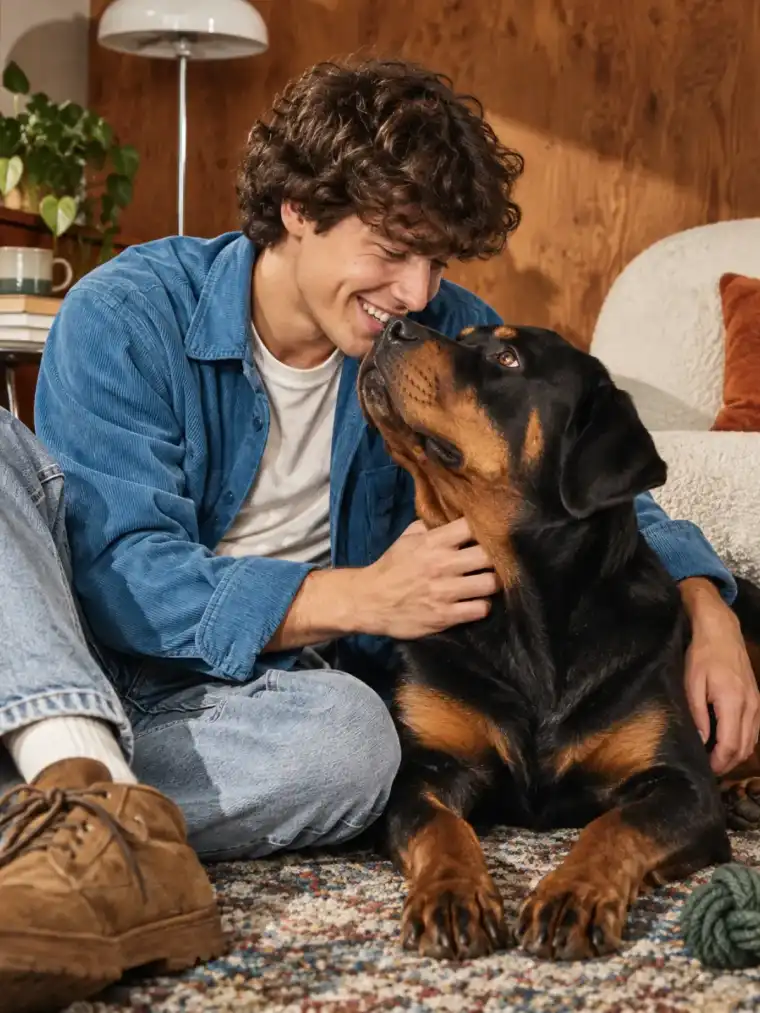
The Rottweiler is in the AKC Working Group. Its ancestors helped Roman legions drove cattle across Europe. Later, Rottweilers pulled carts and worked around butcher shops in the German town of Rottweil. Everything about the breed, from the muscle to the wariness, was shaped by that job.
A few traits set the breed apart:
-
Rottweilers are intelligent and active, so boredom can lead to unwanted behaviors like chewing or digging.
-
Their protective nature can tip into guarding behavior and aggression without careful early socialization.
-
Rottweilers are a large breed; a pull that feels cute from a Labrador is a liability at 100+ pounds.
-
They form intense bonds with their family and are often reserved around strangers.
Rottweiler training is less about teaching tricks and more about building a dog that looks to you first, especially around unfamiliar people, children, and other dogs.
Start Rottweiler Training Early: The 8-Week Sweet Spot
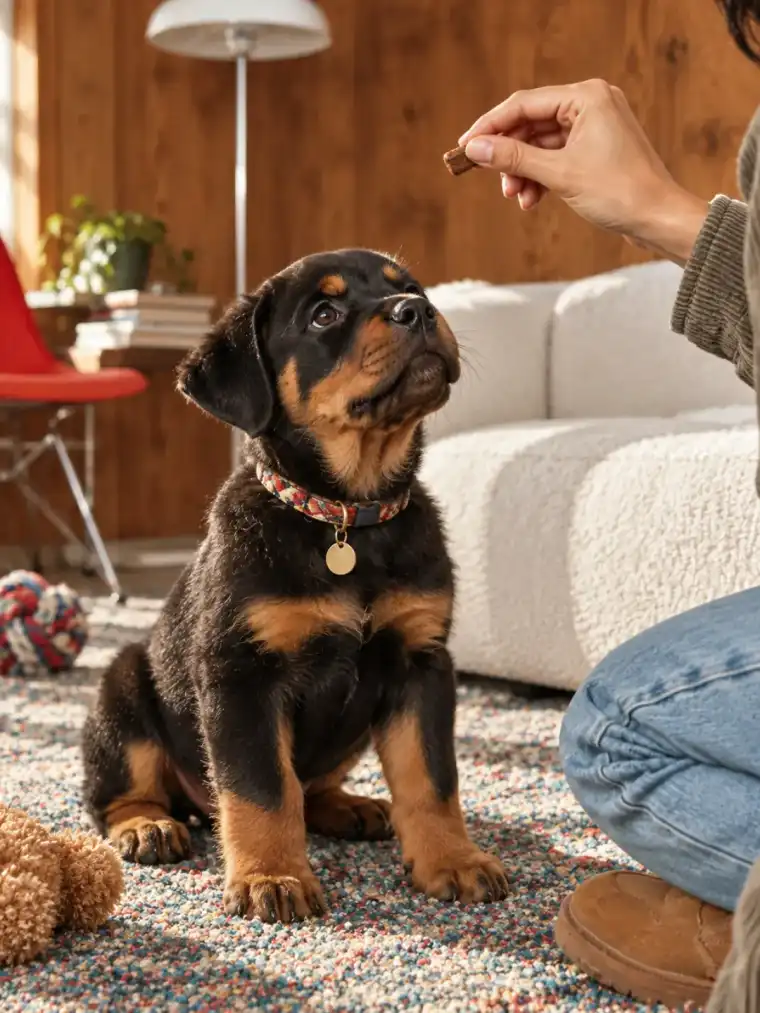
You can start training a Rottweiler puppy at a very young age. The AKC notes simple training can begin at 8 weeks, focused on wearing a collar, responding to praise, and short play-based lessons. By 12 to 16 weeks, obedience training with basic commands like sit, down, and come can enter your Rottweiler puppy's routine.
Keep training sessions short. AVSAB guidance says three minutes is plenty for a dog new to training, since puppies have a short attention span and tire fast. Two short training sessions a day beat one long one. End on a win, even if that win is one clean sit for a treat.
What to teach your Rottweiler puppy first
-
Name response and eye contact.
-
Sit as a default behavior at food, doorways, and greetings.
-
Hand targeting to redirect attention without pulling the leash.
-
Early handling of paws, ears, mouth, and collar grabs. Saves you at the vet and during grooming later.
Teaching these first builds the base other skills rest on.
Early Socialization: The Window You Cannot Miss

For a breed with strong protective instincts, early socialization is one of the most important things you can do. AVSAB recommends safe socialization before full vaccination, with appropriate hygiene and vaccination precautions.
Positive experiences during this window can help puppies develop confidence around new people, animals, places, and sounds. Gradual exposure to people, surfaces, sounds, and other dogs can help a Rottweiler puppy build useful social skills. Under-socialized Rottweilers often begin to see strangers as threats, and that is where protective instincts tip into aggression.
Practical ways to do early socialization right:
-
Puppy socialization class with a positive-reinforcement trainer, with sensible vaccination and hygiene precautions.
-
Short, calm meetings with stable, vaccinated adult dogs.
-
Exposure to various people: men, women, kids, people in hats, people with wheels.
-
Careful introductions to other pets at home.
-
New environments one at a time, always rewarding calm.
Socialization is ongoing practice for life, not a one-time project.
Positive Reinforcement, Not Force
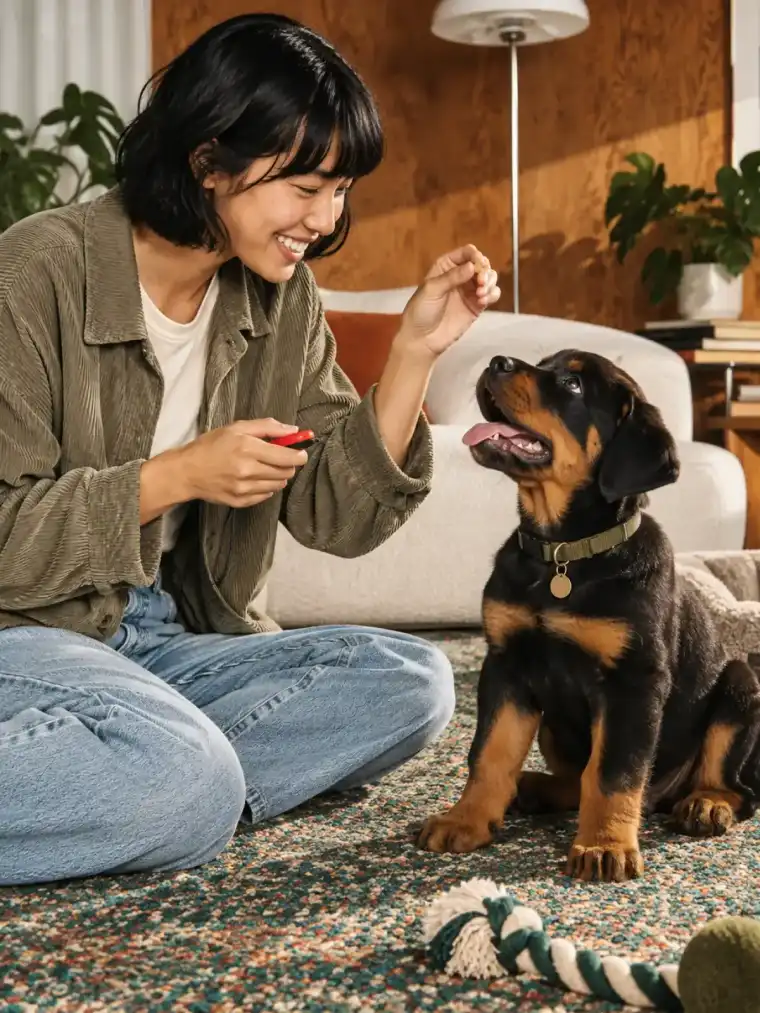
With a dog this strong, people often reach for corrections, shock collars, or dominance-style training methods. Research says the opposite works better. A 2020 study in Frontiers in Veterinary Science found dogs trained with positive reinforcement responded faster and with fewer repetitions than dogs trained with electronic collars.
A systematic review by Ziv (2017) in the Journal of Veterinary Behavior found real welfare risks with aversive methods and no proven efficacy advantage over reward-based teaching.
For a rottweiler, that is doubly true. Harsh corrections damage trust with a sensitive, loyal breed. Keep it calm, reward-based, and let your dog think it was their idea.
Day to day:
-
Mark the moment your dog gets it right with a word ("yes") or a clicker, then treat.
-
Use a high-value treat for new behaviors and tough environments.
-
Reward calm and good behavior as much as active responses.
-
Reward the good behavior you want more of. Ignore what you do not.
Core Commands and Leash Manners
A well-trained Rottweiler needs a short list of basic commands that work everywhere, plus the ability to walk on a loose leash. Everyday obedience is the backbone.
Sit, down, and stay
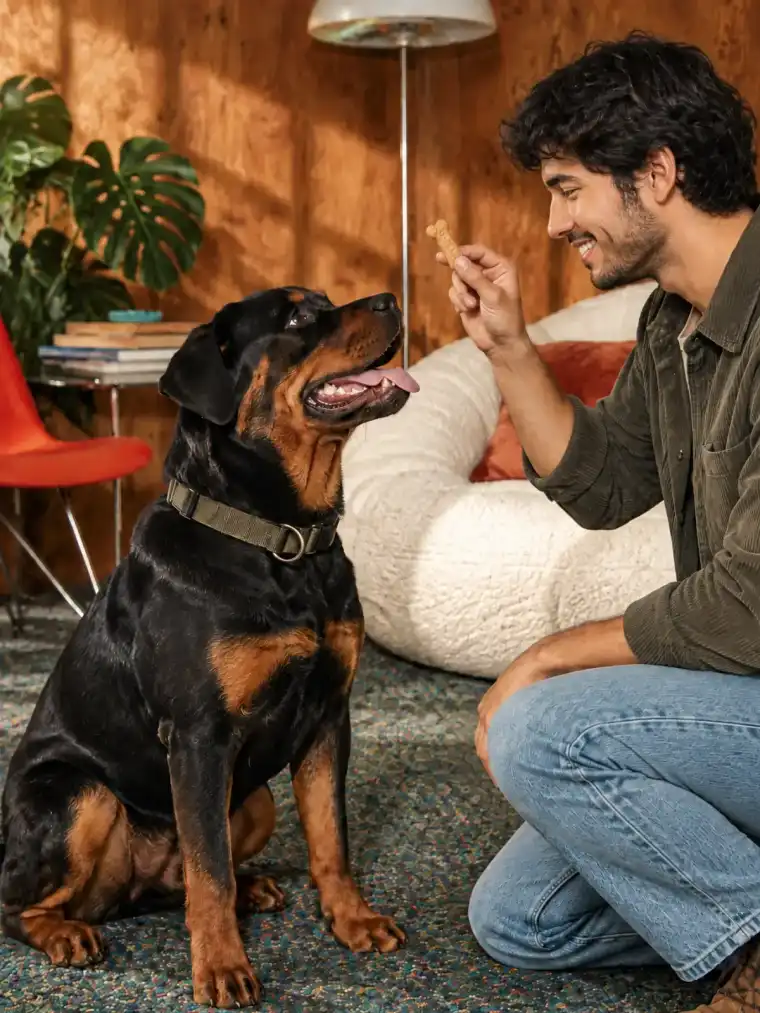
Teach sit with a food lure, then fade the lure quickly so your dog works for the mark, not the bribe. Down comes from sit by luring to the floor. Stay starts at one second and grows. Five clean reps beat twenty sloppy ones.
Eye contact, name, and recall
If your Rottweiler looks at you when you call their name, you've got a great starting point for handling distractions in public. Reward brief eye contact first, then add the name once focus is reliable. Build "come" the same way: treats, voice, games, and plenty of practice at home before you ask for recall outside. Teaching a reliable wait at doors protects the whole thing. Patience is key.
Loose-leash walking
Every walk is a chance for your Rottweiler to practice good leash manners. Reward your puppy for walking beside you, stop moving the moment the leash goes tight, and reset. Consistency is key.
For step-by-step help, see the Woofz guides to sit, stay, come, and watch me command. You can also check out the guide to 7 basic cues every dog needs.
Impulse Control and Protective Instincts
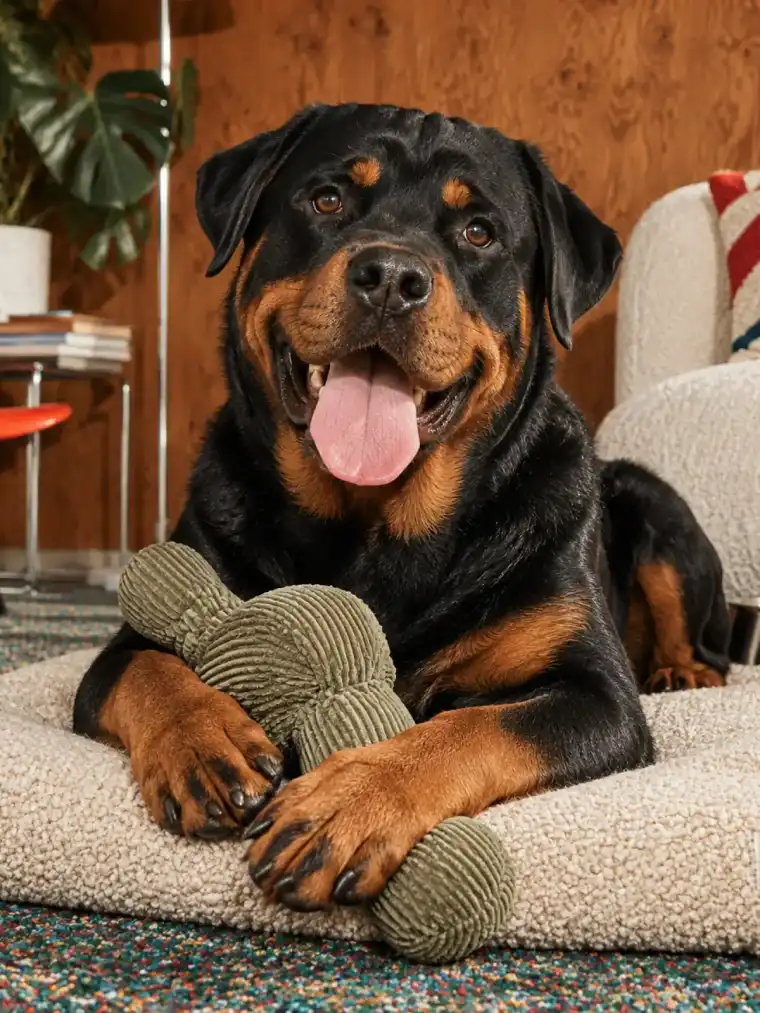
Impulse control helps Rottweilers learn to pause, settle down, and think before they get carried away. Wait at doors, hold a sit until released, settle on a mat, leave food on the floor. Small daily reps stack into a composed, well-mannered adult. Nothing fancy. Just boring repetition that builds reliable habits.
Pair this with activities that channel your Rottweiler's energy and natural instincts. Try scent games, puzzle toys, obedience work, or other structured activities. A well-exercised Rottweiler is easier to settle. A bored dog will find their own entertainment.
If your Rottweiler shows serious aggression or resource guarding, bring in a qualified behavior professional early. A dog this size is not a DIY project when real behavior issues appear.
Potty Training and Crate Basics
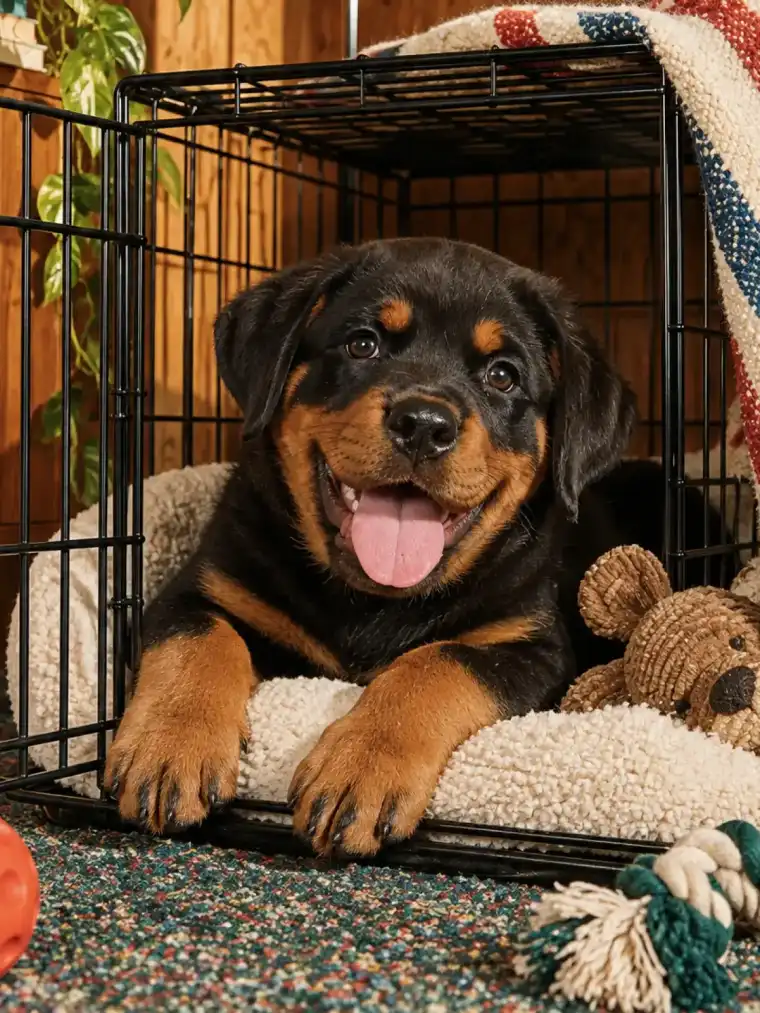
Sticking to a regular potty schedule can make house training easier for many Rottweiler puppies.Take your puppy out after waking, after eating, after play, and every two to three hours in between. Reward the second they finish, right there outside.
A crate gives your Rottweiler puppy a safe resting space and makes house training easier. Begin with short, positive sessions and build duration. The Woofz guides to potty training a puppy and crate training walk through both.
Exercise and Mental Stimulation
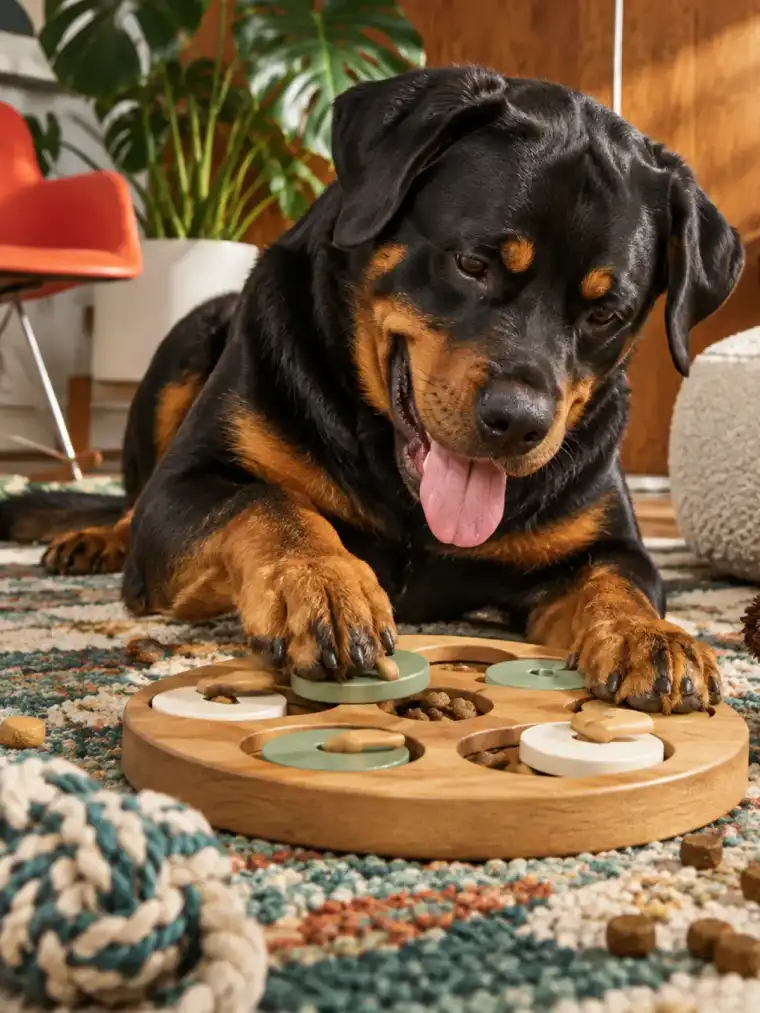
Rottweilers are active dogs with real energy. Adult Rottweilers need daily exercise, but how much depends on their age, health, fitness, and energy level. Avoid high-impact exercise during the fastest growth months, since large breeds are prone to joint issues.
Mental work matters as much as physical. Puzzle feeders, nose games, and new environments tire a Rottweiler out in ways a flat walk never will. See the Woofz guide to mental stimulation for your dog.
Handling Common Problem Behaviors
Even with solid training, some behaviors can still pop up as your Rottweiler grows. Here’s how to handle the most common ones.
Jumping, mouthing, and nipping
Rottweiler puppies have big teeth and no sense of their strength. Redirect mouthing to a toy, step on the lead to prevent jumping, and reward four paws on the floor. The Woofz guides to stopping puppy biting and jumping up cover both.
Barking and reactivity
A Rottweiler that barks at every passerby is practising a habit you do not want. Interrupt, redirect, reward quiet. If your dog is reactive to other dogs or people, work with a trainer and begin distance-based desensitisation early. See the Woofz guides to reactive dogs and stopping dog barking.
Health, Growth, and Long-Term Care
Rottweilers are a large breed, and health shapes how you train and exercise. A peer-reviewed study using OFA data from 1974 to 2015 reported hip dysplasia in about 20% of Rottweilers and elbow dysplasia in roughly 37%. Good breeders screen for hip, elbow, and heart conditions, plus eye disease and share the results with potential buyers. Meeting the parents can also give you a good idea of their health and temperament.
A Rottweiler sheds moderately year round under a short double coat, so a weekly brush keeps the coat healthy and manages loose hair. Pair light grooming with regular vet check-ups and a high quality diet for large breeds.
Where Woofz Fits Into Your Rottweiler Training

Woofz is a dog-training and pet-care app for everyday dog parents. For a Rottweiler owner, that means:
-
A personalized plan built around your dog's age, temperament, and your onboarding answers.
-
Step-by-step lessons for everyday obedience, loose-leash walking, impulse control, and focus work.
-
Troubleshooting programs for common issues like biting, barking, jumping, and leash pulling.
-
Routine and enrichment tools that help structure your dog's day and build good habits.
Not sure where to begin with your Rottweiler puppy? Take the quick quiz and get a plan tailored to your pet.
Frequently Asked Questions
Is a Rottweiler easy to train?
Yes, with the right approach. Rottweilers are intelligent and generally responsive to training, especially when lessons are clear, consistent, and reward-based. Their size and strength make good manners especially important, so start training early and practice consistently. Many first-time owners also benefit from obedience classes to get the basics clean.
What is the 3-3-3 rule for dog training?
The 3-3-3 rule is a popular adjustment guideline, not a fixed timeline for every adopted dog. It suggests three days to decompress, three weeks to settle, and three months for deeper adjustment. For a Rottweiler you have just brought home, use it as a mindset: go slow in the first week, and let your dog's real personality show up over the first few months.
What are the dos and don'ts with Rottweilers?
Do: begin early socialization, use positive reinforcement with a treat marker, build impulse control, give daily exercise and mental stimulation, and set clear boundaries from the start.
Don't: rely on harsh corrections, delay safe socialization until vaccinations are complete, let jumping or mouthing slide, or assume training makes every situation safe. Supervision around children and strangers is non-negotiable, especially while your Rottweiler is still learning social behavior.
Do Rottweilers get attached to their owners?
Deeply. Rottweilers often form strong bonds with their families and may become very attached to their people. Like any dog, some Rottweilers struggle with being left alone for long periods. Build short, positive periods of alone time into your puppy's routine from the start.
Train the Rottweiler in front of you, not the dog you imagined. Small, boring reps every day, done calmly. That is how a Rottweiler puppy becomes the steady, loyal companion the breed is built to be.
Sources
-
American Kennel Club, Rottweiler History: Origins, Breed Standard & More:
-
American Kennel Club, 5 Things You Should Know Before Starting to Train Your Puppy
-
American Veterinary Society of Animal Behavior, Position Statement on Puppy Socialization (2024)
-
American Veterinary Society of Animal Behavior, Training Session Length guidance
-
China L, Mills DS, Cooper JJ (2020). Efficacy of Dog Training With and Without Remote Electronic Collars vs. a Focus on Positive Reinforcement, Frontiers in Veterinary Science
-
Ziv G (2017). The Effects of Using Aversive Training Methods in Dogs-A Review, Journal of Veterinary Behavior (via Purdue Canine Welfare Science Center)
-
Kirberger RM, Stander N (2017). Phenotypic hip and elbow dysplasia trends in Rottweilers and Labrador retrievers in South Africa, Journal of the South African Veterinary Association