


French Bulldog Training: Everything You Need to Know

Por
Anastasiia Malaman Actualizada en |Revisado por Shannon Kenny
So you've fallen for those bat ears and that adorable smushed face? Can't blame you. French Bulldogs are one of the most popular breeds around, and for good reason. They're funny, affectionate, and make great companions whether you live in a tiny apartment or a big house. But here's the thing nobody mentions in those cute Instagram videos: training a French Bulldog takes some work.
Don't get me wrong. Frenchies aren't impossible to train. They're actually pretty smart. But they've also got a stubborn side that can test your patience. One minute, they're learning a new trick like champions, and the next, they're giving you that look that says, "Yeah, I know what you want, but what's in it for me?"
Puntos clave
- French Bulldogs are smart and can be easy to train, but their stubborn streak means you need consistency and patience
- Start your French bulldog puppy training the moment you bring them home, as they're creatures of habit who learn routines quickly
- These pups need only 30–60 minutes of exercise daily due to their breathing issues from their flat faces
- Positive reinforcement with treats and praise works way better than punishment with this breed
- Keep training sessions short (5–10 minutes) because Frenchies get bored easily and have short attention spans.
This guide will walk you through everything you need to know about French Bulldog training. We'll cover the basics of how to train a Frenchie, deal with their quirky behavior patterns, and figure out how much exercise they actually need without overdoing it.
What to Know About French Bulldogs
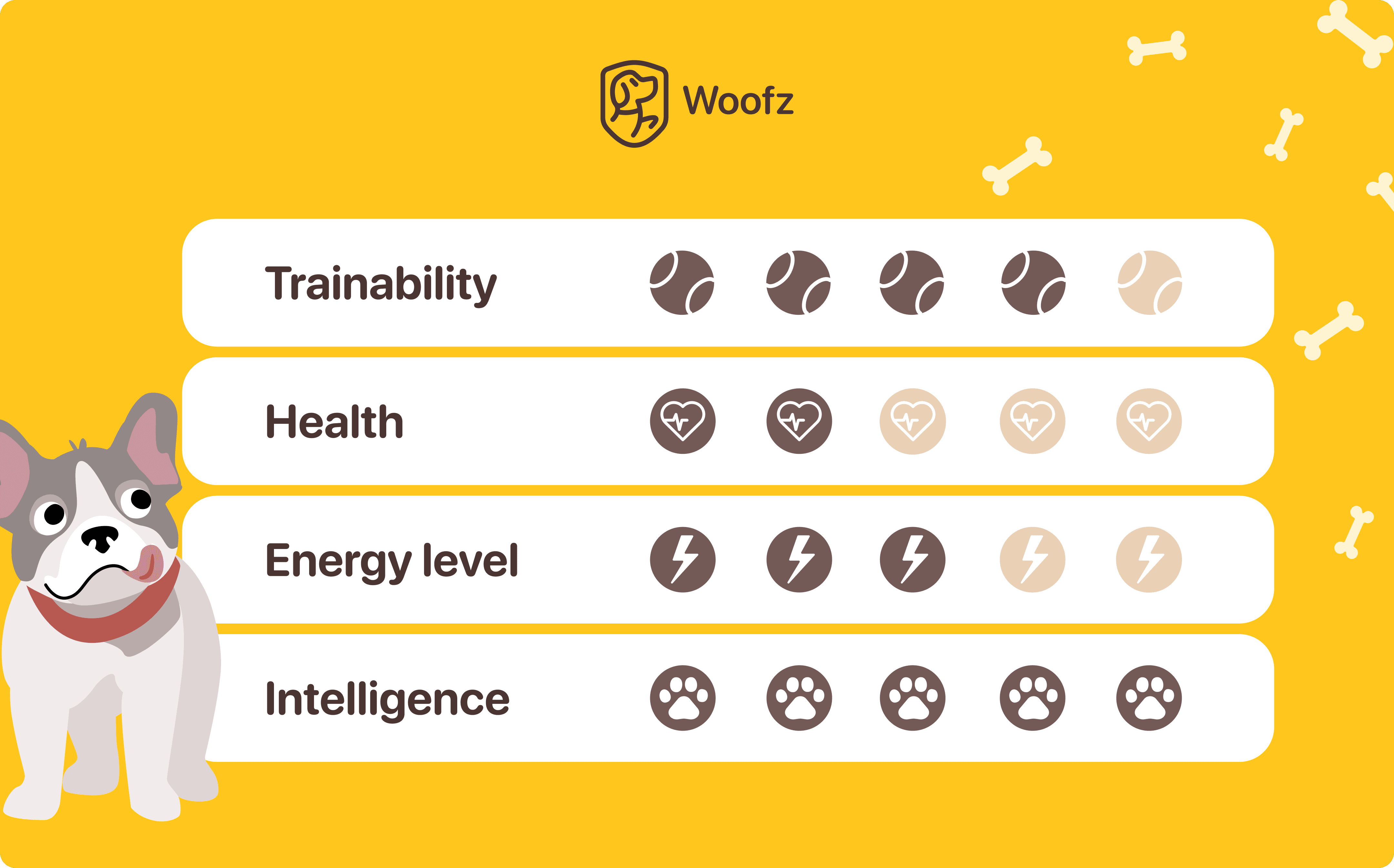
Before we jump into training, let's talk about what makes these little guys tick. French Bulldogs aren't your typical "eager to please" dogs like Labs or Golden Retrievers. They've got their own agenda, and understanding their personality will make training a whole lot easier.
Frenchies were originally bred as companion dogs in England, then became super popular with lace workers in France (hence the name). They weren't meant to herd sheep or hunt birds. They were bred to sit on laps and be adorable, which they absolutely excel at. This breeding history explains a lot about their personality today.
Activity level
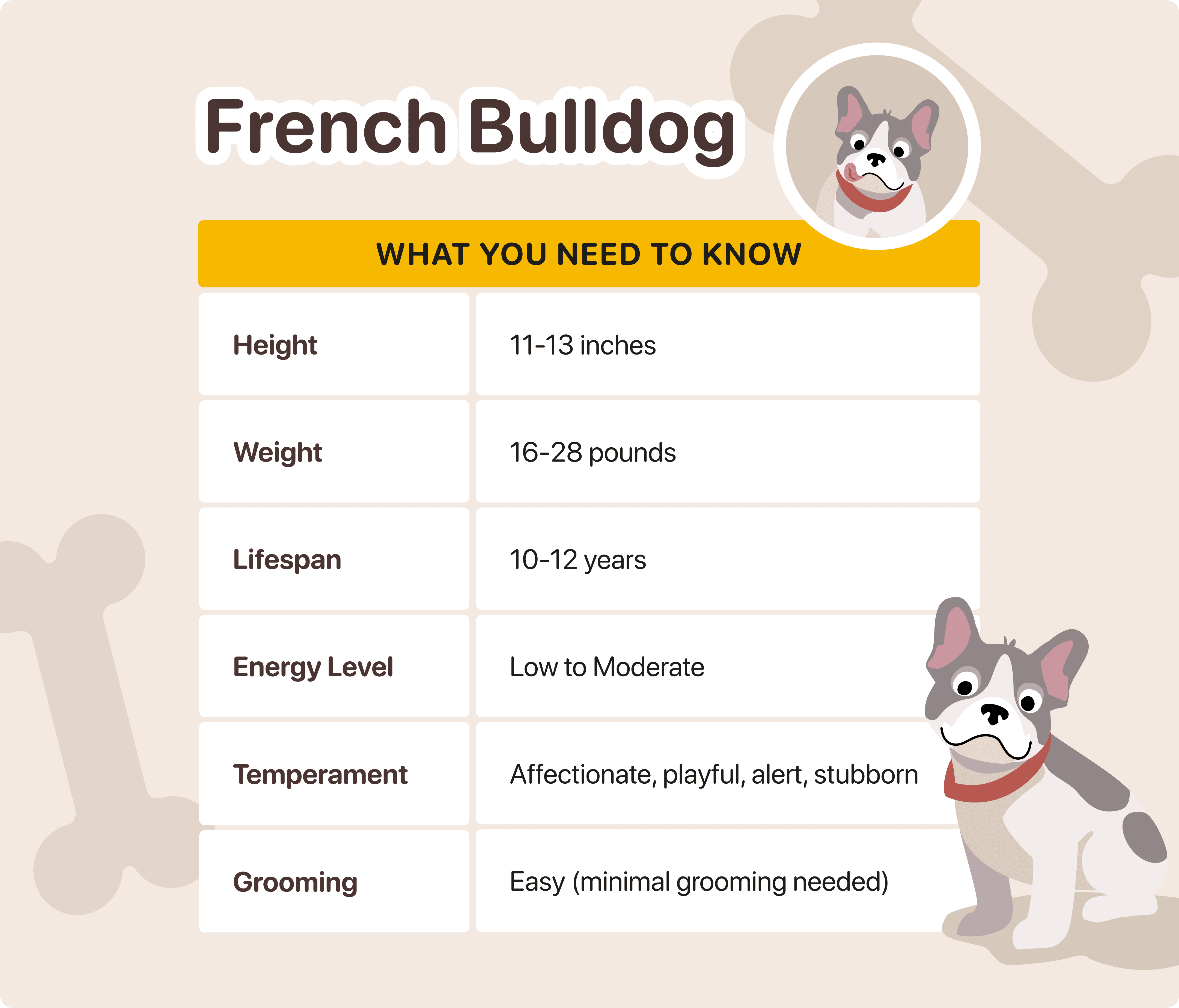
Here's something that surprises a lot of first-time Frenchie owners – these dogs aren't couch potatoes, but they're not marathon runners either. They fall somewhere in the middle. Around 60 minutes of daily exercise is plenty for these pooches, but that doesn't mean an hour-long hike. It means short walks, some playtime, and lots of mental stimulation.

Their flat faces (what vets call brachycephalic) mean they can't handle intense exercise like other breeds. They overheat quickly and can have breathing problems if you push them too hard. In fact, about 50% of French Bulldogs have clinically significant signs of Brachycephalic Obstructive Airway Syndrome (BOAS), which affects their breathing and makes vigorous exercise dangerous. They need their exercises more like "active rest" than "hardcore workout."
French Bulldogs have been America's #1 most popular breed for three years in a row (2022–2024), ending the Labrador Retriever's 31-year reign.
Temperament
French Bulldogs are people dogs through and through. They want to be where you are, doing what you're doing. Known for their affectionate, easygoing nature, French Bulldogs are fiercely loyal to their human companions and make excellent family pets. They're great with kids, generally friendly with other dogs, and adapt well to different living situations.
But (and this is a big but), they can be stubborn as hell. Stubbornness is the most common behavioral trait Frenchie parents encounter. They're intelligent and quick to learn, but they're not always eager to follow – especially if they're not in the mood. They're also sensitive souls who don't handle harsh corrections well. Yell at a Frenchie, and you'll probably just make them more stubborn or anxious. However, they always have a reason for being stubborn:
- Behavior wasn't thoroughly trained or taught in a specific context
- Change in routine, anxiety, or fear, causing a different response than expected
- Confusion or frustration.
Are French Bulldogs Easy to Train?
Short answer: Yes and no.
Here's the deal. Frenchies are intelligent dogs who can absolutely learn commands, tricks, and good manners.
According to Sharon Dykes, an AKC Breeder of Merit with 25 years of experience, "Because of their ritualistic nature, Frenchies can be very easy to train. You must simply train yourself. Set a schedule and stick to it."

The catch? You need to be consistent, patient, and make training fun. French bulldog trainability is different from other breeds. They don't necessarily care about making you happy just for the sake of it. How to train Frenchies the best way? Show them a tasty treat or turn training into a game, and suddenly they're all ears (literally – have you seen those ears?). However, it’s important to consider how to use treats as rewards instead of bribes!
So yes, French bulldogs are trainable. You just need to work with their personality, not against it. Think of it less like commanding a soldier and more like negotiating with a clever toddler who knows exactly what buttons to push.
How to Train a French Bulldog
Training a Frenchie means understanding their behavior quirks and working with them, not trying to force them to be something they're not. Let's look at the most common issues and how to handle them.
Dealing with stubbornness
Stubborn doesn't mean stupid. Your Frenchie knows exactly what you're asking – they're just deciding whether it's worth their time. Or they have a reason for this. Stubbornness and independence are two common traits associated with French Bulldogs. They have a strong-willed nature, which means they may not always readily comply with your training commands.
How to work with it:
Make training worth their while. Find what motivates your specific dog – usually it's food, but some Frenchies are more motivated by toys or praise. Use high-value treats (think small pieces of chicken or cheese) for new commands. Keep sessions super short – like 5–10 minutes max. Frenchies get bored fast, and a bored Frenchie checks out mentally. End on a high note when they do something right, not when they're frustrated.

The key is making them think that training was their idea. Act excited about it. Make it a game. Once they associate training with fun times and snacks, that stubborn streak becomes a lot more manageable. And eventually, owners will likely be able to phase out the treats!
Managing aggression
Most Frenchies aren't naturally aggressive, but they can develop aggressive behaviors if they're scared, not properly socialized, or trying to protect resources like food or toys. Aggressive behavior in French Bulldogs can manifest as growling, snapping, or biting. You might notice their body becoming stiff, ears pinning back, and the fur along their back standing up.
How to handle it:
Start socialization early – like, the week you bring your puppy home. Expose them to different people, dogs, sounds, and situations in a controlled, positive way. Never force interactions if your Frenchie seems scared or uncomfortable.

If your dog is food aggressive, work on hand-feeding sometimes and teaching the "Drop It" command using treats. Trade them something better for whatever they're guarding. Consider working with a professional dog trainer or behaviorist specializing in aggression. They can provide personalized strategies and training techniques to help manage and reduce aggressive incidents.
Create a safe space where your Frenchie can retreat when they're overwhelmed. Sometimes, aggression comes from feeling cornered or stressed, so giving them an escape route can prevent problems before they start.
Stopping excessive barking
Frenchies aren't the quietest dogs. They bark at the doorbell, at people walking by, at that suspicious leaf that just moved in the yard. Some barking is normal, but excessive barking usually means something – boredom, anxiety, or just wanting attention.
How to manage it:
Figure out why they're barking. Is it boredom? Give them more mental stimulation with puzzle toys or training games. Is it anxiety? Address the underlying cause. Are they just doing it for attention? Don't reward the behavior by giving them what they want.

Teach your Frenchie the "Quiet" command. Use positive reinforcement to reward them when they stop barking on command or bark appropriately. The trick is catching them in the act of being quiet and rewarding that, not just yelling at them to shut up (which ironically sounds like you're barking too, so they think you're joining in).
Tire them out. A well-exercised, mentally stimulated Frenchie is a quieter Frenchie. Not exhausted – remember their breathing issues – but satisfied.
Handling separation anxiety
French Bulldogs are velcro dogs. They want to be with you all the time. This is adorable until you need to leave the house and come home to find your couch cushions shredded. Separation anxiety is a common issue in French Bulldogs, manifesting through distressing behaviors for both the dog and its owner. Not all "velcro dogs" have separation anxiety!
How to help:
Start small. Practice leaving for just a minute or two, then come back. Gradually increase the time. The goal is teaching your Frenchie that you always come back, so being alone isn't scary.

Create a comfortable area where your Frenchie feels secure. This could be a crate or a room in your house where they can relax with their favorite toys and comfort items. Some dogs do better with background noise, like a TV or radio, to make the house feel less empty. And try to allow them to have some quiet time in the house or in their safe spaces, even when you ARE home!
Don't make a huge deal out of leaving or coming home. I know, it's hard when they're so excited to see you, but dramatic goodbyes and hellos can actually make anxiety worse. Keep it calm and casual.
Consider calming products like pheromone diffusers or anxiety wraps. For severe cases, talk to your vet or a professional trainer who specializes in separation anxiety.
Preventing destructive behavior
Frenchies are chewers, especially as puppies. Shoes, furniture, remotes – nothing is safe. But destructive behavior isn't just about teething. It's usually boredom, anxiety, or excess energy with nowhere to go.
How to prevent it:
-
Puppy-proof your space; if you don't want something chewed, don't leave it where they can reach it. Simple as that!
-
Rotate toys so they don't get bored with them. Puzzle feeders and treat-dispensing toys keep their brains busy, which is just as tiring as physical exercise
-
Make sure they're getting enough exercise and attention, as a bored Frenchie is a destructive Frenchie; even 20 minutes of playtime can make a huge difference
-
If you catch them chewing something they shouldn't, don't punish; just redirect to an appropriate toy and praise them for chewing that instead
-
Don’t teach them one set of rules as a puppy and then try and change it up later – if you don't want them on the furniture as an adult, don't let them up there as a puppy
-
And try to allow them to have some quiet time in the house or in their safe spaces, even when you ARE home!
French Bulldog Training Tips
Now, let's get into some specific strategies that work well for training Frenchies.
Start Frenchie puppy potty training early
Potty training a French Bulldog can test your patience. They have small bladders, especially as puppies, meaning frequent bathroom breaks. The key to successful potty training lies in establishing a consistent routine.
Here's what works: Pick one spot outside for bathroom breaks and stick with it. Take your puppy out first thing in the morning, after meals, after naps, after playtime, and right before bed. That's a lot of trips, especially in the beginning.
Watch for signs they need to go – sniffing around, circling, suddenly stopping what they're doing. When they do their business outside, throw a party. Treats, praise, happy dance – the whole thing. Make it clear that outside = best thing ever.
Accidents will happen. Don't punish them. Just clean it up with an enzyme cleaner (regular cleaners don't get rid of the smell that they can still detect) and move on. Punishment just teaches them to hide when they need to go, not to go outside.
Crate training helps a lot here since dogs don't like to soil where they sleep. Just make sure the crate isn't too big, or they'll use one end as a bathroom.

Use the proper Frenchie training tools
You don't need a ton of fancy equipment, but having the right basics makes things easier.
Get a properly fitted harness, not just a collar. Frenchies have delicate necks and breathing issues already – you don't want a collar putting pressure on their throat. A good harness distributes pressure across their chest and gives you better control without hurting them.
Invest in high-value treats. We're talking tiny pieces of real meat or cheese, not just regular kibble. Save the good stuff for training, so it stays special. Make them small – like the size of a pea – so your Frenchie doesn't get full halfway through training.
Use a clicker if you want. Some people love them for marking exact moments of good behavior. Others just use a marker word like "Yes!" Either works – pick what feels natural to you.

Have lots of different toys. Frenchies can be picky about what they like, and variety keeps them interested. Some love squeaky toys, others prefer ropes for tug, and some just want something soft to carry around.
Provide short play sessions or walks
This is crucial. Frenchies don't need marathon exercise sessions – they need regular, moderate activity. Their flat faces mean they can't breathe as efficiently as other dogs, which makes intense exercise actually dangerous.

It's best to do short, low-intensity walks. Break it up into shorter sessions. Maybe a 15-minute walk in the morning, some playtime in the afternoon, and another short walk in the evening. This keeps them active without overwhelming their system.
Watch the weather. Hot and humid days are dangerous for Frenchies. If it's too warm, skip the walk and do indoor play instead. The same goes for really cold weather – their short coats don't provide much protection.
Pay attention to your dog's signals. If they're slowing down, panting heavily, or just stop and refuse to move, they're done. Don't push it. Overheating can be life-threatening for this breed.
How Much Exercise Does a French Bulldog Need?
Let's get specific about exercise requirements since this is one of the most misunderstood aspects of owning a Frenchie.
As a general guideline, adult Frenchies should have around 60 minutes of physical activity every day. That should include a short walk in the morning and a longer walk or playtime in the evening, with each session lasting about 30 minutes.

But here's the important part – that doesn't mean 60 minutes of nonstop activity. It's more like 60 minutes of "being outside and doing stuff," which includes walking, sniffing around, short play sessions, and rest breaks.
Puppy exercise needs are different. A four-month-old French Bulldog only needs 20 minutes of total walkies each day. The general rule is about 5 minutes per month of age, twice a day. So a three-month-old gets about 15 minutes, twice daily. This prevents overexercising young joints that are still developing.
According to the Orthopedic Foundation for Animals, 72.6% of French Bulldogs struggle with hip dysplasia, so protecting those joints early is crucial.
What kind of exercise works best
Short leisurely walks are perfect. No jogging or running – just a nice stroll where they can sniff everything and explore. Walking is just as much mental stimulation as physical exercise for them.
Indoor play sessions work great, especially when it's too hot or cold outside. Play fetch in the hallway, tug-of-war with a rope toy, or hide treats around the house for them to find. Mental exercise counts, too. Training sessions, puzzle toys, and sniff games tire them out just as much as physical activity. Sometimes, even more.
Swimming can be good for some Frenchies, but here's the catch – most can't swim well because of their body structure. If you try it, use a dog life jacket and supervise constantly in very shallow water. Never leave them unsupervised near pools.
Signs you're exercising too much
Heavy, labored breathing that doesn't calm down quickly. Excessive drooling or foaming at the mouth. Slowing down significantly or refusing to move. Bright red or purple tongue and gums. These are signs of overheating, which is an emergency.
Heatstroke is a very common problem in French bulldogs because of their inability to regulate their body temperature. Overheating typically occurs when your dog's body temperature increases to over 106 degrees. If you see these signs, get them to a cool place, offer water, and contact your vet immediately.
The goal isn't to have an athletic dog. It's to keep them at a healthy weight, mentally stimulated, and happy. That's it.
Wrap Up
Training a French Bulldog isn't rocket science, but it does require understanding what makes these little characters tick. They're smart, affectionate, and funny – but also stubborn, sensitive, and prone to doing their own thing. The key is working with their personality instead of fighting against it.
Start training early and be consistent. Use positive reinforcement with treats and praise rather than punishment. Keep sessions short since their attention span isn't exactly legendary. Be patient with the stubborn streak – it's part of their charm, even when it's driving you crazy.
Remember that these dogs don't need intense exercise like some breeds, but they do need regular, moderate activity. Short walks and play sessions are perfect. Watch for signs of overheating and never push them too hard.
With the right approach, your Frenchie will learn good manners, fun tricks, and how to be a well-behaved member of your family. It might take longer than training a Border Collie, but the bond you build with your stubborn little companion makes every frustrated moment worth it.