


Puppy Feeding Schedule by Age: Simple Chart for Every Life Stage

By
Woofz Team Updated on |Reviewed by
Woofz TeamA new puppy comes home and, inside a week, you have a hundred small questions. Wet or dry? How much food? How often? A clear puppy feeding schedule cuts through most of it. A rhythm your puppy can trust. Healthy growth at a sensible pace. House-training that starts to click. You got it.
This puppy feeding guide covers the first year, stage by stage. Not a rulebook, just a starting point.
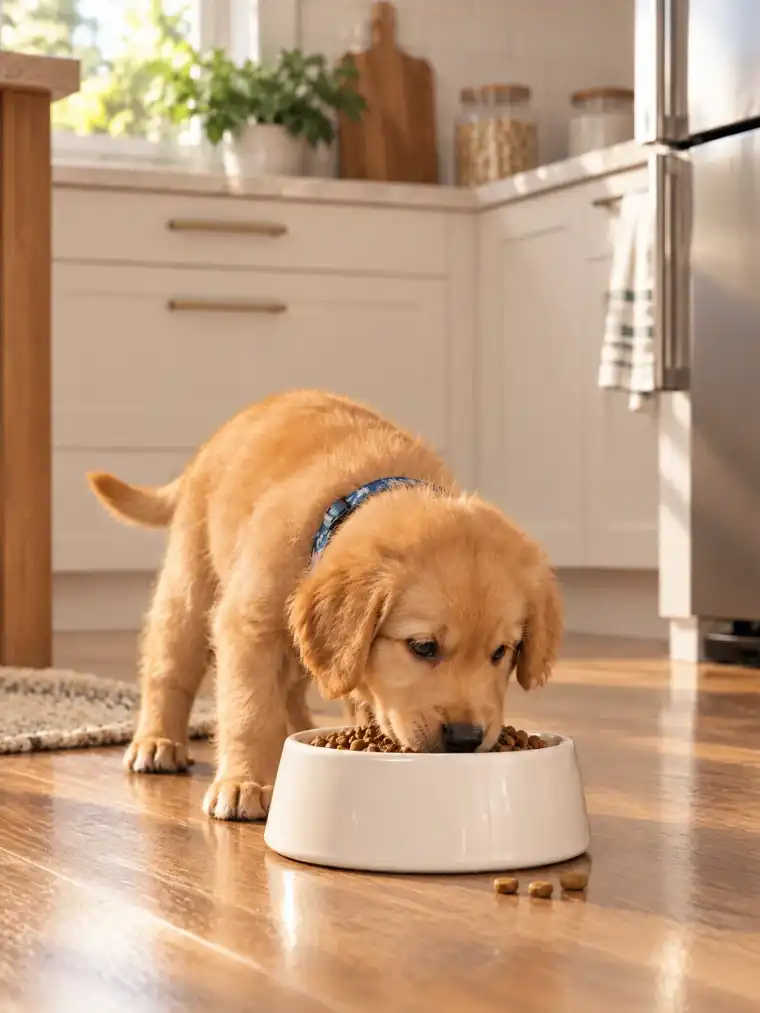
Puppy Feeding Schedule by Age
Age changes almost everything about how to feed a puppy: frequency, texture, portion, timing. Here is the shape of a normal year.
Newborn to 3 weeks: mother's milk only
A newborn puppy runs entirely on the dam. Warm milk on demand, roughly every two hours. For a bottle fed puppy, feed your puppy on the milk-replacer label and weigh daily. Healthy puppies gain about 5% to 10% of their body weight per day. They roughly double their birth weight during the first week.
Solid food does not belong here yet. The puppy's digestive system is not ready.

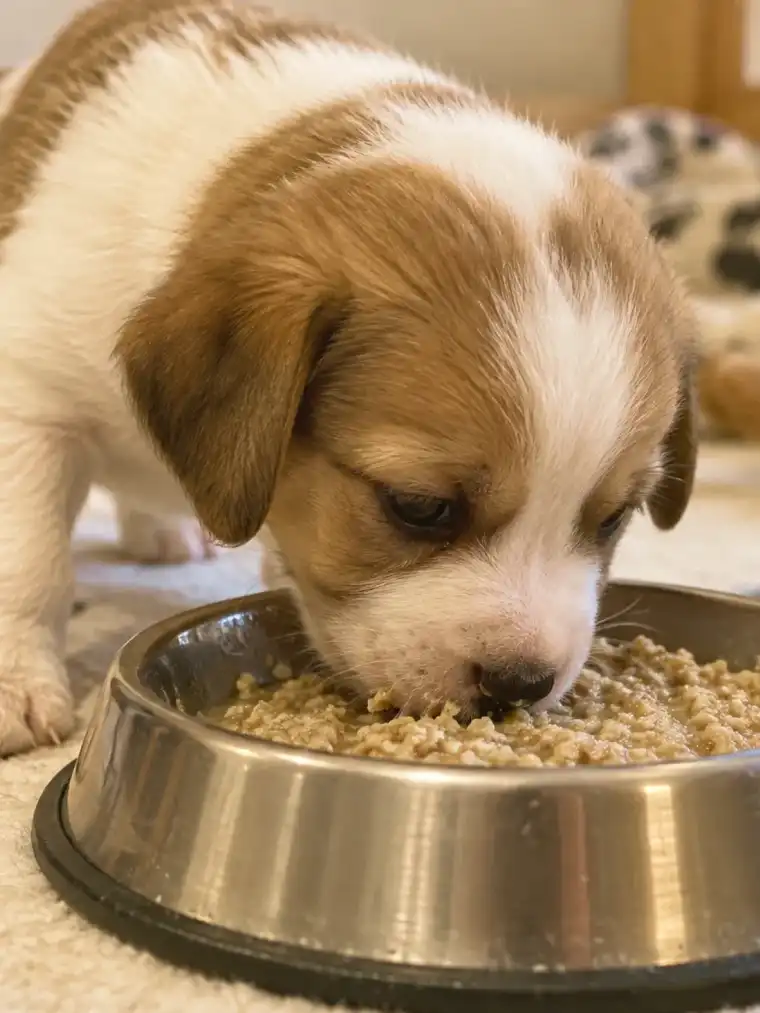
3 to 8 weeks: weaning and the first meals
Weaning starts around three to four weeks. Puppies begin consuming semi-solid food around this time. Mother's milk alone no longer covers all their needs.
A typical way to feed puppies during weaning:
-
Mix a balanced puppy formula with warm water into a soft mash.
-
Offer it in a shallow dish, once a day at first, then two or three times.
-
Cut the water down over two to three weeks so the texture firms up.
-
Keep clean water available at all times.
By six to eight weeks, most puppies are fully weaned. Younger puppies from small breed lines can be a beat slower. That is normal.
8 to 12 weeks: three to four meals a day
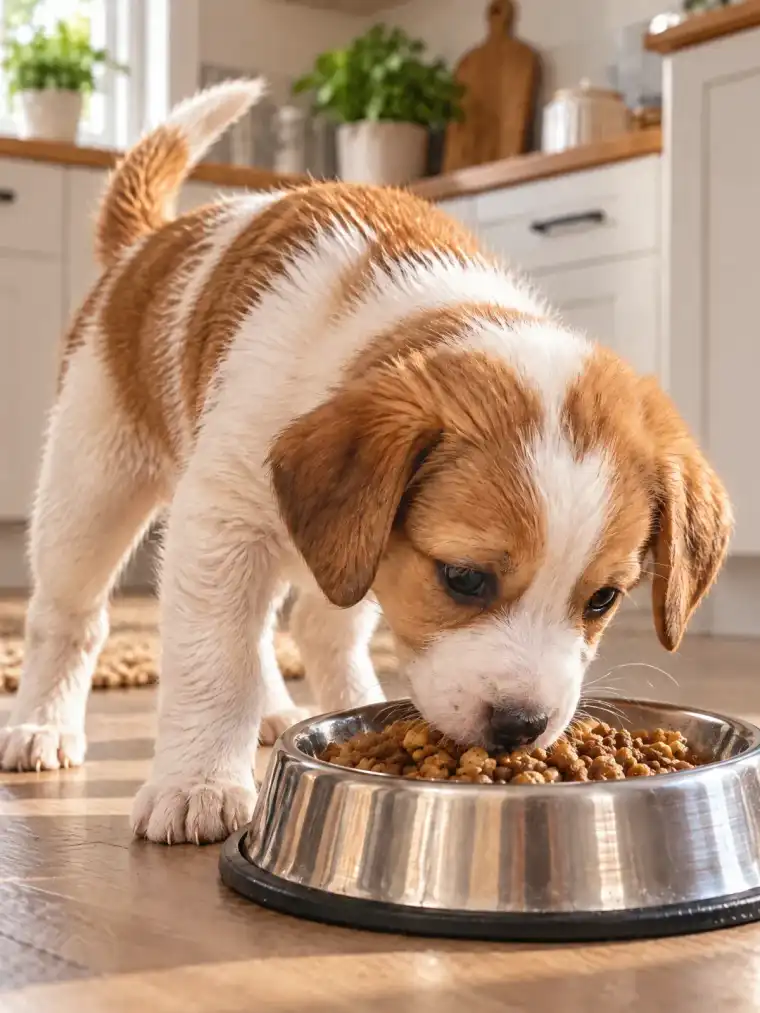
Once your puppy comes home, a real puppy feeding schedule starts. The AKC recommends four feedings a day for puppies aged six to twelve weeks. Little bellies, big appetites, lots of growing.
Sample times for four meals a day:
-
7:00 AM
-
11:00 AM
-
3:00 PM
-
7:00 PM
Feed your puppy a formula designed to support growth. Adult food does not cover the protein, fat, calcium and phosphorus a puppy's growth needs. So puppy food it is. Leave the bowl down for about 15 minutes, then lift it. Uneaten food goes back in the fridge, not on the floor. Start with the recommended portion, then adjust it as your puppy grows and their body condition changes.
3 to 6 months: three meals a day
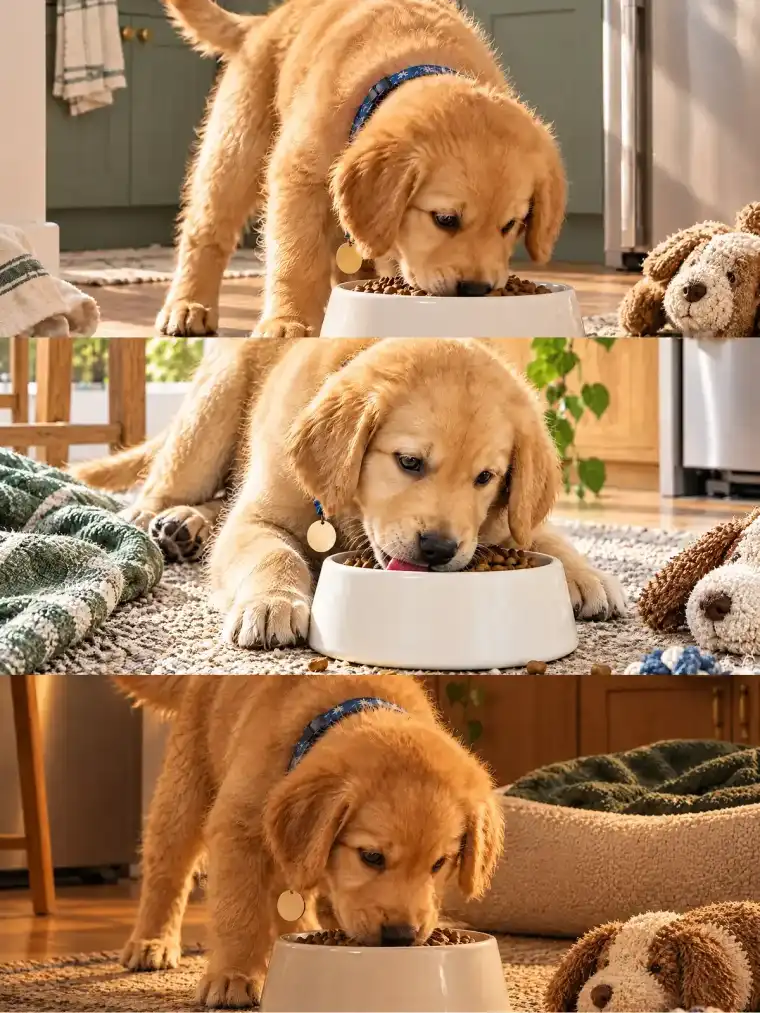
Between 12 and 16 weeks, most puppies drop to three meals a day. Portions grow because your puppy grows fast, and hunger climbs as the puppy grows. The AKC's guidance is to decrease from four to three feedings, and to watch the potbelly. A puppy's body condition matters more than the calendar. Keep your puppy lean as they grow.
Sample times for three meals:
-
7:00 AM
-
12:00 PM
-
5:00 PM
Weigh your puppy every week or two. Let the puppy's weight trend and body condition, not the bag, tell you if the portion is right. Body condition is the best day-to-day signal.
6 to 12 months: two meals a day
By six months, most puppies transition to two meals a day. Morning and evening, roughly 10 to 12 hours apart, matches most adult dog routines.
Some large and giant breeds stay on three meals longer. Follow your puppy's growth and your vet's advice.
Feed your puppy at set times, not free-choice, from here. It steadies appetite and makes house-training easier.
After 12 months: transitioning to adult food
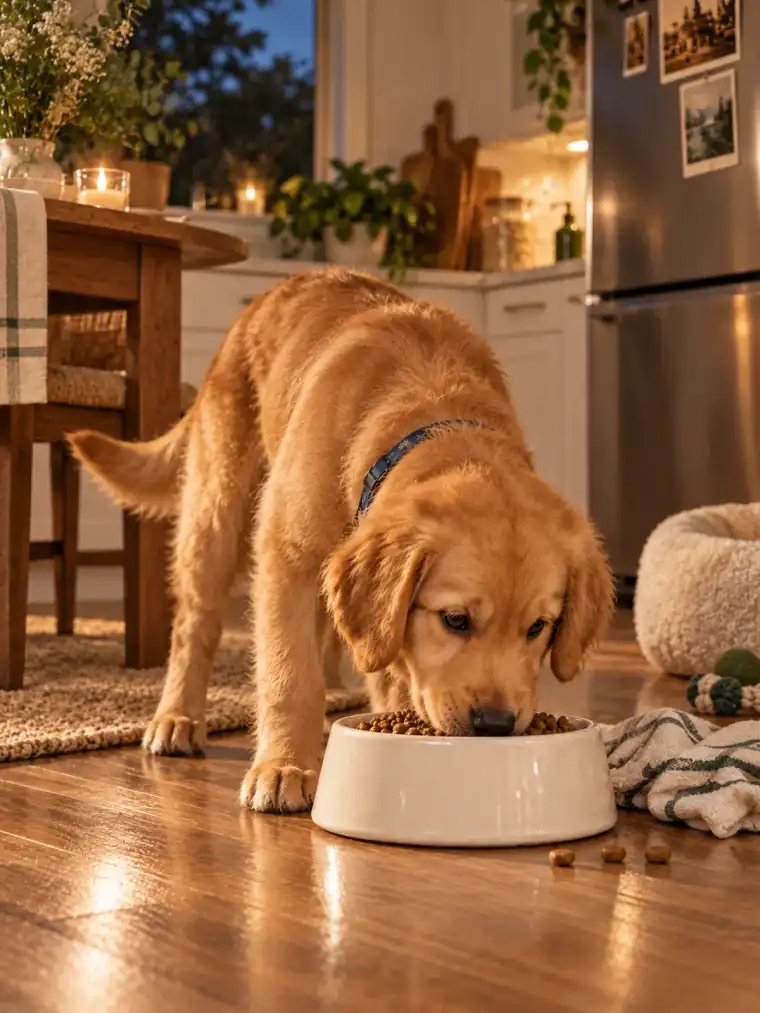
Keep feeding puppy food until your puppy is ready to transition to adult food. It usually happens at about 80% of their expected adult size. Rough timing:
-
Small breed: 9 to 12 months
-
Medium breeds: 12 months
-
Large breeds: 12 to 18 months
-
Giant breeds: 18 to 24 months
The switch is gradual: over 7 to 10 days, walk the ratio from mostly puppy food to mostly adult food. Watch stool, appetite, and energy. Slow down if any wobbles.
Puppy Feeding Chart by Age and Weight
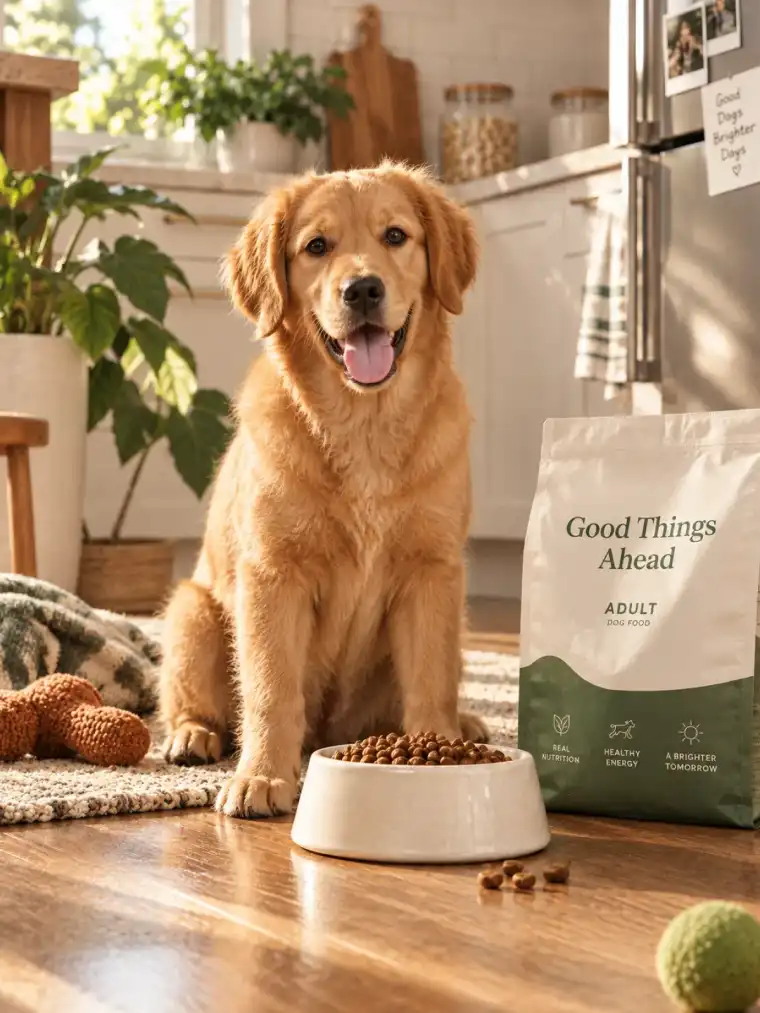
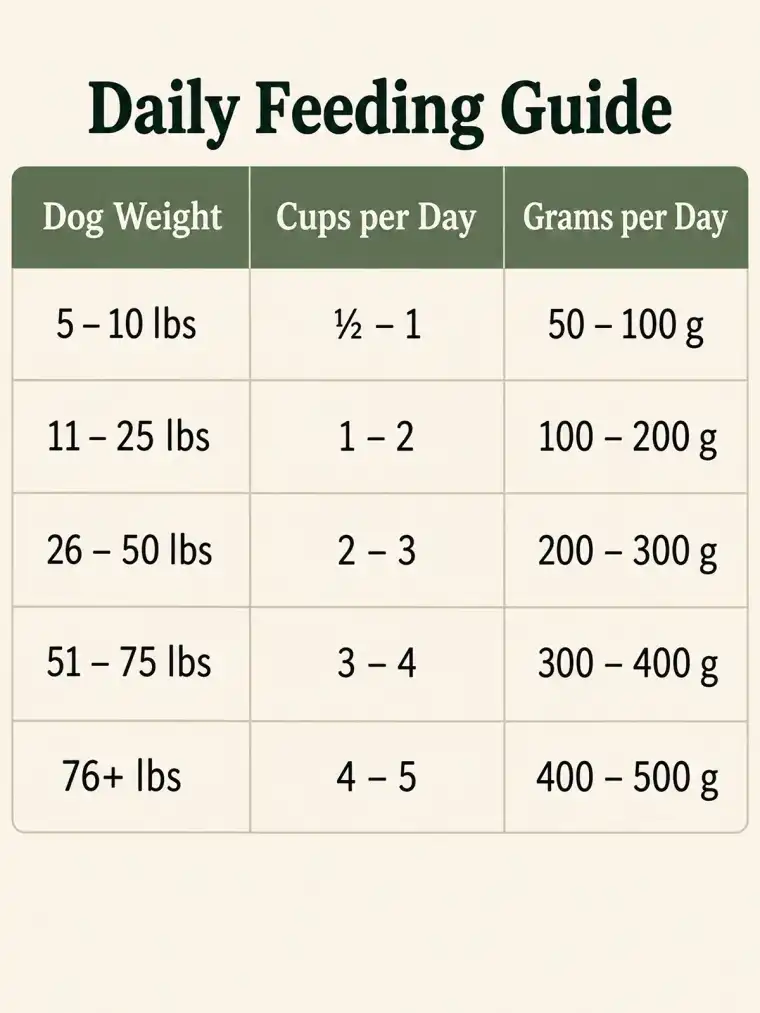
Puppy feeding amounts vary by breed, size, food, and individual needs. Use the ranges below as a rough guide, not a fixed daily amount.
Age | Feeding frequency | Cups per day (approx) |
|---|---|---|
6-12 weeks | 4 meals | 0.5 - 2 cups |
3-6 months | 3 meals | 0.75 - 3 cups |
6-12 months | 2 meals | 1 - 4 cups |
12+ months | 2 meals (adult food) | Per adult food label |
Check your food label for the recommended amount for your puppy's weight. Adjust portions based on growth and body condition. For more granular numbers by expected adult size, PetMD's chart is a good reference.
How Many Calories Should you Feed a Puppy
Working out how much to feed a growing dog is not guesswork. Vets start with Resting Energy Requirement (RER), then multiply by a life-stage factor.
The RER formula
The formula used by veterinary nutritionists is:
RER (kcal/day) = 70 × (body weight in kg)^0.75
For a 5 kg puppy, RER is roughly 234 kcal.
From RER to daily calories
Growing puppies burn well above RER. Under four months, many are fed at around 3× RER; from four months on, closer to 2× RER. That 5-kg puppy would land near 700 kcal early on and around 470 kcal as growth slows. Calorie needs can vary a lot from one puppy to another. Use these calculations as a starting point, not an exact feeding plan.
How to Measure Meal Portions
A "cup" on the bag is a proper 8-fluid-ounce measuring cup, not the mug on your counter. A digital scale is more accurate for toy breeds.
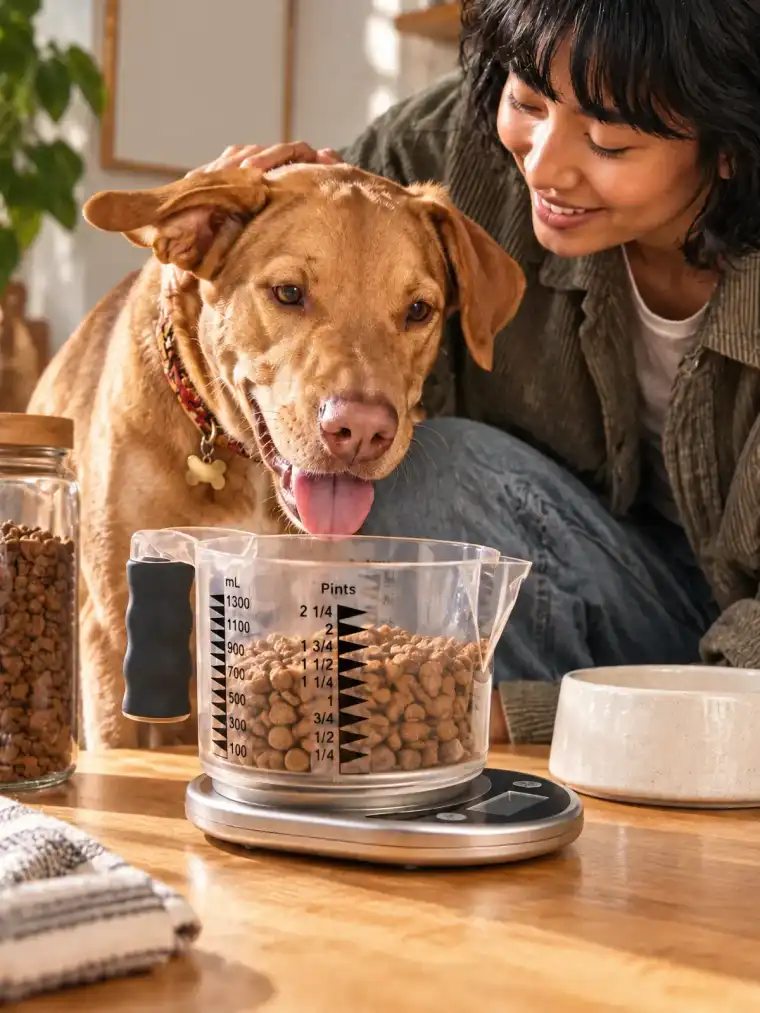
Simple rules for meal portions:
-
Keep treats and human foods to about 10% of daily calories and count them into the total.
-
Skip table scraps and rich foods that undo a careful feeding plan fast.
-
Don't top up just because your puppy begs. Extra calories add up quickly.
Wet Food or Dry Food
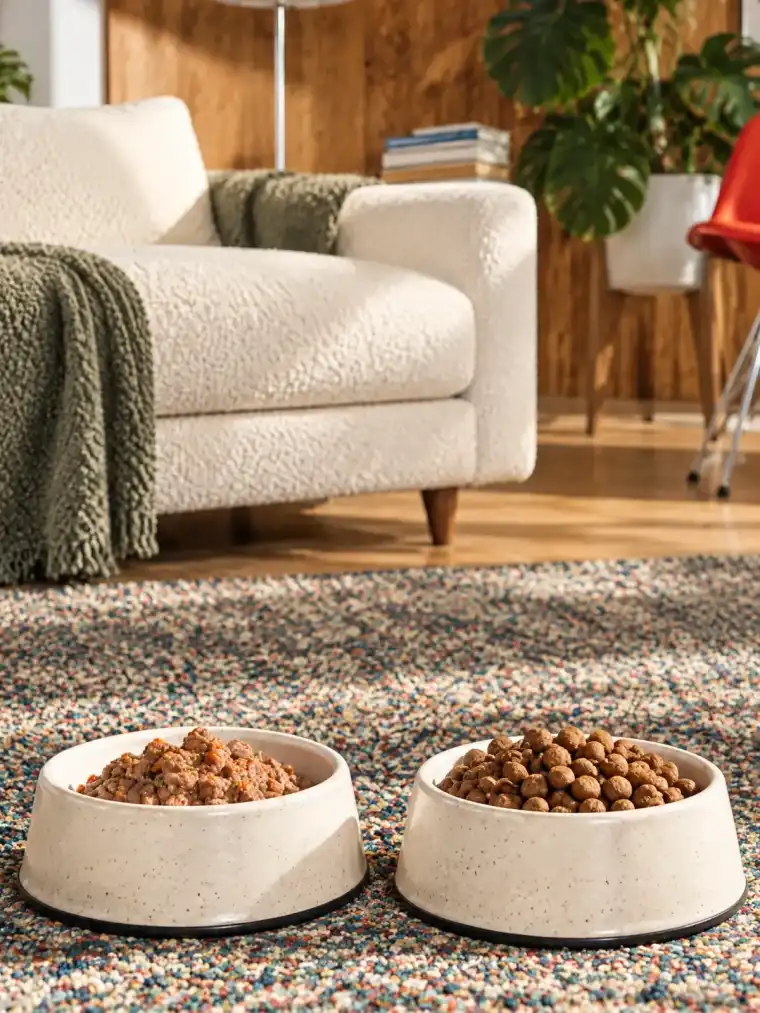
Wet or dry food is a personal call, not a health call. Both can be complete and balanced if the label carries an AAFCO growth statement.
-
Dry food: usually cheaper per calorie and easy to portion. Some dental diets also support oral health.
-
Wet food: more palatable for picky eaters, adds hydration, softer for tiny mouths.
-
A mix of wet food and dry food works well for many puppies. Wet food with kibble also helps a fussy puppy eat.
Whichever you choose to feed your puppy, look for a "formulated to meet the AAFCO Dog Food Nutrient Profiles for growth" statement. That is your signal the dog food supports growth, not adult maintenance. This is the base of a good puppy's diet.
Feeding by Breed Size
Feeding frequency and portion size shift with breed size. Same age, different needs.
Toy and small breed puppies
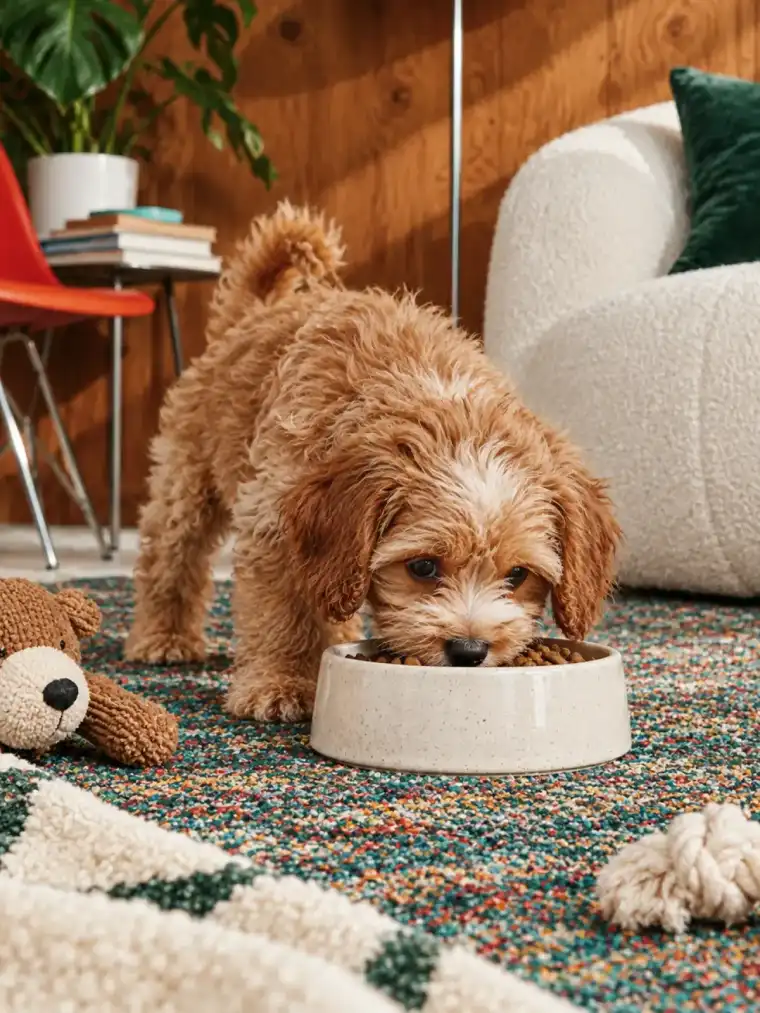
Toy breeds have smaller stomachs and high metabolisms, with little in reserve. Those small stomachs, plus fast metabolism, put them at real risk of low blood sugar (hypoglycemia) in the first months. VCA advises frequent meals for toy breed puppies. Some toy puppies need four to six small meals a day. Ask your vet about the right schedule for your puppy. Watch for wobbliness, lethargy, cold ears, or refusal to eat.
Medium-sized dogs
Medium-sized dogs follow the standard puppy feeding schedule: four meals until 3 months, three meals to 6 months, at least two meals from 6 months. Transition to adult food around 12 months.
Large breeds and giant breed puppies
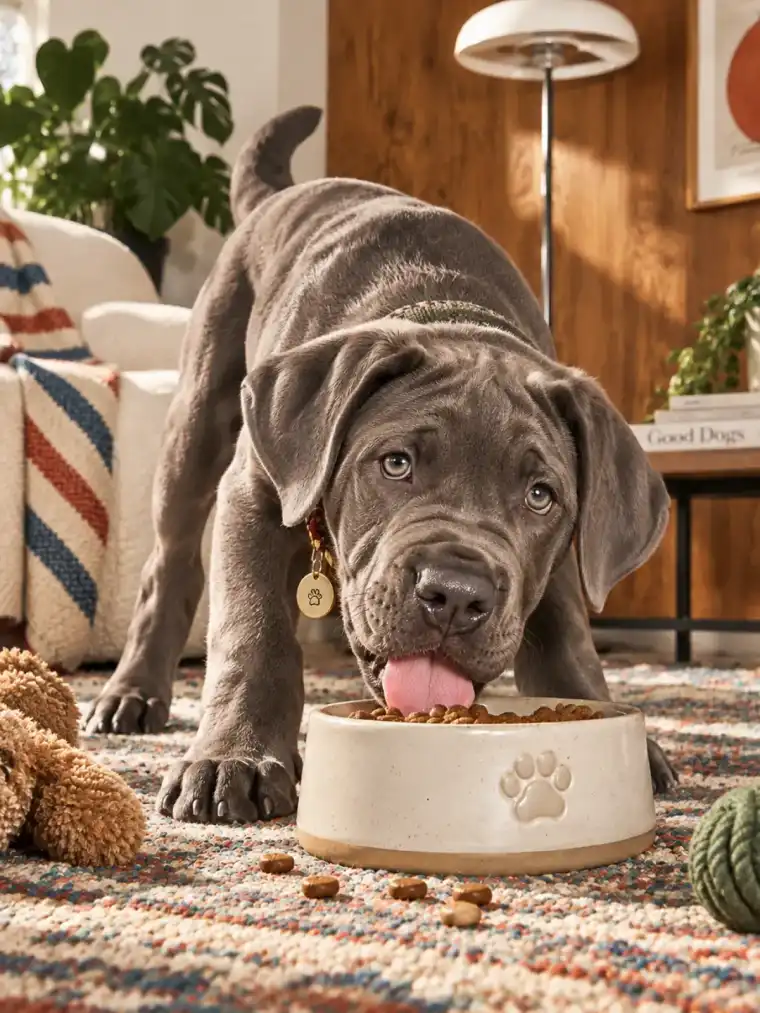
Large breeds grow for longer and are more sensitive to overfeeding. Excess calcium and calories during rapid growth can raise the risk of developmental orthopedic disease. Use a large-breed puppy formula. Avoid adding calcium or other supplements unless your vet recommends them. Keep them lean. A body condition score around 4-5 out of 9 is a reasonable target for a large-breed puppy's diet.
Giant breed puppies may stay on puppy food up to 18 to 24 months.
Transitioning From Puppy Food to Adult Food
Around the first birthday, or later for larger dogs, you switch from puppy food to adult food. Most owners rush this.
A gentle 7 to 10 day plan works. Feed your puppy the mix at these ratios:
-
Days 1-2: 75% puppy food, 25% new food.
-
Days 3-4: 50% / 50%.
-
Days 5-6: 25% puppy, 75% adult.
-
Days 7-10: 100% adult dog food.
If you see soft stools, gas or the puppy's appetite dip, slow down. For large and giant breeds, follow your vet's advice before switching to adult food.
Feeding Times Drive Potty Timing
Many new pet parents underestimate this. A set feeding schedule is the backbone of house-training and healthy eating habits. Meals in on schedule, potty out on schedule.
Puppies usually go out within 5 to 30 minutes of a meal. Evenly spaced meals mean predictable breaks. Random grazing means random accidents on the rug.
A pattern that works:
-
Meal, then straight outside for a break.
-
Water available all day.
-
Last meal a few hours before bedtime so there is time to go out again.
These eating habits also make your dog's digestive health more predictable: firmer stools, steadier energy.
Our potty training guide pairs well with this feeding routine. If accidents creep back, look at house-training regression before you change food. Our crate training tips for puppies build the meal-crate-break rhythm this schedule needs.
What if My Puppy Won't Eat
One skipped meal isn't always a crisis. Repeated skipped meals call for your attention, especially in toy puppies. A few things to try before you worry:
-
Soften kibble with warm water for a few days.
-
Feed in a calm spot without other pets watching.
-
Check the food bowl is clean and at ground level for tiny mouths.
-
Cut back on treats and human foods that may be filling them up.
If the puppy's appetite is still off after 24 hours, or they are lethargic, call your vet. For toy breeds, do not wait that long. Persistent appetite loss can signal more than a food preference, and early attention is better for your pet's health. Our guide on signs a puppy is sick covers the red flags.
FAQs
What is the 7-7-7 rule for puppies?
It is a socialization guideline, not a feeding one: expose a puppy to 7 people, 7 surfaces and 7 objects (some versions say by 7 weeks, others the first 7 weeks in your home). Useful for confidence, not food.
What is the hardest month for a puppy?
There is no single hardest month. Some owners find months 3 to 5 especially challenging. Teething, testing limits, and a second fear period all land here. Consistent meals, a predictable feeding frequency, and short training help puppies thrive.
How much should I feed my puppy at 6 weeks?
At six weeks most puppies still need three to four meals a day. Toy puppies may need more to help prevent low blood sugar. Ask your vet about the right schedule. By 12 to 16 weeks, most can go through the night if the last meal is not too early.
What time should a puppy's last meal be?
About 3 hours before bedtime. That leaves time for a final potty break and cuts midnight accidents. Move it earlier, not later, if your puppy tends to have loose stools overnight.
Feed with structure and the year gets easier. Your puppy is not a chart. Watch the dog in front of you.
Not sure where your puppy sits on any of this? Take the 2-minute Woofz quiz and get a plan built around your dog's age, breed and stage.
Sources
- AKC: Puppy Feeding Fundamentals
- AKC: How Often Should Dogs Eat?
- AKC: Closing the Milk Bar: The Puppy Weaning Process
- PetMD: How Much To Feed a Puppy
- PetMD: When Should You Switch From Puppy to Adult Dog Food?
- VCA Animal Hospitals: When To Switch Puppy To Adult Food
- VCA Animal Hospitals: Toy Poodle breed guide
- dvm360: Developmental Orthopedic Disease in Large-Breed Puppies
- Today's Veterinary Nurse: Energy Calculations for Cats and Dogs