How to Train a Blue Heeler: Expert Tips for Owners-to-Be

By
Anastasiia Petrovska Updated on |Reviewed by Shannon Kenny
A Blue Heeler is one of the smartest and most dedicated breeds in the world. Also known as an Australian Cattle Dog (ACD), they were originally bred for herding cattle across rough terrain. They constantly rank in the top 10 most intelligent breeds. These dogs thrive on purpose and structured routine.
Key Takeaways
- Blue Heelers, also known as Australian Cattle Dogs, are high-energy dogs
- Their work ethic and loyalty to owners guide their behavior during training
- Training Blue Heelers requires both mental and physical stimulation
- They require more exercise and enrichment than most breeds.
This guide explores all Blue Heeler personality traits and training tips. You’ll learn how to train your Blue Heeler dog based on their specific personality traits, individual needs, and behavior patterns.
Characteristics of a Blue Heeler
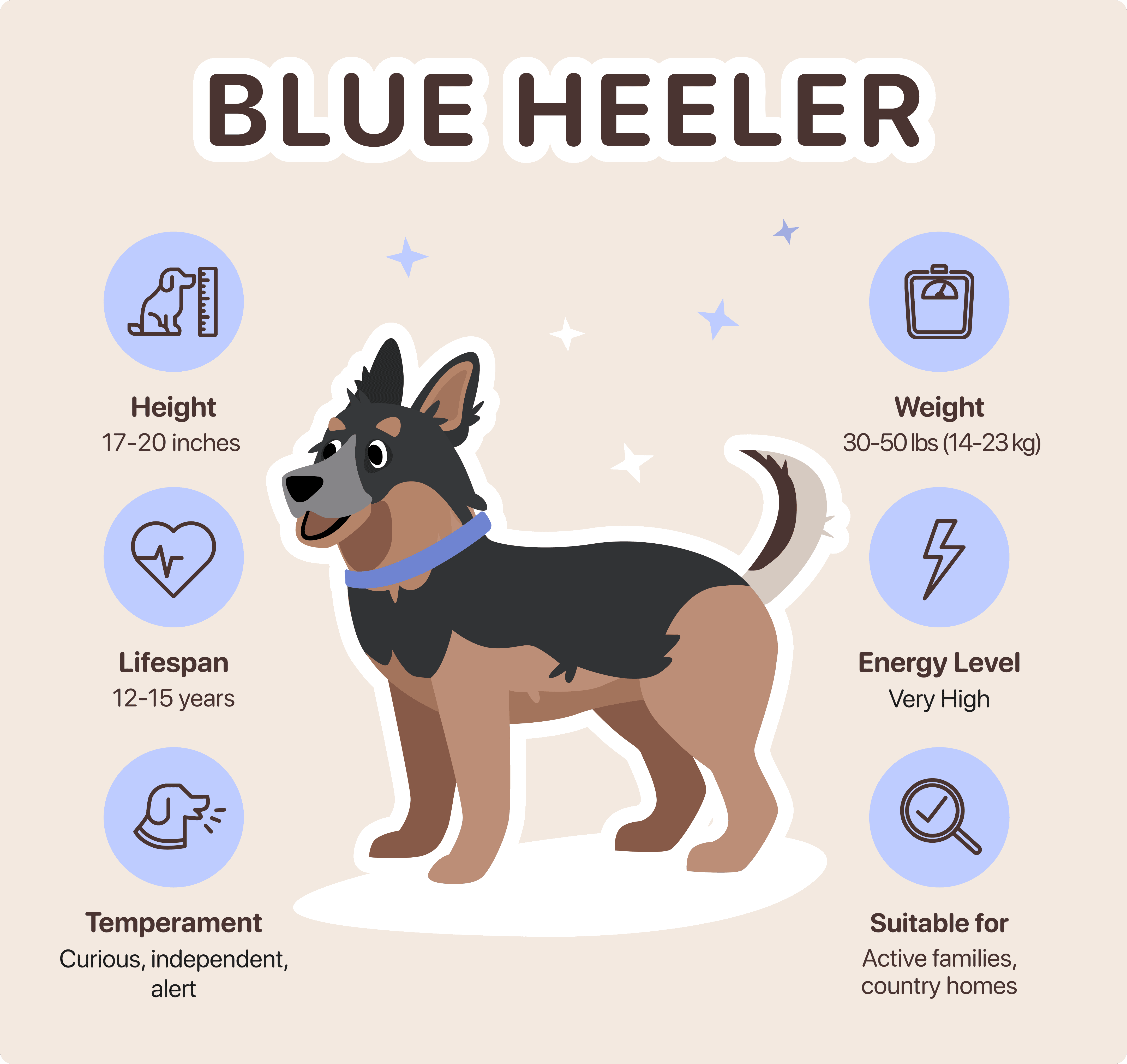
Blue Heelers are compact, athletic dogs born with a white coat that turns either blue-gray or red. Both coat colors may feature distinctive mottling or speckling patterns.
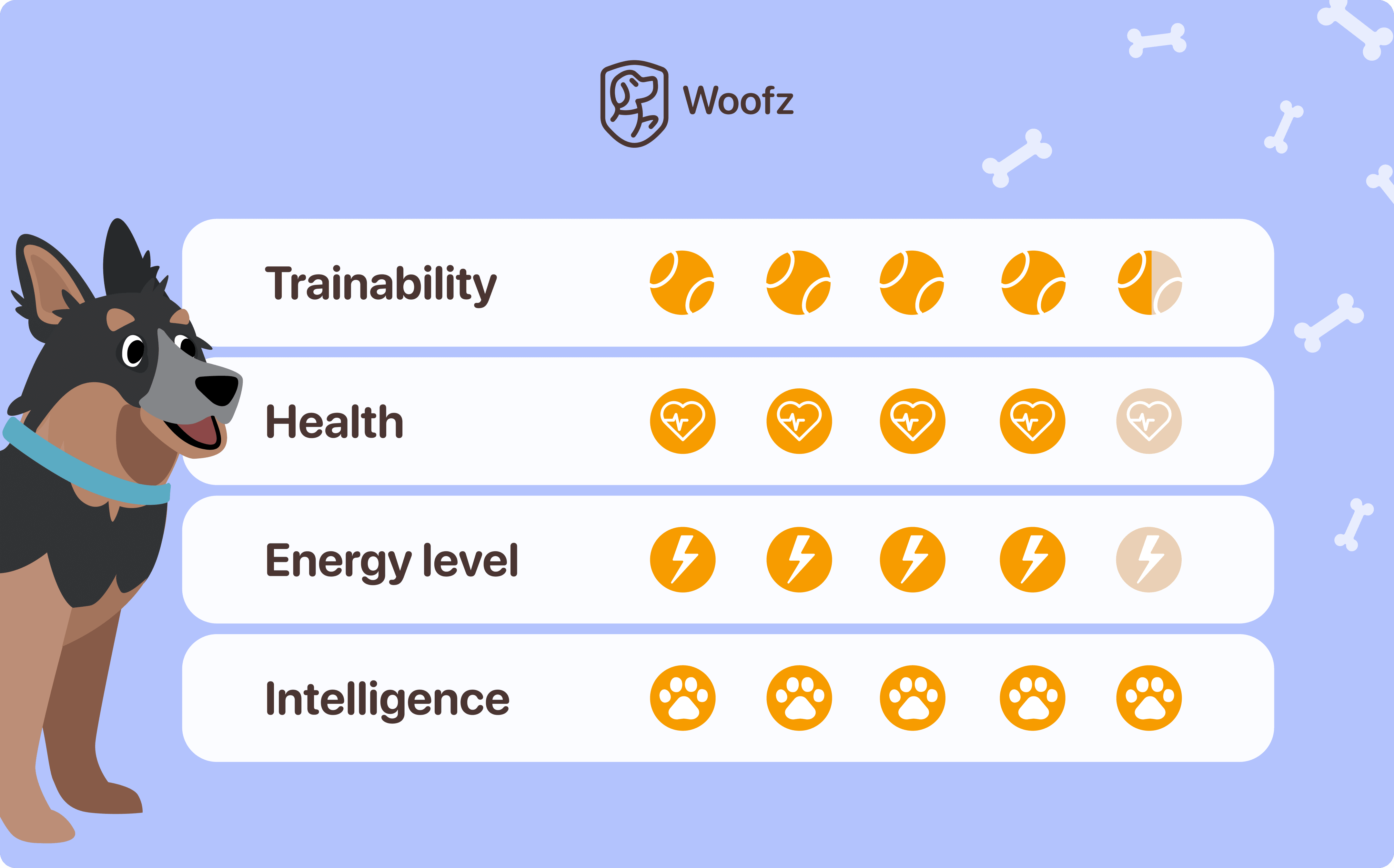
Blue Heelers are well-known for their loyalty, intelligence, and strong work ethic.

They have prominent natural protective and herding instincts while forming deep attachments with their owners. An Australian Blue Heeler likely wants to follow their pet parents everywhere, which is why they’re also called “shadow dogs.” It’s also a reason they can easily become distressed when separated from their owner.
Activity level
Blue Heelers have some of the highest energy levels of any dog breed. Thus, simple daily walks aren’t enough for them. Instead, they crave an active lifestyle, structured exercise, and rigorous work.
If Blue Heelers go without proper physical and mental stimulation, they can quickly become bored. This is also one of the reasons dog owners complain about destructive behaviors.
Temperament
Australian Cattle Dogs are typically quite independent, confident, and alert. They have strong problem-solving abilities, which help pet parents in Blue Heeler training. While deeply devoted to their owners, they can be reserved with strangers and may show herding tendencies, especially if they become overstimulated or under-exercised.
Are Blue Heelers Easy to Train
Generally, yes, but only if you’re committed to training them consistently and without force. Australian Cattle Dogs are extremely intelligent, highly driven, and strong-willed. This means that they easily get bored when they’re not working. Many dog trainers describe Blue Heelers as “advanced-level dogs” due to their sharp minds and the intensity of training they need.

Overall, Blue Heeler dogs have been bred to do more than easygoing breeds like Golden Retrievers. Thus, potty training a Blue Heeler requires a committed owner who is calm, consistent, and ready to work together.
How to Train a Blue Heeler
Before training your dog, try to understand their behavior patterns. Knowing their temperament and needs, it’ll be easier to find the right force-free training approaches. Explore the following Blue Heeler training tips and potential challenges you can face.
Dealing with boredom
Blue Heelers easily get bored without proper exercise or work. A bored dog starts vocalizing, becomes restless, and may engage in undesirable behaviors. To avoid that, try task-based training sessions instead of typically long practice classes.
For example, you can do scent games, puzzles, or practice obedience through movement (figure-eights or “go to place”). Mental challenges are crucial for Blue Heelers and other intelligent dogs, as they reduce unwanted behaviors up to 40% in high-drive dogs.
Managing herding (Nipping, Chasing, Circling)
Herding is a prominent characteristic of all Australian Cattle Dogs. It’s an instinctive behavior, but it must be managed. Use impulse-control exercises, such as “Look,” “Leave It,” or classic “Sit-Stay.”
Avoid games that involve chasing people (for example, simply running with kids). Instead, you can use herding balls to create a more controlled environment, as controlled outlets. For over-protective Blue Heelers, early socialization is essential to reduce guarding and herding.
Selective hearing
Blue Heeler owners sometimes share that their pets pretend not to hear them. As a matter of fact, for them, your current command may not be a priority at that moment. And this is just learning theory at work! This isn't a dog being "stubborn" as most people think.
To deal with that, start teaching engagement first. If they think something else is more rewarding than you are, they may ignore cues in favor of their chosen reinforcer. Use high-value reinforcement alternatives such as toys, play, or permission to explore. Teach cues in quiet environments first, then gradually add distractions. Practice “watch me” and name recognition commands.
Remember: ACD training often requires movement-based rewards – dogs find them more exciting than food. Food rewards can work very well, but many Blue Heelers may find movement, toys, or the environment more rewarding than treats. Owners must be ready to be flexible with reinforcement choices to make training as effective as possible.
Destructive behaviors
A typical Australian Blue Heeler is prone to certain destructive behaviors.

Common problems dog owners face include:
- Digging
- Excessive chewing
- Shredding
- Escaping.
All these behaviors are not a sign of disobedience; it’s a sign of a lack of proper stimulation. You can manage that by providing a structured exercise routine, including hiking, fetch, or agility. Experts say that exercising is a reliable way to reduce destructive behaviors in dogs. You should also practice training how to relax, for example, by teaching the “settle” command.

How Woofz helped Isha with Australian Cattle Dog
Read how Isha stopped her Blue Heeler’s excessive barking using the Woofz app
Aggression issues
Most Blue Heelers aren’t aggressive by nature, though they’re very protective and suspicious of new people. Their cautious nature can turn into fear-based reactivity without proper early exposure. Structured socialization before sixteen weeks of age is especially important because this period sets their emotional foundation. Beyond puppyhood, controlled positive exposure and rewarding calm behavior help prevent fear-based responses. Thus, if you’ve wondered how to train a Blue Heeler puppy, begin socialization between 8–14 weeks. It’ll help you avoid stranger-directed aggression during walks or visits.
Introduce your dog to new people while rewarding calm behavior. Start practicing with family members in a safe environment. Make sure to avoid forced interactions – it increases dogs’ reactivity.
A “check-in” command will help them keep focus on you in case something catches their attention. Proper training is essential for the dog to stay polite and well-behaved around new people.
Separation anxiety
Blue Heelers are known to form a strong bond with their owners. This is why they tend to develop separation anxiety when disconnected from their pet parents. Make sure to have a structured pre-departure routine. It’ll help your dog not to feel lonely and abandoned.
You can also try practicing short departures for 1 to 5 minutes. Don’t forget to leave a puzzle or a long-lasting toy to keep the pet occupied while you’re away.
Remember: it’s part of Blue Heeler’s nature, not a sign of misbehavior.
Why Common Methods for Training Australian Cattle Dogs Don’t Always Work
Treat-based training absolutely works, but only when the treat is more valuable than the distraction or when a behavior has been "generalized" around high distractions. Force-free methods are always the best way to train to preserve trust and confidence. Below are reinforcers that may work even better than treats in many circumstances.
Their brains are focused on solving problems, finding movement, and working. All of that they find way more exciting than simply enjoying the treats.Thus, despite treats still being valuable for use during practice, the best training reinforcers include:
- Rewards through play
- Physical activity
- Work-based tasks
- Tugs
- Freedom as a reinforcement tool
- High-engagement sessions.
This way, ACD training aligns with dog behaviorists’ recommendations. It also ensures your pet has both productive and enjoyable training.
How Much Exercise Does a Blue Heeler Need
Experts say that most dogs need 10 to 20 minutes of walking daily. The exact time depends on the dog’s age, breed, health state, and other factors. Blue Heelers are one of the most exercise-needy dog breeds in the world. Unlike most dogs that do well with just 1–2 walks, Australian Cattle Dogs require structured, robust activity.
Daily exercise recommendations for Blue Heelers are:
- 90–120 minutes of physical exercise
- 30–45 minutes of mental stimulation.

This usually includes:
- Running
- Biking alongside you
- Hiking
- Agility training
- Obedience drills
- Fetch
- Nose work.
Blue Heeler training simply doesn't comply with a sedentary lifestyle. Without enough exercise, raising a well-behaved Blue Heeler dog becomes much harder, if not impossible.
Wrap Up
Training a Blue Heeler can be as rewarding as it is challenging. Having boundless energy, dog owners need commitment and consistency in their routine. Remember that a Blue Heeler isn't just another intelligent breed. They’re working dogs who thrive on purpose and structure.
Understanding the breed’s unique personality traits, you’ll find the right training plan. The techniques mentioned in this guide will help you manage the breed's negative behaviors. The result of your efforts will be an incredibly loyal, loving, and well-behaved companion.