


How to Potty Train a Puppy: The Complete 7-Day Plan

By
Woofz Team Updated on |Reviewed by
Woofz TeamYour puppy will pee where you do not want this week, probably more than once. That is not a training failure. Just a small bladder in a big house.
Potty training is less about the puppy and more about your schedule. Get it right and accidents drop fast. Here is how to potty train a puppy in seven days, plus the potty training tips for when things go sideways.
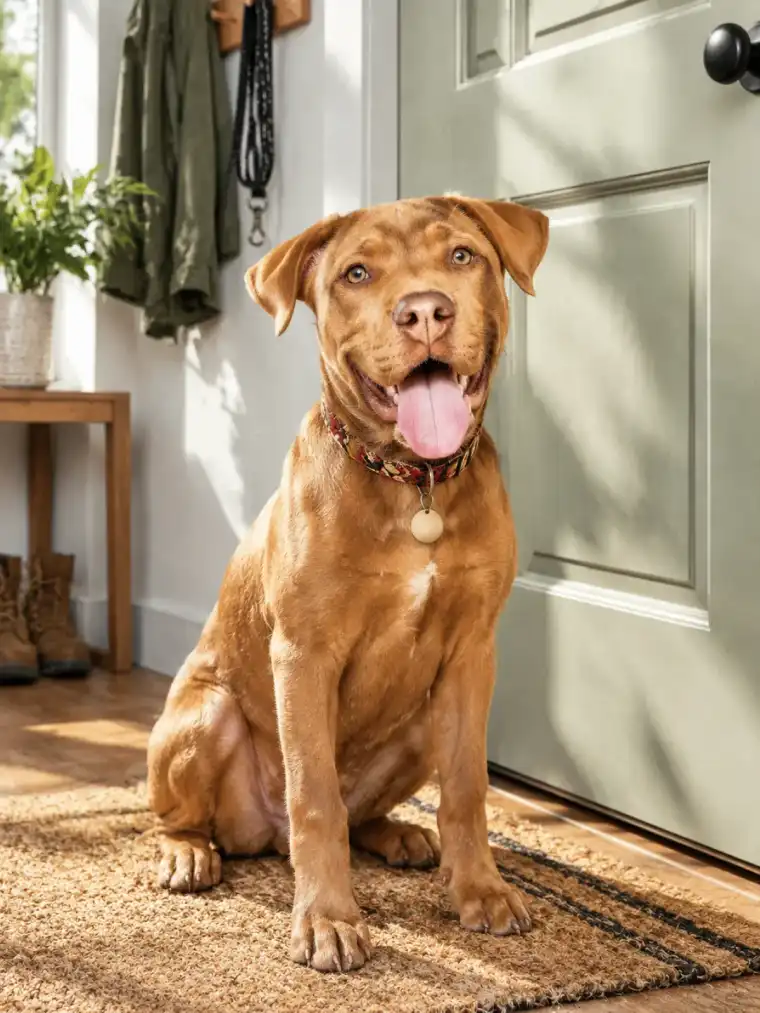
Short Version
Take your puppy out on a consistent schedule. Reward the second they finish outside. Supervise or confine the rest so accidents cannot happen. Clean accidents so they do not repeat. That loop is the whole potty training method, and it helps your puppy learn fast.
Seven days helps you lock in the potty training routine. Most dogs are not fully house trained that fast, and it is not enough to call a puppy fully trained. The American Kennel Club says some puppies get reliable within days and others take several months, so let successful potty training arrive on your puppy's timeline. Successfully potty training puppies takes weeks, and puppy potty training rarely finishes in one.
What You Need Before Day One
Good potty training starts with the right gear, before the new puppy arrives.
Get a Crate That Fits
A crate is the backbone of fast house training. A crate large enough to stand, turn, and lie down is right, and no bigger. Too much room and they potty in one corner and sleep in the other. Our crate training guide covers sizing.
Buy an Enzymatic Cleaner
Regular cleaner masks the smell and leaves it for your puppy. An enzymatic cleaner breaks down the odor. The ASPCA recommends cleaning every accident thoroughly so your dog is not drawn back to the same spot.
Stock High-Value Treats
Keep tiny treats by the door and in your pocket, so you can reward often.
Choose a Designated Potty Spot
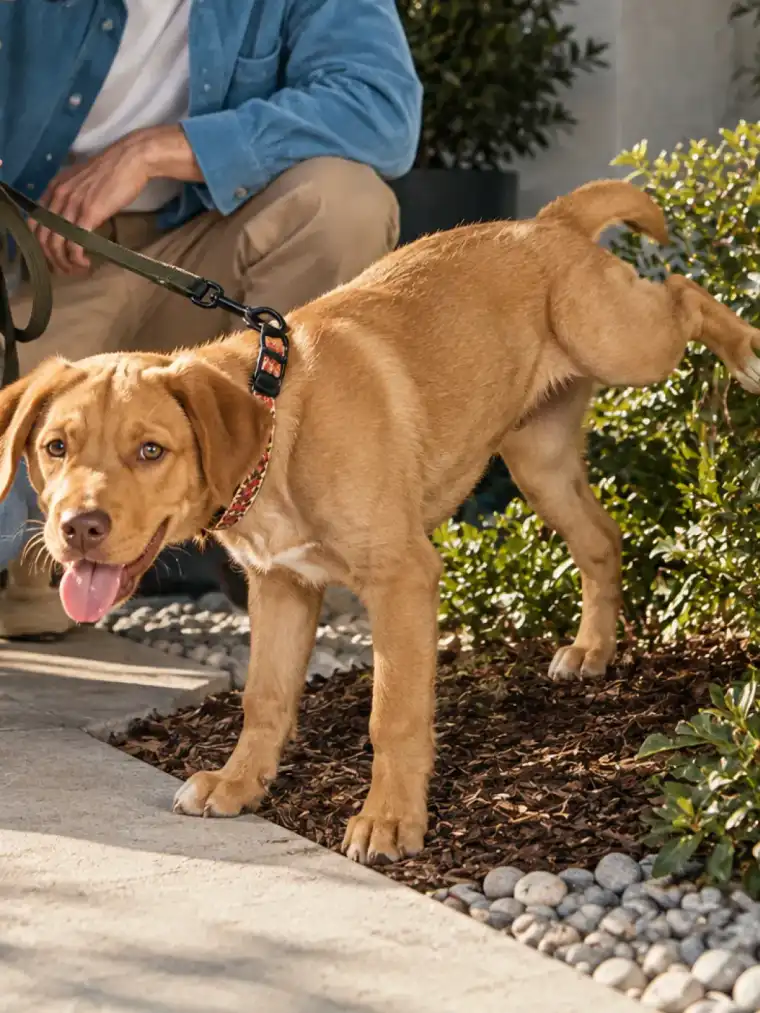
Pick one designated potty spot and use the same route to that potty area every time. The scent builds up and can pull your puppy back to the same area.
How Long a Puppy Can Hold It
Most puppies come home around eight weeks old, when bladder control is weakest. A rough guideline is that a puppy can hold it for about one hour per month of age, though every puppy is different. So a two-month-old puppy may need a potty break about every two hours while awake, and young puppies may still need nighttime trips too. Small breeds urinate frequently and need more frequent potty breaks than that.
This bladder control math is why potty training runs on the clock. Puppies are not adult dogs, so you cannot potty train a puppy without a schedule. You get them out before they have to.
The 7-Day Potty Training Plan
The potty training loop stays the same: out on schedule, reward outside, supervise inside, clean misses. Keep training sessions short so your puppy stays focused.
Day 1: Set the Schedule and the Spot
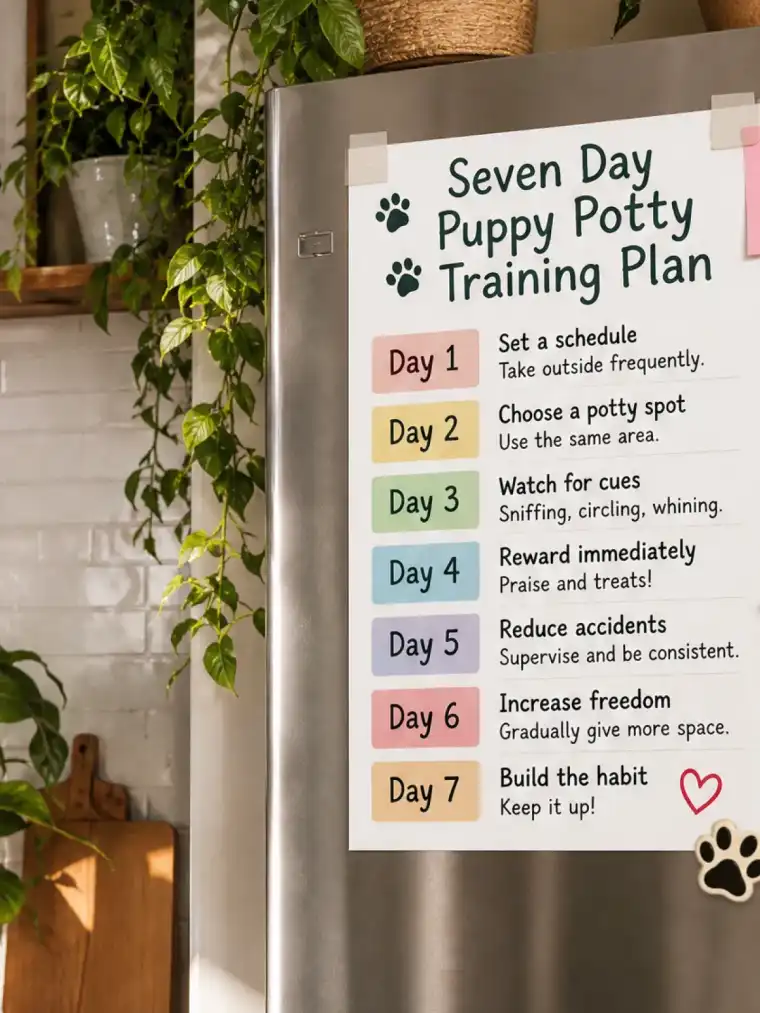
Take your young puppy to the potty spot first thing in the morning, after every meal, after every nap, after play, and before bed. Add a potty break every one to two hours between. Carry your puppy immediately out if they are tiny. Write down every time your dog eliminates.
Day 2: Add the Potty Cue
Pick a short phrase like "go potty." Say it calmly as your puppy starts to potty, not before. Immediately reward with verbal praise and a treat, and you help your puppy learn to connect the words to the act. A clicker at the finish works the same way.
Day 3: Tighten Crate Time
Crate training does the overnight work. Use the crate for naps and overnight. When your puppy wakes, carry them straight to the potty spot. Puppies may signal that they need to go by whining, circling, or scratching. Answer fast and you help your puppy learn that holding it leads outside.
Day 4: Read the Signals
You know your puppy's tells. Sniffing the floor. Circling. Suddenly quitting a game. The AKC lists these plus restlessness and scratching at the door as classic pre-potty signs. Constant supervision lets you catch the signal and prevent accidents instead of cleaning them.
Day 5: Stretch the Intervals
No accidents yesterday? Add fifteen minutes between daytime bathroom breaks. Accidents creeping back? You stretched too soon. Shorten again. Bladder control grows on its own schedule, and rushing only creates more accidents.
Day 6: Add a Little Freedom
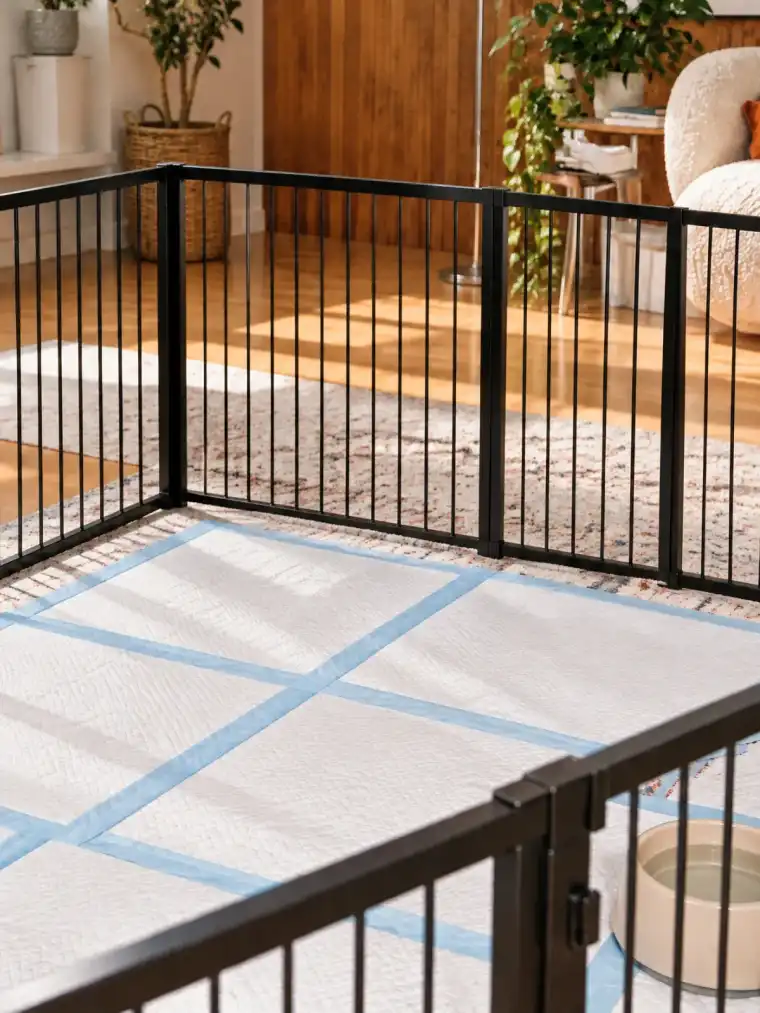
Give your puppy access to one more room. Limit access with baby gates and close supervision. Freedom is earned one room at a time, since too much freedom too early undoes it.
Day 7: Review and Adjust
Read back your potty training log. Spot the pattern: when your puppy reliably potties, and where accidents sneak in. Tighten the gaps, keep the wins, and repeating this consistent schedule builds good habits.
Puppy Pads and Indoor Potty Areas
Puppy pads give a dog an approved indoor option when you cannot get out often, which helps small breeds and apartment dogs. The trade-off: puppy pads can teach your puppy that going indoors is sometimes okay, which may make the move to fully outdoor potty training take longer. Keep puppy pads in one quiet potty area like a gated laundry room, and shift the pad toward the door.
Feeding Schedule and Potty Breaks
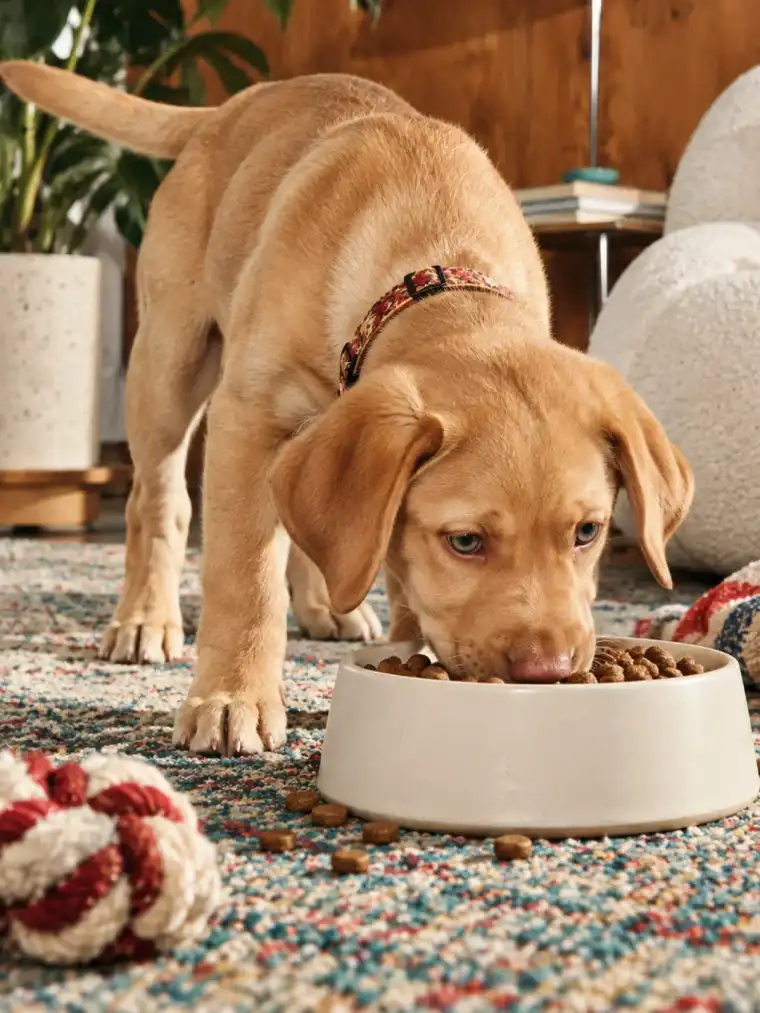
What goes in on a schedule comes out on one, so feeding drives potty training timing. A regular feeding schedule makes bathroom breaks predictable. The AKC suggests several small meals rather than one big one. Take your puppy out after each meal, since most puppies eliminate outdoors soon after. Keep an eye on your puppy's drinking habits and always offer a last potty break before bed.
Crate Training to House Train Faster
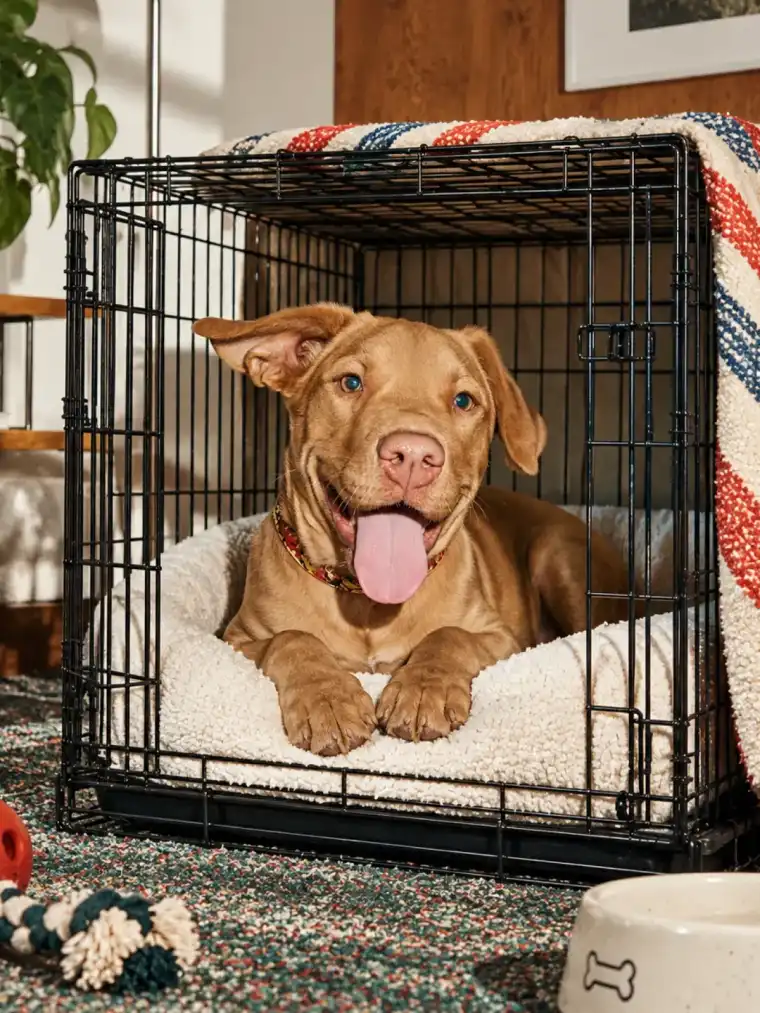
Dogs generally prefer not to soil where they sleep. A correctly sized crate can help your puppy learn to hold it between potty breaks, so crate training is a good tool that speeds potty training and helps your puppy learn bladder control. Dogs tend to treat a right-sized crate as a den. Never use the crate as punishment. Young puppies still need nighttime potty breaks, so set an alarm, carry them out, then straight back with no play. If your puppy keeps peeing in the crate, it may be too big or the interval too long.
Positive Reinforcement, Done Right
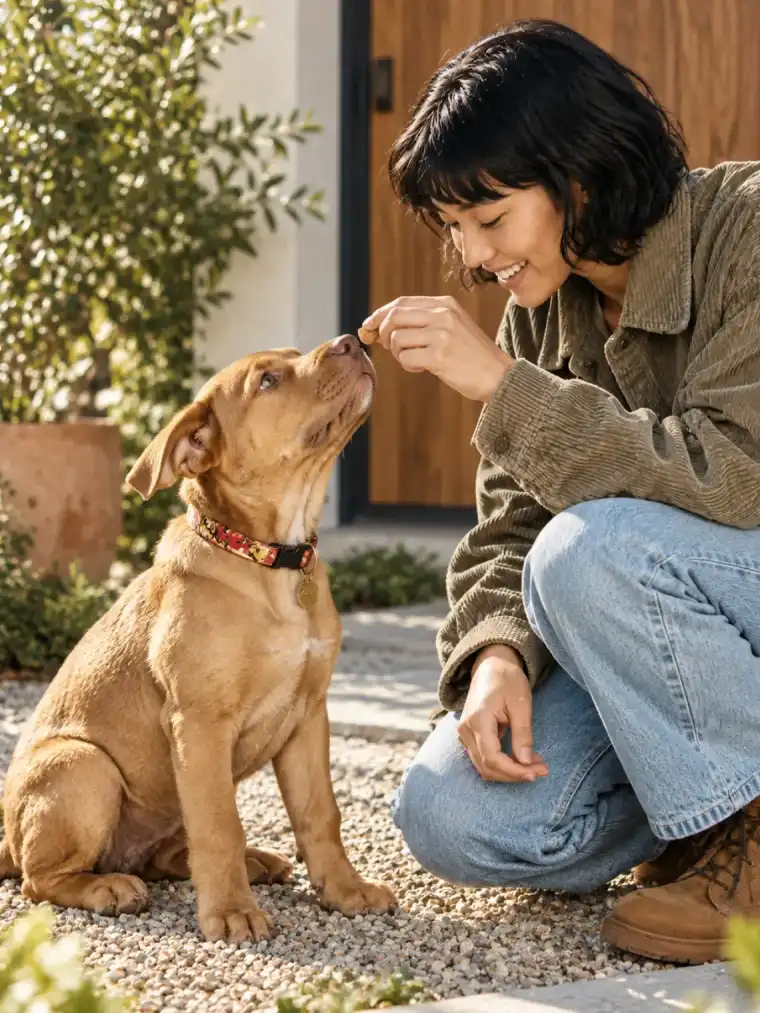
Positive reinforcement beats punishment, and it is not close. Dogs repeat what pays off. The American Veterinary Society of Animal Behavior recommends reward-based methods for all dog training. Potty training rewards belong outside. The instant your puppy potties outside, reinforce good behavior with a treat and praise. Wait until you are inside and you reward coming in, not the positive behavior you wanted. Positive reinforcement makes potty training stick, and keeps the process stress-free for both you and your dog.
Clean Accidents so They Do Not Repeat
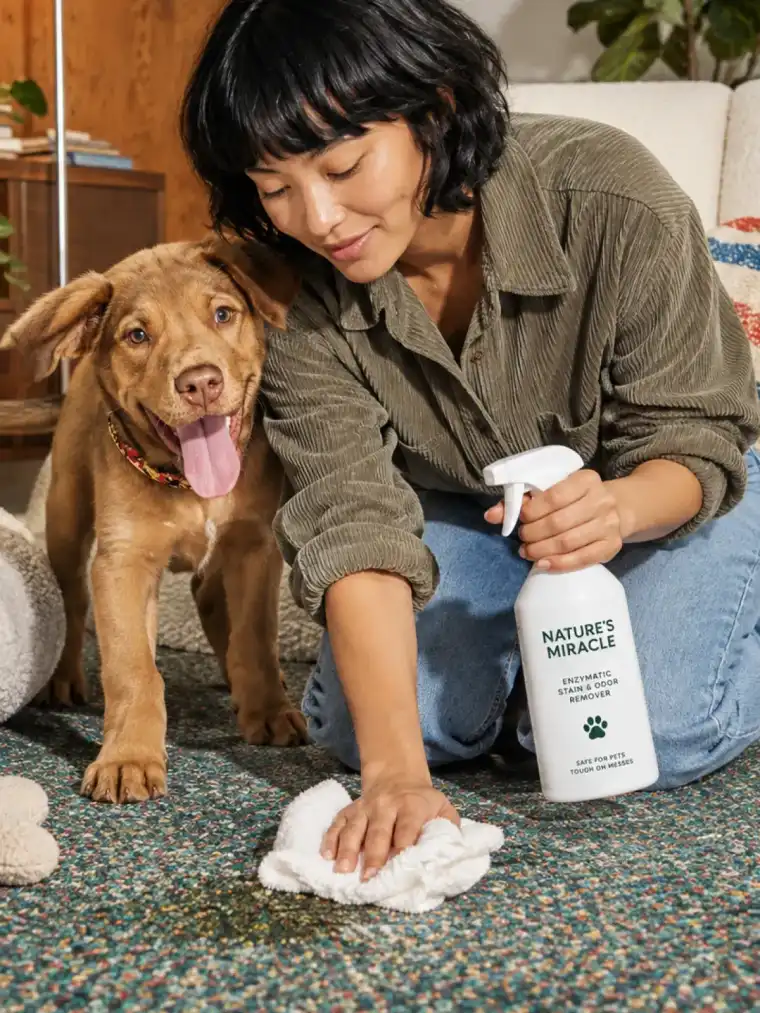
Dogs follow their nose back to old spots, so cleaning is the quiet half of potty training. Clean the spot immediately, get the scent out, and you avoid accidents in the same area later.
What to Do When Your Puppy Has an Accident
Say nothing. Clean it up. Move on. When you train a puppy, prevention beats correction, and accidents are a normal part of house training.
Punishment after the fact does not work. Per the ASPCA, a dog cannot connect a scolding to a puddle made minutes ago. Skip the scolding and loud noises, since they only create fear, not potty habits, and a scared puppy learns to hide. Catch your puppy mid-squat? Clap once, then rush to the potty spot and reward the finish.
Troubleshooting House Training Setbacks
Potty training rarely moves in a perfect straight line. Here are the most common setbacks and what to do when they show up.
Your Puppy Pees in the Crate
The crate is probably too big, or you are stretching intervals too far. Shrink the space with the divider and shorten the time between potty breaks.
Your Puppy Keeps Going in the Same Spot
Lingering odor pulls them back. Re-clean that potty area with an enzymatic cleaner and block access for a while. A dog that still will not pee outside needs the schedule tightened, not more freedom.
Your Puppy Regresses After a Good Week
Potty training setbacks happen, even after a good week, and they are often temporary. Tighten the schedule back to week-one frequency. A sudden change with no cause is worth a vet call to rule out urinary tract infections. Our guide on puppy potty training regression walks through fixes.
Your Puppy Potties Right After Coming Inside
They got distracted outside and never finished. Stand quietly at the potty spot for a few minutes and reward the moment they go.
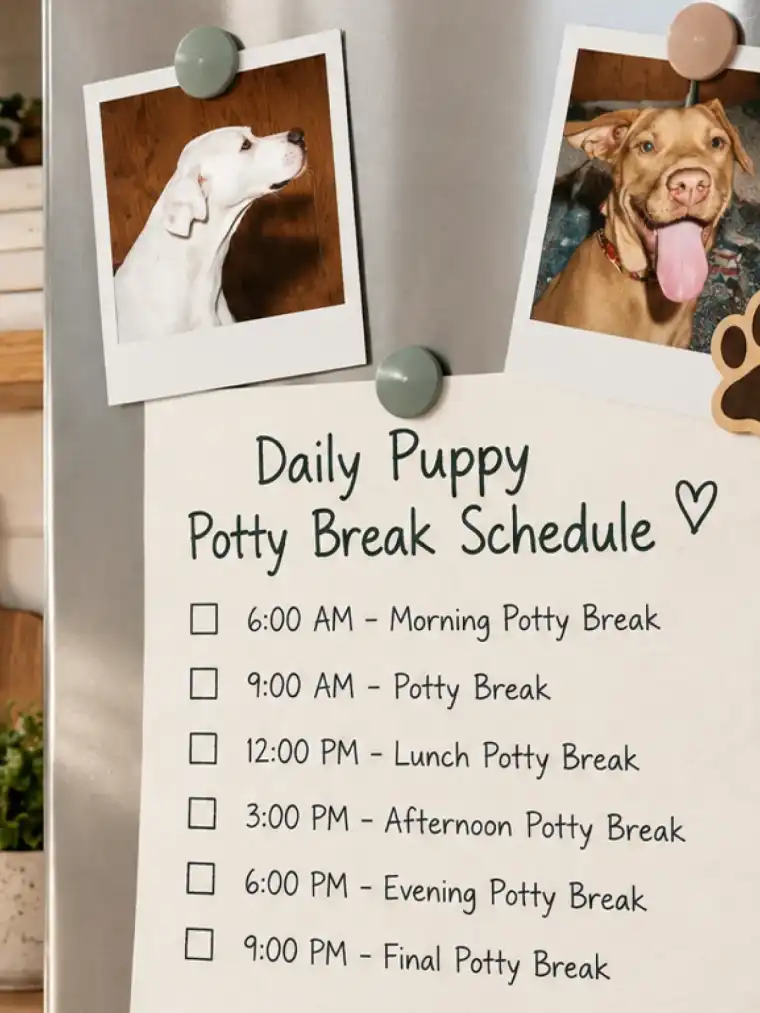
Daily Potty Break Schedule
Young dogs need more trips than you expect. Here is the fridge version. Take your puppy outdoors:
-
The moment they wake, and after every nap
-
Shortly after each meal and after drinking
-
After every play session and chew
-
Before bed, and once overnight for a young puppy
-
Every one to two hours in between while awake
Personalized Plan for Your Puppy
Every puppy holds it differently. Breed, size, and age shift the timing, which is why a generic potty training schedule only gets pet parents so far. Small breeds may need more frequent potty breaks, while some puppies start building reliable habits within weeks.
Woofz builds a step-by-step plan around your dog, from the puppy potty training process to first commands, and adjusts as your puppy grows. It will not train the puppy for you, and it does not replace your vet. It gives you the next step when you are unsure, so you can potty train a puppy through a busy week. Build your puppy's personalized plan and take the guesswork out of week one.
Frequently Asked Questions
What is the quickest way to potty train a puppy?
Consistency and prevention. Out on a tight schedule, reward outside right away, supervise or confine the rest, and clean misses. Most dogs need every one of those frequent potty breaks.
What is the 10-10-10 rule for puppies?
Honest answer: it is not an official veterinary rule, and definitions vary. The most common version means ten minutes at the potty spot, within about a ten-foot area, then ten minutes of close supervision inside. Treat it as one informal routine for potty training puppies, not a law.
At what age will a puppy be potty trained?
The AKC notes some puppies get reliable in days and others take several months. Some puppies develop reliable habits within days, while others need several months. Age, consistency, and the individual puppy all matter, so there is no exact finish line.
How do you break a puppy from peeing and pooping in the house?
Remove the chance to rehearse it. Limit access so indoor accidents cannot happen, take frequent bathroom breaks to the same spot, reward every time your puppy potties outside, and clean past accidents with an enzymatic cleanser. Dogs learn faster when you prevent accidents than when you scold, and consistently rewarding the behavior you want helps raise a well-trained puppy.
Miss a day. Miss three. Then get back on the schedule. Your puppy is learning, even on messy weeks.
Sources
-
American Kennel Club, How to Potty Train a Puppy
-
American Veterinary Society of Animal Behavior, Position Statement on Humane Dog Training