


Puppy Potty Training Schedule by Age (8 Weeks to 6 Months)

By
Woofz Team Updated on |Reviewed by
Woofz TeamBringing home a puppy is exciting, but potty training can get messy fast. The trick is to have a routine that works for your puppy's age. With the right schedule and a little consistency, you'll help your pup learn where to go and avoid plenty of accidents along the way.
Here is what to do week by week, from 8 weeks to 6 months. You'll also find a sample daily schedule to help prevent accidents and make potty training easier for both of you.
When to Begin Puppy Potty Training
Start the day your pup walks in the door. Most puppies come home between 8 and 10 weeks, and that is exactly the right time to start potty training. Waiting lets your puppy learn to pee in spots you will later need to undo.
Your dog learns fast at this stage, but the puppy body has not caught up yet. Puppies have small bladders, limited muscle control, and almost no warning time before they go. That is why the puppy potty training schedule carries the load, not the young dog.
The House Training Puppy Schedule by Age
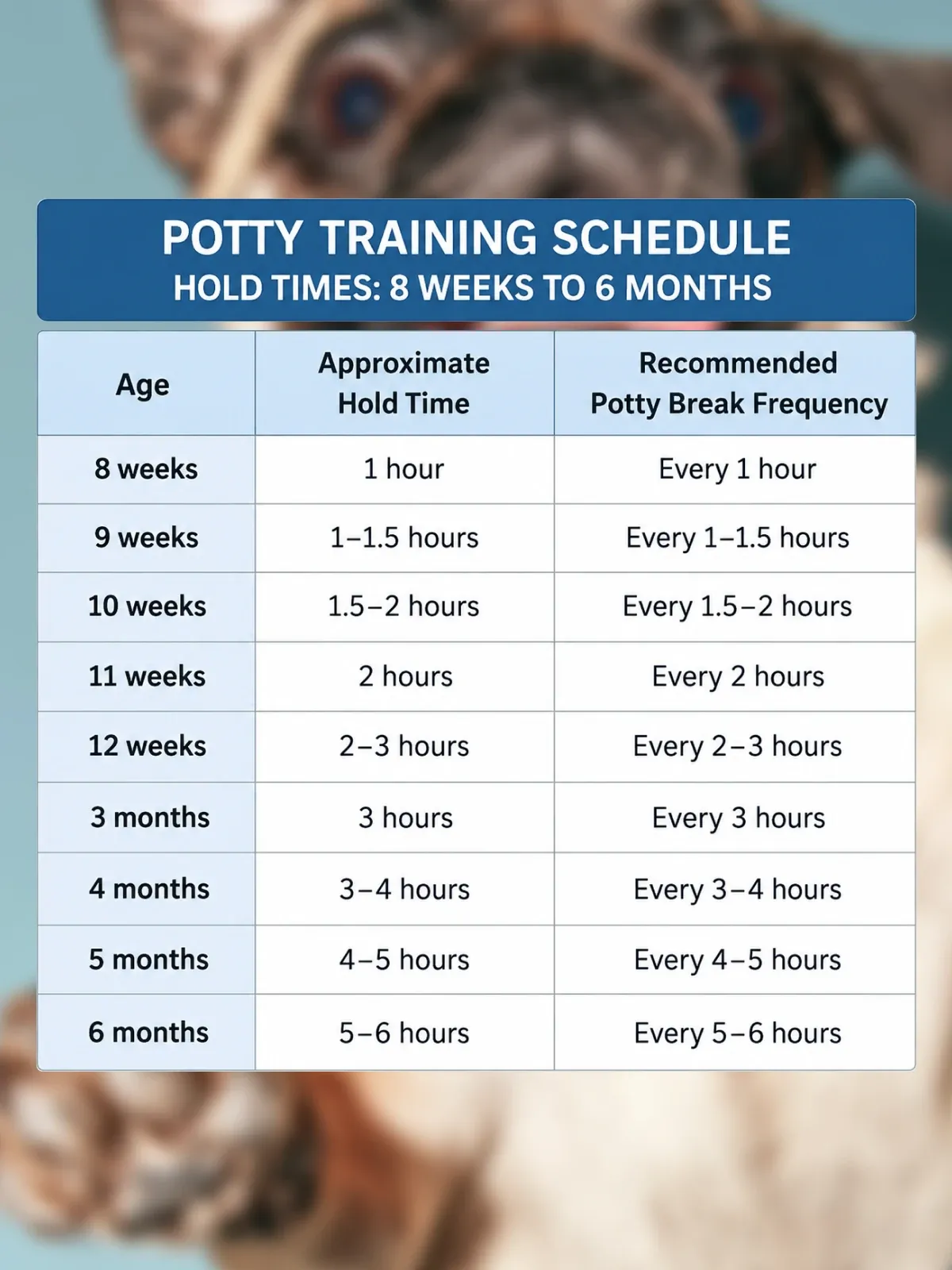
A common rule of thumb is that puppies can hold their bladder for roughly an hour per month of age, but this varies from dog to dog. Don't rely on this estimate alone. Take your puppy out more often, especially after meals, drinks, naps, and play.
8 to 12 Weeks
Potty breaks every 1 to 2 hours during the day, plus after eating, drinking, every nap, and every burst of playtime. Overnight, expect 1 to 2 potty breaks. Carry your pup outside if the yard is far to prevent accidents on the way.
3 to 4 Months (12 to 16 Weeks)
Potty breaks can drop to roughly every 3 hours. Many puppies thrive on 5 to 6 outdoor potty breaks per day plus one before bedtime. But some still need to go out every 1–2 hours while awake, plus after meals, drinks, naps, and play. Adjust the schedule to your puppy's needs.
This is a solid time to layer in crate training a puppy, since crate training can help prevent accidents between scheduled trips. It's also a good time to start teaching basic cues in short, positive sessions, working at your puppy's pace.
4 to 6 Months
Your puppy can usually hold for 4 to 5 hours during the day. Sleep time stretches through the night for many pups at this point. Some dogs are reliably well-behaved indoors by now, but others still need backup. Both are normal. Though your puppy may be able to hold their bladder for longer stretches now, keep offering regular potty breaks and take them out after naps, meals, drinks, and play.
Full house training usually lands between 4 and 6 months, but some puppies take longer, especially small breeds. The easiest dogs to potty train tend to get there faster.
Daily Puppy Potty Training Schedule (Hour by Hour)
Here's an example daily schedule for a 12-week-old puppy. Use it as a starting point, adding potty breaks after naps, meals, drinks, and play whenever needed.
Time | Activity |
|---|---|
7:00 AM | Wake, potty, eating, potty again (20 min later) |
9:00 AM | Potty, short training session, nap |
11:00 AM | Potty, playtime indoors, potty |
1:00 PM | Potty, eating, potty, nap |
3:00 PM | Potty, basic commands practice, short leash walk |
5:00 PM | Potty, eating, potty, playtime |
7:00 PM | Potty, calm settling |
9:00 PM | Final potty before bedtime |
2:00 AM | Overnight potty break (as needed) |
These times aren't set in stone. If your puppy starts sniffing, circling, or suddenly stops playing, head outside rather than waiting for the next scheduled break.
The puppy potty training pattern matters more than the clock. Potty breaks go after every nap, every meal, and every walk or play session. Keep meal times consistent so bathroom times stay predictable.
Watch your dog for sniffing, circling, suddenly stopping play, pacing, or whining near the door. Interrupt gently and get the puppy outside on leash. Lead to the same spot each time so the smell cues the behaviour.
Puppies sometimes pee when they get excited, especially during greetings. Check out our guide to excited peeing.
Crate Training and the Puppy's Schedule
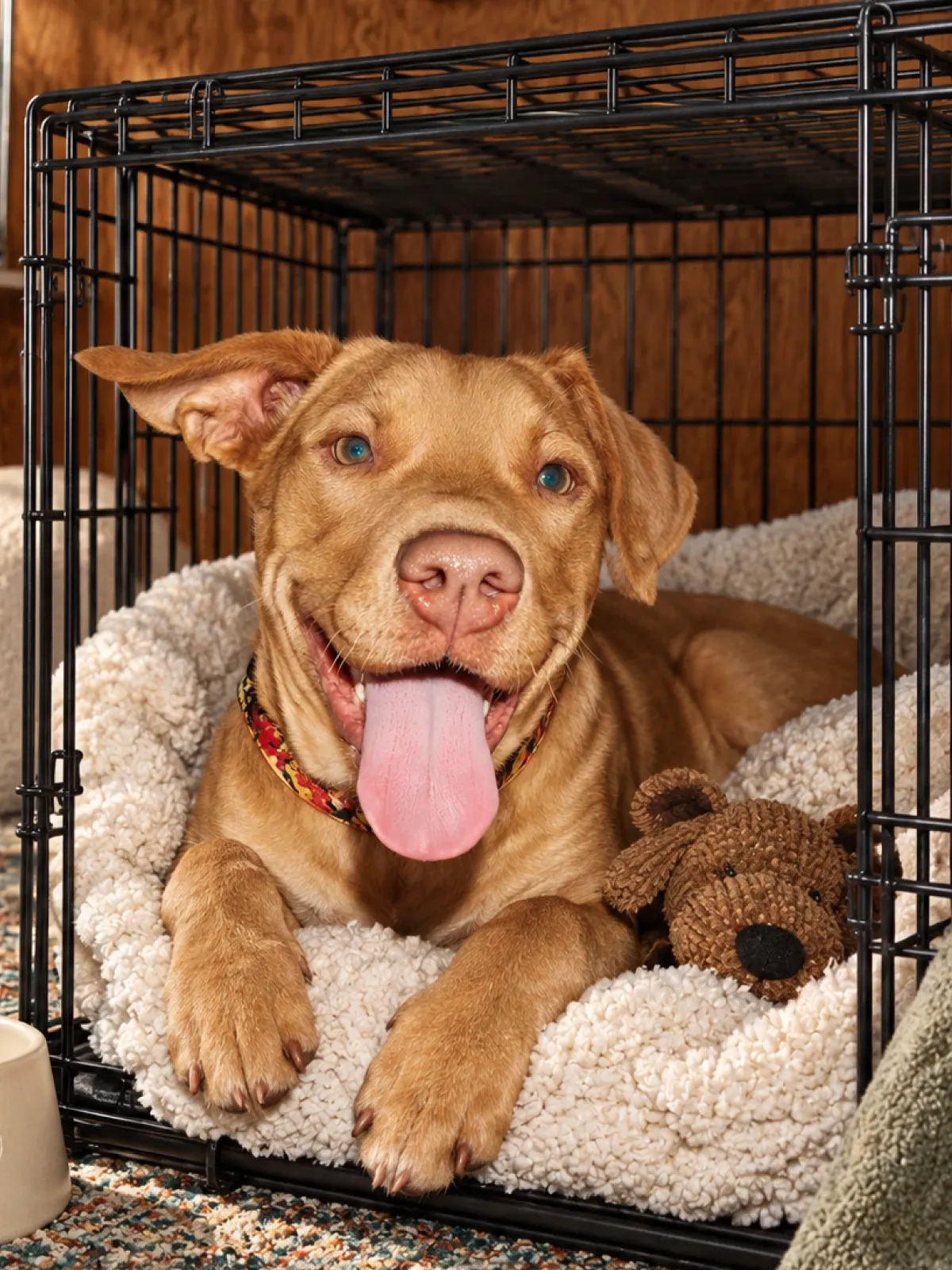
A properly sized crate works because most dogs avoid soiling where they sleep. The crate is a tool to prevent accidents, not a holding pen. It is helpful for sleep and for building a positive association with calm downtime, which supports the whole puppy's schedule.
Choose a crate where your puppy can stand up, turn around, and lie down comfortably. A divider can help adjust the space as they grow. Keep the crate stretches shorter than the pup's hold limit for that stage. If your puppy pees inside again and again, something is off. Our deep dive on stopping crate accidents covers it.
How to Handle Accidents
Accidents happen. All of them. Even with a tight routine. Three potty training rules:
- Do not punish. Scaring your puppy slows learning and can create fear based habits.
- Clean with an enzymatic cleaner, not vinegar or ammonia. Enzymes break down urine proteins and remove odors that pull the pup back to the same spot.
- Catch your puppy mid pee? Make a soft sound to interrupt, then rush outside to finish. Reward completion with a small treat and a calm "good boy" within 3 seconds.
That timing is the key trick. Positive reinforcement techniques work because the reward lands while the good behavior is still fresh in your puppy's mind. Rewarding your puppy immediately helps them connect going in the right place with something positive.
Potty pads can bridge the first few months in high-rise apartments, but they slow the transition to outdoor peeing. Move them closer to the door over time, then outside.
Adjusting the Potty Schedule as Your Puppy Grows
After a week with no accidents, stretch intervals by 30 minutes. If a mess happens, go back to the shorter potty breaks for a few days. Stay consistent on the parts that are working, so you reinforce good behavior rather than reset it.
Regression is common around 4 to 6 months, and again during adolescence. Hormones and new freedom pull focus away from the routine you built. A dog who was fine for weeks suddenly backslides. Our puppy potty training regression guide covers what to do without starting over.
Keep the structure even when things are going well. Give your puppy more freedom gradually, and keep supervising until their house training is reliable.
For adult dogs, the same ideas work. Many adult dogs need a restart because of a new puppy home dynamic, a long illness, or inconsistent earlier training. See our guide to house training an adult dog and the rescue version.
Red Flags: When to Call the Vet
Most accidents are schedule problems. Some are not. Call your vet if your dog:
- Strains or whines while trying to pee
- Passes very small amounts, very often
- Has blood or cloudy urine
- Starts drinking much more water than usual
- Suddenly regresses after being reliable for weeks
These can point to a urinary tract infection, bladder stones, or another medical issue. UTIs are common in young puppies and are treatable. When in doubt, book the appointment. Professional trainers and your vet are both part of the team.
A clear potty schedule, regular meal times, and positive reinforcement help your puppy build good habits. The key is consistency, not perfection.
FAQ
How to house train a puppy at night?
Last potty around 10 PM. If your puppy is healthy, you can ask your vet whether picking up the water bowl before bedtime may help. Always provide plenty of water during the day. Keep the crate near your bed in week one so you can hear a whimper and get out quickly. Expect one night potty trip for puppies under 3 months. Carry them out quietly, no play, no training, back to crate. By 4 to 5 months most pups sleep through.
What is a red flag for potty training?
Frequent small puddles, straining, blood in urine, sudden regression in a previously reliable dog, or a jump in water intake. These point to possible medical causes, not training gaps. Book a vet visit before adjusting the plan.
What age is the hardest puppy stage?
Many new dog owners expect the first few weeks to be worst. The harder phase is usually adolescence, roughly 6 to 18 months. Hormones shift, impulse control dips, and previously learned obedience can fall apart. Hold the line on the routine and it passes. For context on earlier stages, see our overview of puppy development by weeks.
Make Potty Training Easier With Woofz
Woofz is a dog training and care app that gives you a puppy training schedule tailored to your dog, their stage, breed, and current struggles. Not a generic PDF. A plan moving with your dog through every stage, with short lessons, basic commands, dog obedience work, and real-life reminders.
A few consistent minutes a day beats a one hour weekend blitz. Your pup is learning. You've got this.
Sources
- American Kennel Club, How to Potty Train a Puppy
- American Kennel Club, How to Potty Train a Dog in an Apartment
- American Kennel Club, The Ins and Outs of Potty Pad Training
- AKC Reunite, Housetraining: Tips for Preventing Accidents
- VCA Animal Hospitals, Struggling With Potty Training
- San Francisco SPCA, House-Training Your Puppy (PDF)
- PetMD, How To Take Care of a New Puppy: 8 to 12 Weeks