


How to Socialise an Adult or Rescue Dog: Practical Guide

By
Woofz Team Updated on |Reviewed by
Woofz TeamYou brought home a dog past the puppy window. Maybe a rescue with a foggy backstory. You are staring at a worried pet on a leash, wondering if dog socialization applies to an adult dog.
Short answer: yes. With realistic timelines and willingness to read your dog, you can socialize an older dog, help them feel safe, and build social skills for everyday life.
This guide covers socialization for an older dog and a plan you can stick to.
What Dog Socialization Means for an Adult Dog
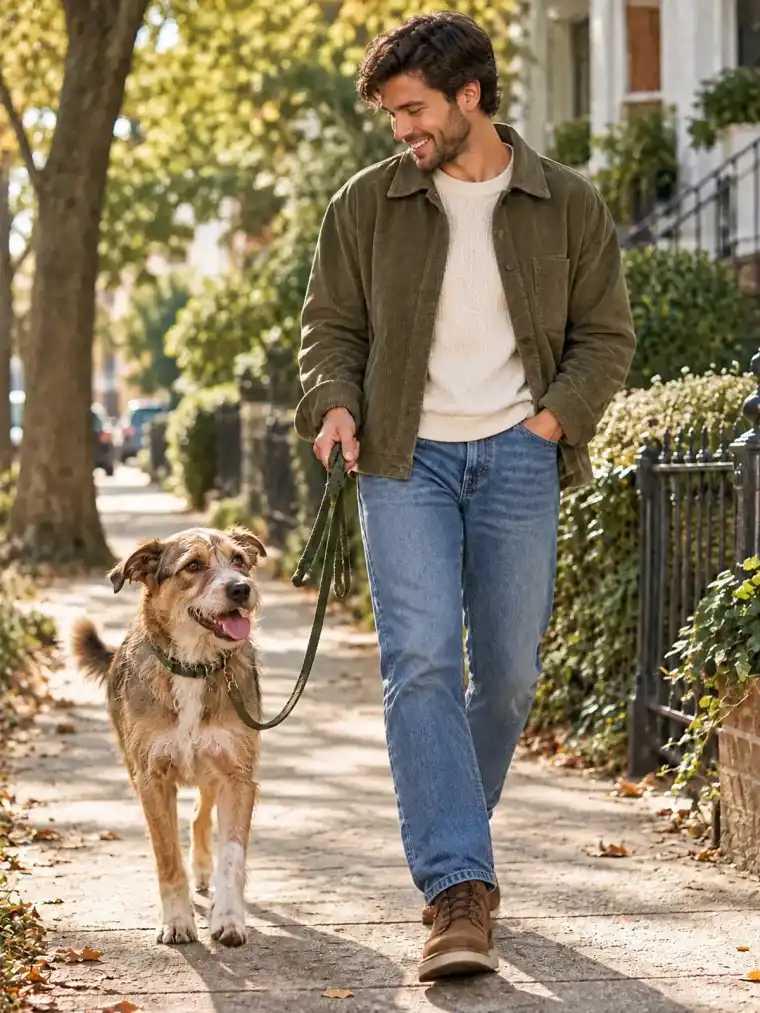
To socialize a dog is not "let them play with every dog they meet." Socialization is the process of building positive experiences with the environment your dog now lives in, at a distance and intensity they can handle without tipping into fear. It also covers exposure to new situations, other animals, and family members.
For a young puppy, the puppy's development window is limited. It pushes owners to socialize broadly with new people, new environments, sounds, animals, and other dogs. Skipping it shapes a dog's life. For an adult, especially a rescue, socialization looks different. You are working with a dog who already has opinions about their environment. Some are helpful. Some are wobbly. You add positive experiences on top so the wobbly bits get room to relax.
The core moves stay the same at every life stage. Controlled exposure. Positive reinforcement with food, treats, and play. Distance you can adjust. A pace set by your dog.
Socialization is not a phase. It runs across your pet's life. A well-socialized adult still needs regular walking and occasional new things to stay well adjusted.
Is It Ever Too Late to Socialize a Dog?
No, it is not too late to socialize a dog. That is the short version.
The critical socialization period does close. The American Veterinary Society of Animal Behavior describes the first three months of a puppy's life as the primary window when sociability outweighs fear. Miss the first few months and you cannot rewind.
A puppy raised with limited exposure to humans, other animals, and different things in their environment is more likely to grow into a fearful adult with fear-based behaviors, aggressive behaviors toward strangers, or reactivity around new dogs. A puppy who missed that window may carry it into adulthood, and any attempt to socialize them later has to work with that history.
What you can still do to socialize an adult is build new social skills and layer in fresh socialization experiences through counterconditioning and gradual exposure. Adult brains are less plastic than a puppy's, so progress feels slower. A previously undersocialized adult can learn to walk past strangers calmly, sit at a coffee shop patio, meet a handful of trusted dog friends, and handle situations that used to trigger panic. Progress builds slowly across various situations.
Some behaviors sit outside “just needs more time.” True fear-based aggression, serious resource guarding, or panic-level reactivity need help from a qualified behavior professional or veterinary behaviorist.
3-3-3 Rule for Dogs and Where Socialization Fits
If your new dog is fresh from a shelter or foster, do not rush into active socialization on day one. Let them decompress.
Rescue organizations use a loose guideline, the 3-3-3 rule: three days to adjust to the environment, three weeks to build a routine, three months to deepen the relationship and feel safe. The San Francisco SPCA calls it a guideline, not a rule. Some dogs need less. Traumatised dogs need more. If your dog is hiding under the couch on day two, that is decompression, not a socialization problem. Pushing new people into that window can create negative associations you will spend weeks undoing.
How socialization fits into the first few months:
-
First 3 days: quiet home, minimal visitors, no dog parks, no doggy daycare, no puppy class. Let them sleep, eat, watch. Do not push them to interact. Let them see how the household members interact around them.
-
First 3 weeks: short calm walks in your neighborhood, low-pressure introductions to family members at home, one or two calm friends over at a time. Start reading body language and watch for signs of stress.
-
First 3 months: planned exposure to new environments and time to introduce trusted friends, distance work around other dogs on leash, structured meetings with a couple of trusted dog friends, real training classes when the dog is ready.
Our guide to the 3-3-3 rule for rescue dogs goes deeper. Pair it with our rescue dog training guide for foundations.
Signs Your Adult Dog Is Poorly Socialized
You cannot fix what you cannot name.
Signs an adult dog missed key socialization experiences during the critical socialization period:
- Freezing, cowering, or trying to bolt when a person approaches.
- Barking or lunging on leash at other dogs even at a distance.
- Startling badly at everyday sounds: bin lorries, a dropped pan, a scooter.
- Excessive stress around new people, or people wearing hats, high-vis vests, or hoods.
- Refusing food, treats, or play when out.
- Nipping or a warning bite when a person crowds their space.
- Poor impulse control around joggers, cyclists, or skateboards.
- Struggling to settle at a coffee shop for five minutes.
- Trouble with basic social skills like meeting a calm new dog.
None mean your dog is broken. It means your dog has gaps. Some close quickly. Others take months. Our common dog fears and phobias and critical signs of stress in a dog pieces help you tell a nervous dog who is coping from one who has crossed threshold.
Before adding exposure, learn your dog's baseline. What does calm look like? Uneasy? "One more step and I growl"? Watch for the ladder of stress: lip licking, yawning out of context, a slow head turn, a stiff pause, whale eye, hackles up, tucked tail. Add distance. Try again later. Our canine body language piece breaks each signal down.
Build the Socialization Process Step by Step
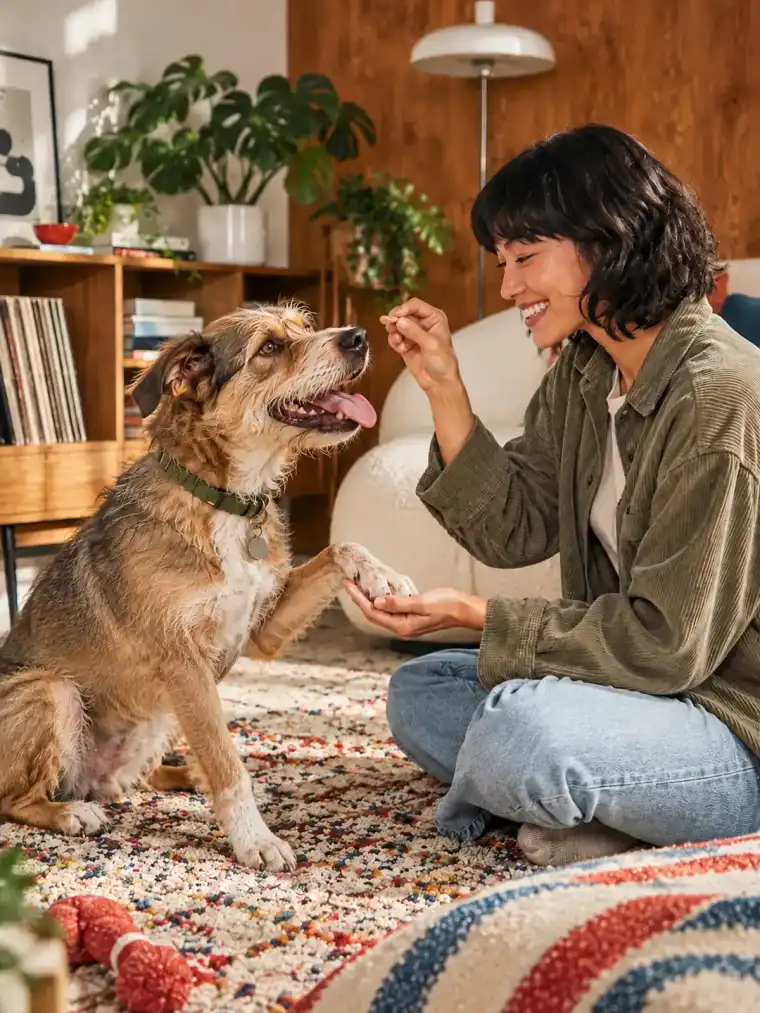
The socialization process for an adult dog usually works better in short, positive sessions built around one goal per outing. No hero walks. Sessions should be fun, rewarding, and short.
Start under threshold at home
Teach the foundations first. Teach sit, teach a hand-touch cue, teach a solid recall, teach a settle on a mat. These are essential tools you use to redirect your pet. Use small food rewards and treats. Keep sessions rewarding and short.
Positive reinforcement, not corrections. The American Animal Hospital Association warns that aversive training can worsen fear-based behaviors rather than fix them. New to reward-based work? Our clicker training guide is a good start.
Introduce new people to your dog on your terms
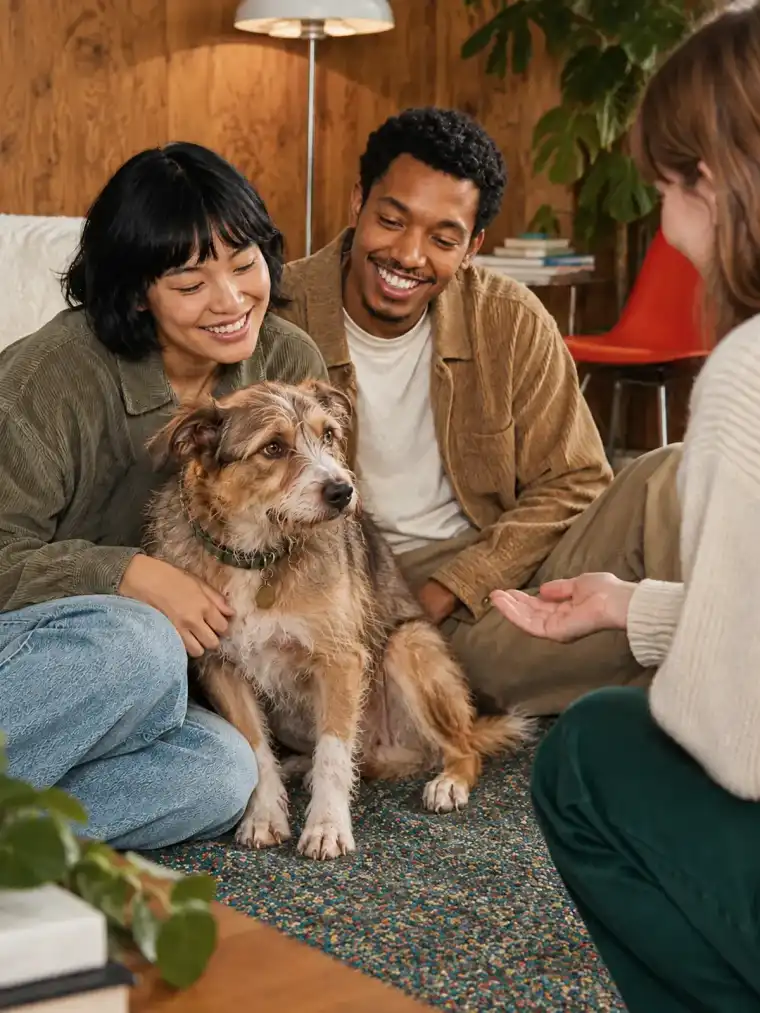
When friends visit, ask them to ignore your dog. No cooing, no reaching, no direct eye contact. Let your dog approach if they want. Toss treats on the floor near, not to, your visitor so your dog builds positive experiences around new people in the environment. If your pet stays behind the couch, fine. This is how you introduce humans without pushing your pet into a corner.
Add distance work with other dogs and animals
Do not walk straight up to another dog on leash. Park where you can watch dogs pass from a distance. Reward calm looking. Move closer over sessions, not minutes. Confidence around dogs is built at distance first. Structured meetings with one well-adjusted friend's dog beat any chaotic dog park visit. To introduce your adult dog to a housemate cat or small animals in the home, use baby gates and short controlled sessions. Our introduce dogs to each other piece covers the mechanics.
Take your dog into new environments slowly
Pick one manageable outing per week. A quiet cafe terrace on a Tuesday, not brunch on Saturday. A hardware store aisle. Different surfaces, sounds, sights, and smells. Bring treats. Keep sessions around fifteen minutes. Leave while your dog is still doing well. This teaches your dog that new experiences and new situations end while things are still fun.
Adult Dog and Others: Cats, Kids, Other Dogs
Other animals in the household, especially cats, deserve a slow structured introduction. Separated spaces for the first week. Scent swapping. Baby-gate visual introductions before face-to-face contact. If your pet gets stiff or fixated, add distance.
Kids are their own category. Even a dog who has never bitten can be pushed into a bite by a fast toddler. Before you socialize a dog with kids, set rules: no crowding at meals, no touching on the bed, no hugs around the neck. Our dogs and children guide covers safety for family members with young kids.
Other dogs are where most owners rush. Slow down. A trusted playmate, on neutral ground, on leash to start, beats a chaotic scene at dog parks. If your adult already shows leash reactivity, treat it as its own project before you introduce them to other dogs. Our reactive dog piece covers the counterconditioning approach.
When Training Classes or a Professional Dog Trainer Make Sense
Training classes are useful for two things: teaching your adult dog to focus around distractions, and giving you feedback on your handling. They are not your dog's first exposure to many dogs at close quarters. If your rescue dog is reactive, ask about private lessons first. A local puppy class is not the right fit for a fearful adult dog, but an adult-only reactive class may be.
A professional dog trainer should use reward-based methods and describe their approach in plain language. Skip anyone leaning on prong collars, alpha rolls, or "dominance" talk. Behavior problems in animals, per the AAHA, are a top reason dogs get relinquished, so this is worth getting right. For serious fear, aggression, or panic-level anxiety, look for a veterinary behaviorist or certified behavior consultant, not a general obedience trainer. Our older dog training piece covers a solid starter plan.
Is It Bad to Not Socialize Your Dog with Other Dogs?
This question gets asked a lot. Honest answer.
Your dog does not need dog friends the way you need human friends. Some dogs love other dogs throughout their lives. Some tolerate them. Some prefer to skip the whole thing after adolescence, which is normal. A dog who is neutral on walks, who does not lunge or bark or panic is showing good social skills.They do not owe anyone play at dog parks.
The problem shows up when an adult cannot walk past another dog without reacting, cannot pass a cafe with a dog tied up outside, or refuses to socialize even briefly. That is a functional problem worth working on. Reactivity work is more useful than trying to socialize a dog to love every other dog, or forcing them to socialize at dog parks.
Skip dog parks at that stage. Dog parks are an unpredictable environment and can do more harm than good to a nervous adult. Even well-run dog parks are a rough intro. Work up to controlled setting play with one or two vetted playmates. Calm, regular walks help build confidence.
Signs of a well-socialized adult: steady body language on walks, ability to settle in public, willingness to take treats, and calm curiosity around new experiences and new situations. These are the settled behaviors and social behaviors to track as your dog builds confidence.
Where Woofz Fits Into the Socialization Process
Woofz is not a replacement for a professional trainer. What it does well is daily practice: short lessons at home to teach commands, command work you layer into walking sessions, and troubleshooting programs for common everyday challenges. Working with a rescue? Our life-stage content covers what to teach and how to socialize each week.
Ready to socialize with a plan? Take the quiz and get a personalized path: start the Woofz quiz.
Small steps, done most days, beat one perfect session per month.
Your pup is not behind. They are where they are. That is where the work starts.
Sources
-
American Veterinary Society of Animal Behavior. Position Statement on Puppy Socialization.
-
San Francisco SPCA. The 3-3-3 Guideline for Dogs.
-
American Animal Hospital Association. 2015 AAHA Canine and Feline Behavior Management Guidelines.
-
American Animal Hospital Association. Behavior Management Toolkit: Understanding the Guidelines' Key Points.
If timing is where you struggle, our clicker training guide explains the mechanics. For a broader look, our overview of dog training methods walks through the research.
Keep Training Sessions Short
Adult humans overestimate how long a puppy can focus. The AKC recommends that training sessions run 5 to 10 minutes each and end on a positive note. That is plenty for most young puppies before they lose focus.
Five short training sessions a day beat one long session. That is the puppy training schedule that sticks. Sit while the coffee brews. Come during a hallway walk. Leash manners for one minute at the front door. Small, often, playful.
Practice in Different Settings
A cue that works in your kitchen does not automatically work in the park. Dogs generalize slowly. Once your pup knows a cue at home, practice it in the yard, on the sidewalk, in a friend's living room, in the vet's lobby.
The step many pet parents skip. It is why a dog who "knows sit" freezes when a stranger asks for "sit" outside. Practice widely, and reliability builds confidence for both of you.
Stay Consistent With One Cue Word
Pick one word per behavior. Not "sit, sit down, park it." Just sit. Puppies tend to learn faster when the same word predicts the same action and the same reward. Get the whole household on the same script.
When to Begin Training in a Class
Many trainers recommend enrolling between 8 and 12 weeks of age, while the socialization window is wide open. Look for a well-run class that follows appropriate vaccination and illness-prevention protocols.
A good puppy training class does more than teach obedience. It is a controlled space where your puppy meets other puppies, other people, and unfamiliar sounds while a pro watches.
Look for a trainer who uses reward based methods. Skip anyone who talks about being "the alpha," uses shock collars, or promises to fix behavior in three sessions. Force free credentials: CPDT-KA, KPA-CTP, IAABC. For more serious behavior issues like aggression, resource guarding, or separation anxiety, look for a qualified behavior professional or veterinary behaviorist.
Working with a coach helps catch the small things you might miss alone: how you hold the leash, when you mark the correct behavior, whether your reward timing is off by a second.
What About Older Dogs? Is It Ever Too Late?
You do not have to begin training a puppy at 8 weeks for the dog to turn out well. Rescued a 2-year-old? You can still teach almost everything on this page.
What changes is speed. An older dog carries habits and sometimes fear responses that a young age puppy does not. Our guide on how to house train an adult dog shows how to rebuild a solid foundation of good habits at any age.
Right track at any age: reward what you want, manage or redirect what you do not, keep it short and positive.
Puppy Training FAQs
What Is the First Thing You Should Train a Puppy On?
Teach their name first, then sit. Name recognition gives you attention before you cue anything else, showing excitement in your voice so your puppy wants to check in. Sit is often the easiest to lure and fastest to reward, which makes it the entry point to obedience training and to the perfect pup routine you are building.
What Is the 7-7-7 Rule for Puppies?
The 7-7-7 rule is a trainer heuristic, not a clinical guideline. The common version says a puppy should meet 7 different people, walk on 7 different surfaces, and visit 7 different locations by a certain age (versions vary between 7 and 12 weeks old). A useful checklist for early socialization, but what matters is the underlying idea: varied experiences that build a positive association with the world during the sensitive period.
Can I Leave My 8 Week Old Puppy Alone for 3 Hours?
No. According to the AKC's guidance on leaving a puppy alone, puppies under 10 weeks old typically cannot hold their bladder more than an hour. Between 10 and 12 weeks, many manage about 2 hours. From 3 months on, the rule of thumb is one hour per month of age, up to about 6 hours for an adult dog. Three hours is a long stretch for an 8-week-old puppy and makes accidents much more likely. It also gives you less opportunity to gradually teach alone time.
How Long Does Basic Puppy Training Take?
Depends what you count as "done." Basic commands, simple commands like sit, come, down, stay, can look reliable in 2 to 4 weeks of daily practice at home. Housetraining usually takes 4 to 6 months. Impulse control and off-leash reliability keep developing through your dog's first year. Our how long puppy training takes walks through realistic timelines.
Ready to Start Training Your Puppy?
You do not need to figure this out alone. Tell us about your dog and we will build you a plan based on their age, breed, and what you are working on today.
Take the free Woofz quiz and get a puppy training plan built for your dog →
Related: tips for first time puppy owners if this is your first, preparing for a puppy checklist if you are still shopping, expert guide to basic puppy training for the full schedule day by day.
Training your puppy is not a project with a deadline. It is a habit for your puppy and for you. Reward the try.
Sources
-
American Veterinary Society of Animal Behavior (AVSAB), Position Statement on Puppy Socialization.
-
American Veterinary Society of Animal Behavior (AVSAB), 2021 Position Statement on Humane Dog Training.
-
American Animal Hospital Association (AAHA), 2019 Canine Life Stage Guidelines.
-
American Kennel Club, Teach Your Puppy These 5 Basic Commands.
-
American Kennel Club, How Long Can a Puppy Be Left Alone?
How the Schedule Shifts From Here
Your 4-month-old puppy's schedule is one stepping stone through the life stages ahead. A four-month-old puppy who follows this pattern usually sails into month five without drama.
-
5 months: two meals for many breeds. Longer awake windows. Sleep drops toward 14 to 16 hours.
-
6 months: twice-daily meals for nearly all breeds. Bladder waits 4 to 6 hours. Sleep drops toward 12 to 14 hours.
-
9 months: adolescence peaks. Consistent training pays off. Recall may temporarily disappear as many young dogs test boundaries.
-
12 months: small breeds close to full-grown. Large and giant breeds still growing.
Any 4-month-old puppy schedule loosens as your puppy grows, but the pattern of routine, rest, and play holds. Adult dogs run on twice-daily meals and a walk or two. Puppies get there.
Answers to the Most-asked Questions
What month is hardest with a puppy?
Many owners say months 6 to 9 are the hardest. Adolescence peaks, previously reliable cues wobble, energy spikes, testing behaviors are common. Puppies push harder here than as a young puppy. Four months may feel easier, but early adolescent behaviors can already start showing up.
How much bigger will a puppy get after 4 months?
Depends on puppy's breed. Puppies grow at different rates by breed and individual. Small breeds are usually much closer to adult size by four months than large or giant breeds. Large and giant breeds have much more growing left to do.
What should a puppy be doing at 4 months?
By four months, many puppies are working on skills like these: name response, sit, and recall on a long line. They can also practice loose-leash walking in quiet spaces and settling in the crate. Potty training should be coming along as well. Adult teeth are erupting. Adolescence is on the horizon for puppies at this age. Many puppies can hold their bladder for around four hours during the day.
What time should a 4-month-old puppy go to bed at night?
A consistent bedtime between 9 and 11 pm works for most households. Exact time matters less than consistency for puppies at this age. Aim for 8 to 10 hours in the crate overnight and dinner three hours earlier.
Where Woofz Fits In
A schedule on paper is easy. Sticking to it (when to feed, potty, train, nap) is where most new puppy owners drown. That's especially true between 12 weeks and 6 months. Puppies raise the difficulty as their brains grow.
Woofz gives your puppy a personalized daily plan, a lesson library of basic commands and behavior work, and a training schedule that fits between meetings and school runs. Training, care, and guidance in one app for the whole puppy's routine.
For a schedule that fits your furry friend's breed, age, and real life at home, take the free Woofz puppy quiz. Two minutes.
Small habits, done daily, turn four months of testing into a settled young dog. Puppies pay you back in the second half of the first year. Your puppy will not be perfect. Your schedule will not be either. Both will get there in the end.