


Bell Training for Dogs: Teach Your Dog to Ring to Go Outside

By
Woofz Team Updated on |Reviewed by
Woofz TeamIf your pup paces, scratches, or stares at you with that silent "please open this" look, bell training gives you both a cleaner way to communicate potty time. You hear a jingle, open the door, and the scratching, whining, and surprise accidents fade.
The idea is not magic. It's a simple way to build on your dog's potty training routine. With repetition and rewards, your dog learns that ringing the bell is a way to ask to go outside.
What Is Bell Training for Dogs?
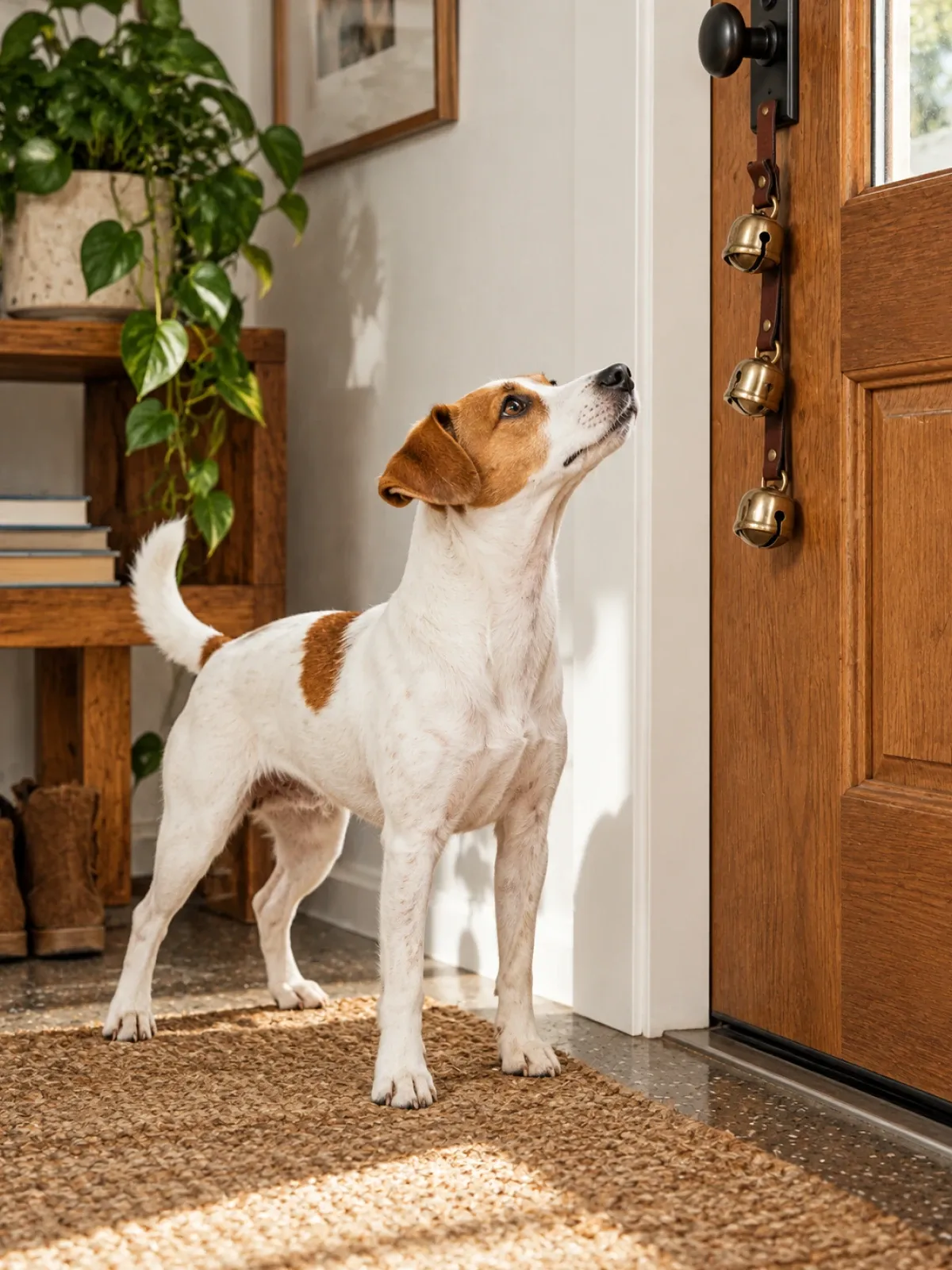
Dog bell training teaches your dog to ring a bell to signal they need to go out. The dog potty bell hangs beside the potty door at nose or paw level. The jingle becomes a clear cue. No barking, no scratching, just a sound you can act on.
The method is association. Dog touches bell, bell rings, you open the door immediately, point them to the right spot, treat. Repeat, and your dog learns to ring the bell as the shortcut outside.
This is reward-based training, in line with the current scientific consensus. The American Veterinary Society of Animal Behavior recommends reward-based methods for all canine training because they are more effective and better for welfare than aversive methods.
Does Bell Training Actually Work?
For most dogs, yes. Bell ringing works best on an existing potty training routine. If you walk your dog on a schedule and treat outdoor elimination, the bell gives them a quick way to communicate. Many dogs catch on fast because the sound links action and outcome.
It is less effective in a chaotic home, with inconsistent responses, or when a medical issue is driving accidents. See a vet first. Add structure second. Hang the bell third. Some dogs also use the bell for things it was never intended to signal.
Choosing the Right Dog Bells
Training bells are cheap. Pick based on your dog's size, your setup, and sound sensitivity.
Hanging dog bells on a strap
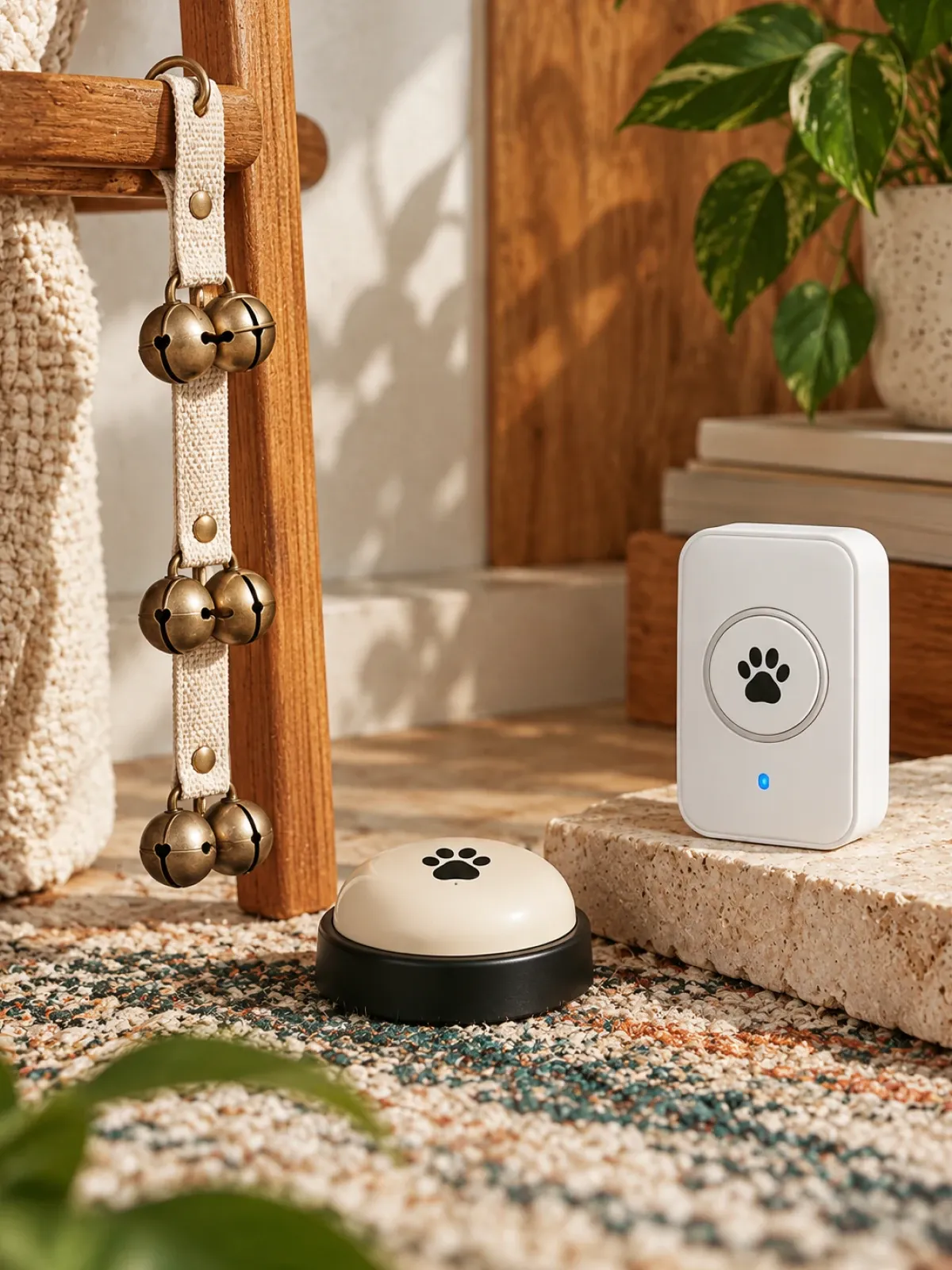
The classic. A strap of dog training bells, often sleigh bells, hangs from the door handle at nose height. Your dog nudges the strap, the jingle sounds, you move. Cheap, easy to hang, and the most common type of potty bells.
Stationary button bells for paw taps
A stationary bell system sits on the floor near the exit. Your dog uses a paw instead of a nose. A fine option for larger dogs, dogs that dislike straps, or anyone who wants a louder signal. The tradeoff: accidental ringing from paws running past.
Electronic dog doorbell options
A wireless dog doorbell pairs a button with a chime unit elsewhere. Useful if the standard jingle sounds too loud, if you work in a back room, or if someone sleeps during the day. Electronic doggy doorbells also help in multi-level homes.
Making potty bells from simple craft store supplies
You do not need to purchase anything fancy. Simple craft store supplies, a ribbon, jingle bells, and ten minutes produce a working dog potty bell for your doorknob. Or shop ready-made for a few dollars. The DIY works just as well.
Where to Hang the Bell
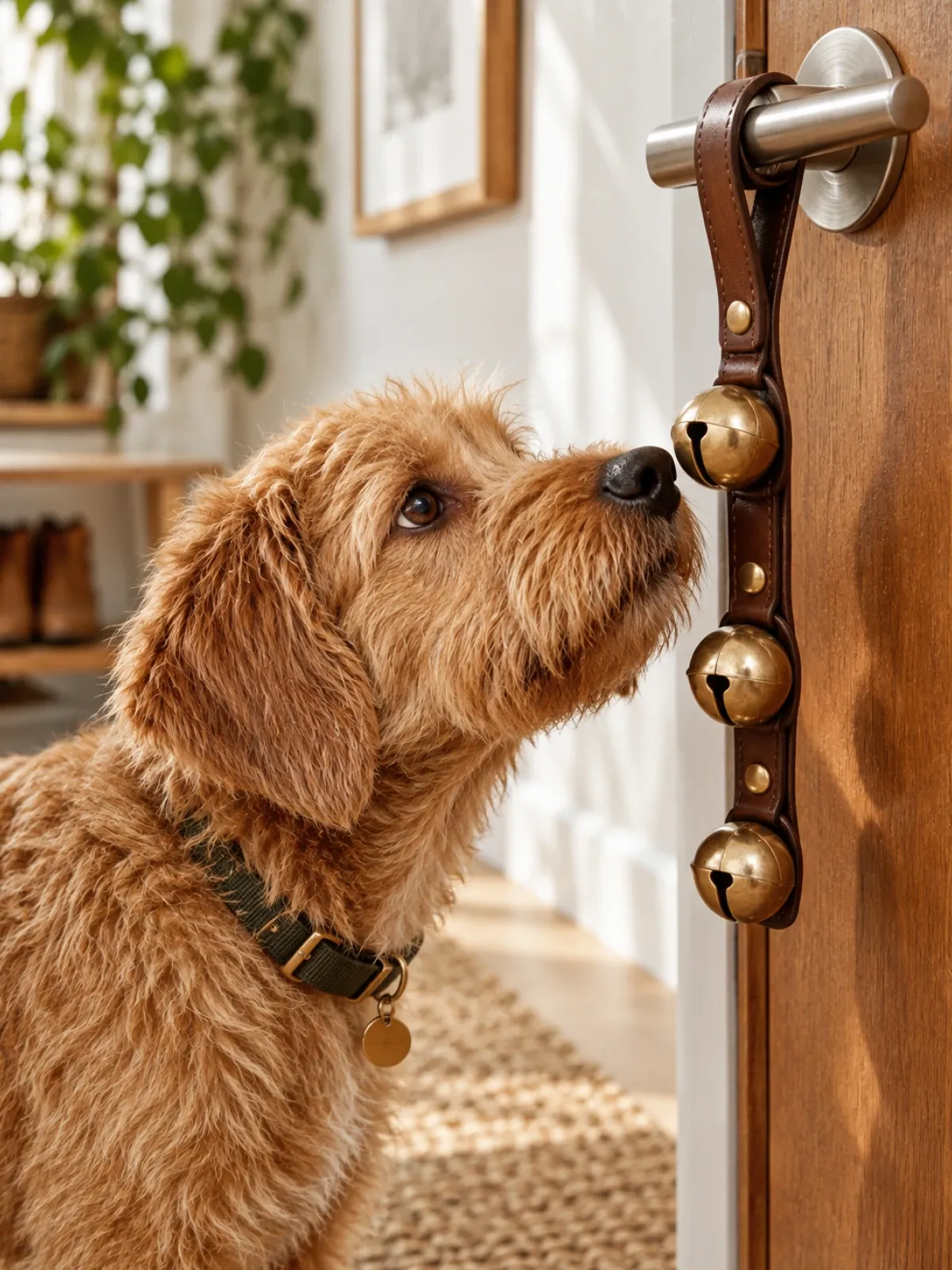
Place the bell at your dog's nose or paw level, beside the exit you use for potty training breaks. The right height keeps the behavior natural. If your dog has to stretch or crouch, they may quit.
For medium and large dogs, hang off the door handle. For small breeds, use a lower hook. If the door knob is slick metal or the doorknob sits awkwardly, a suction hook on the glass works. The bell should swing so a nose nudge rings clearly from another room.
What You Need Before You Start
Pick one exit. Choose a dedicated outdoor potty area so your dog links the ring, exit, and the right place in one loop.
Grab high-value treats. Not kibble. Something small, soft, and strong-smelling, used only for training. Keep a clicker if you have one. If not, a marker word like "yes" works. For more, see our guide to clicker training.
What to prep:
- One potty bell (hanging or stationary).
- One designated exit.
- One outdoor potty spot.
- A pouch of small, high-value food treats.
- One verbal cue you use every single time.
Keep practice short: 5 to 10 minutes a day in consistent bursts.
How to Teach Your Dog to Ring a Bell: Step by Step
Teaching your dog to ring a bell takes a few simple steps. Here's how to build the behavior from initial curiosity to independent ringing.
Step 1: Introducing your dog to the bell
Introducing the bell starts with no pressure. Set it on the floor and let your dog inspect it. Mark any contact with your clicker or a "yes" and treat. The goal: a positive object, no cue yet. Two or three minutes is enough. Repeat for a day or two.
Step 2: Teach your dog to ring a bell on cue
Lure your dog toward the bell with a treat held behind it. The moment the nose or paw touches it and the bell rings, mark and treat. Keep going until your dog can ring the bell on their own, then layer the verbal cue. This is essentially a touch command with a noisy target.
Step 3: Move the bell to the door
Hang the bell on your chosen door at the right height. Guide your dog, prompt the touch, mark the ring, treat. Practice at the doorway so the context shifts cleanly. Fade the food lure by waiting a beat before the treat.
Step 4: Connect the ring with potty time
The key step. Every time you take your dog out, prompt them to ring the bell first. Use one short verbal cue, like "ring" or "bell." When you hear it, open the door and walk to the designated outdoor potty area. Treat elimination the moment it happens. The connection: ring the bell, door opens, potty, treat. No shortcuts. That is the turning point that converts a cute trick into real communication.
Step 5: Fade the prompt and build independence
After a week or two, pause at the doorway before the cue. Watch for your dog to ring the bell on their own. The first independent ring is a big moment. Celebrate it, treat generously.
Keep up with scheduled potty breaks, especially with young puppies learning potty basics. They still need frequent trips outside, even if they're learning to use the bell.
Common Bell Training Problems and How to Fix Them
Bell training doesn't always go smoothly, and your dog might need a little extra help along the way. Here are some common hiccups and how to handle them.
My dog is scared of the bell
Some dogs flinch immediately at the first jingle. Lower the volume, swap sleigh bells for a quieter chime or electronic doorbell, go back to Step 1 at a distance. Mark every brave look. Dogs adjust once the sound stops being a surprise.
My dog will not ring the bell at all
Try a different bell, height, or food. Certain types of dogs prefer paws over noses, or buttons over straps. If your dog is distracted, shrink the session. Three one-minute reps beat one long slog.
My dog rings the bell too often
Your dog has figured out that ringing the bell opens the door, so they may start using it to ask for playtime or a chance to explore. Keep these trips short and boring: take them to the potty spot, give them a chance to go, and head back inside if they don't.
Keep rewarding outdoor potty breaks and stick to your regular schedule. If your dog suddenly starts asking to go out much more often, check with your vet to rule out a medical issue. For setbacks beyond bell training, see our puppy potty training regression write-up.
Bell Training Timeline: What Is Realistic
Most dogs learn the ring-and-go process within two to four weeks of training on a consistent schedule. Some get it in days. Others need two months. Breeds, ages, previous training, and household consistency all shift it.
A puppy can start the process around the same point as potty basics, usually at eight weeks of age. Training your dog as an adult works too, sometimes faster because focus holds longer. Dogs of various ages and breeds follow the same process.
Where Bell Training Fits in a Bigger Plan
Bell training is one layer in house training. If you are still training your dog on the basics, start with a solid potty training routine first and introduce the bell once outdoor elimination is already consistent. The same goes for adult dogs re-learning home habits or recent rescues settling in.
Many families pair bell training with crate training. The crate controls indoor access. The bell gives the dog a voice. Together, they may shorten the process.
If you want a structured place to start, the Woofz app builds a step-by-step plan tailored to your pup's age, breed, and goals. Basic commands, clear communication cues, behavior programs. Take the Woofz quiz to get your dog's plan in minutes.
Bell Training FAQ
Is bell training good for dogs?
For many households, yes. Bell training can improve communication, reduce indoor accidents, give your dog a way to ring a bell and ask. It will not help if a medical issue is behind the accidents.
How long does it take to bell train a dog?
Two to four weeks of consistent training is reasonable. A puppy with a short attention span may need longer. Older focused dogs can catch on in days.
Can potty bells replace regular potty training?
No. Potty bells supplement a structured potty routine. For a young puppy, scheduled outings, supervision, and reward-based habits do the heavy lifting. The bell adds a signal, not a substitute.
What is the hardest command to teach a dog?
A reliable off-leash recall, usually. It competes with every smell, dog, and squirrel in sight. Training your dog to ring a bell is easier: the action is small, the treat is immediate, context never changes. See our seven dog commands every pup should know overview for the harder ones.
Can you bell train an older dog?
Yes! Dogs can learn to use potty bells at any age. Introduce the bell gradually, reward your dog for touching it, and connect the ringing with going outside. Just be patient and keep your regular potty routine going.
Hang the bell. Keep sessions short. Let your dog, your very good friend, ring the bell.
Sources
- American Kennel Club. How to Teach a Dog to Ring Bell to Go Outside.
- American Veterinary Society of Animal Behavior. (2021). Position Statement on Humane Dog Training.
- American Kennel Club. How to Potty Train a Puppy.
- VCA Animal Hospitals. Housetraining for Puppies and Dogs.