


Dog Training Tools: What You Actually Need (and What to Skip)

By
Woofz Team Updated on |Reviewed by
Woofz TeamWalk into any pet shop and you'll see gear promising to turn your dog into a well-mannered angel. Head halters. Vibration collars. Pouches, clickers, lick mats, long lines, slip leads, "no-pull" harnesses in six colours. Most of it earns a drawer slot for a week, then collects dust.
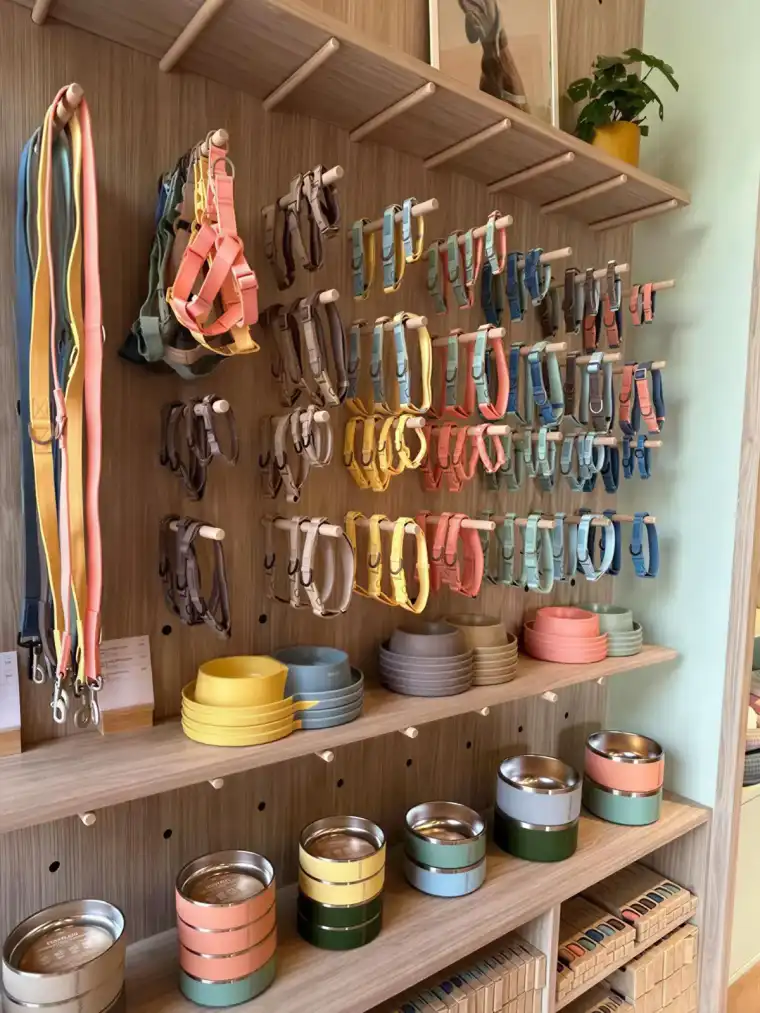
Here's the uncomfortable truth. The best gear won't fix bad timing, missed cues, or a plan that dies on day three. The gear matters a little. The method matters a lot. This article covers what to buy, what's specialist, and what to skip.
No fluff. No gimmicks. Just what the research and experienced trainers actually say.
Method Beats Equipment, Every Single Time
Before you spend another pound on gear, pause. A 2021 AVSAB position statement says only reward-based methods should be used for dog training. That includes the treatment of behaviour problems. The ASPCA takes a parallel view. It opposes equipment that causes a pet physical discomfort or undue anxiety.
That isn't just an opinion. It reflects the position of major veterinary and animal-welfare organisations. It also shapes which categories of gear earn space in your kit.
The gear is a tool, and a tool needs a handler with a plan on the other end. If you're new, start with our overview of dog training methods. The gear decisions get much easier once you've picked a lane.
Short List: What You Actually Need
For most pet dogs, a complete starter kit fits in a small tote and costs less than one visit to a mediocre trainer. Here's what belongs in it.
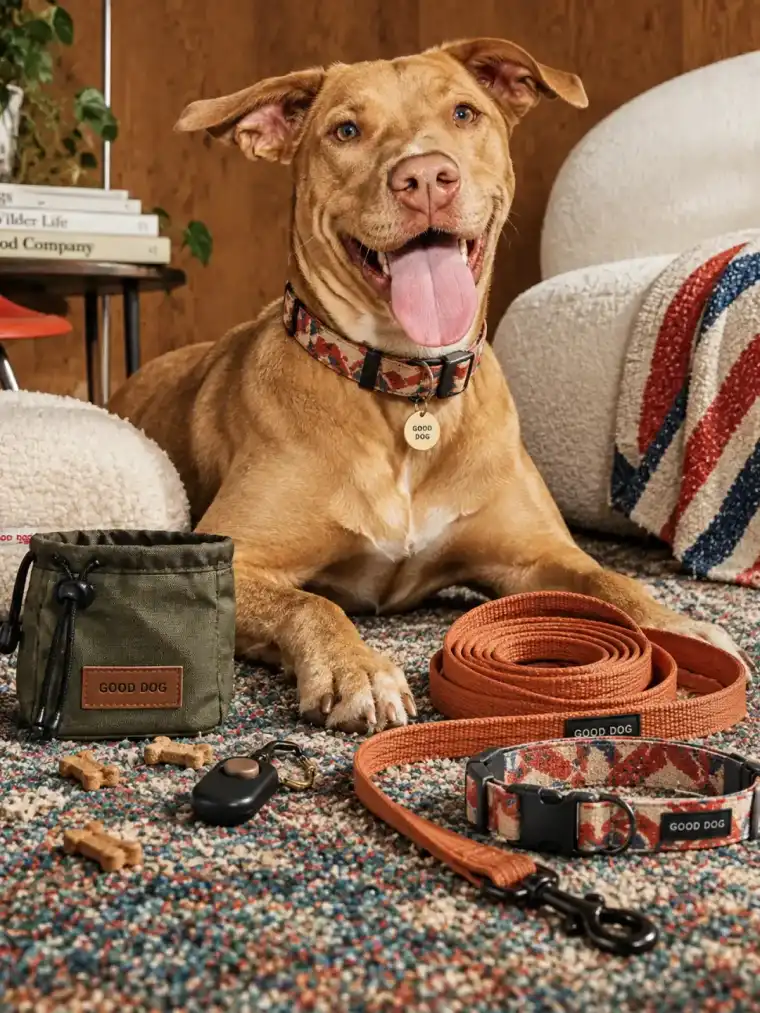
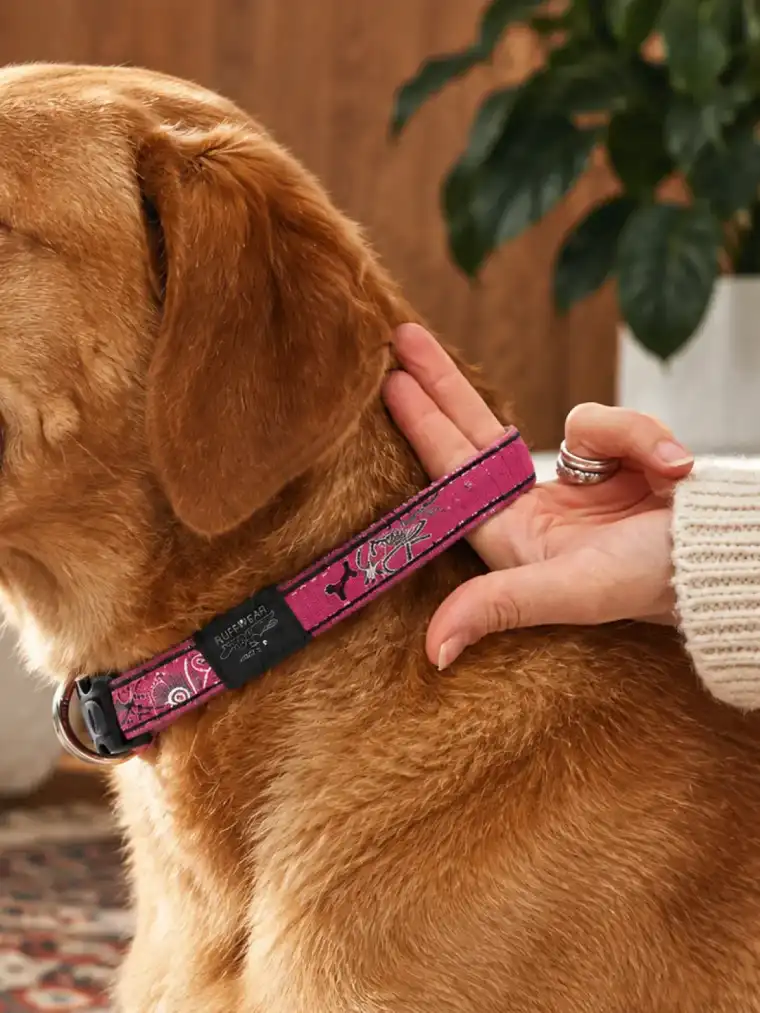
A plain flat collar with ID. A nylon or leather flat collar with a tag holding your phone number is a basic piece of everyday gear. It isn't really a training tool as such. It carries ID and holds the lead ring for everyday walks. Fit test: slide two fingers under the collar at the back of the neck. Loose enough to spin and hold a finger under, snug enough that it won't slip off over the ears. Check the fit every few weeks on a growing pup. For an adult, check it every couple of months.
A standard 4 to 6 foot lead. A plain lead at that length gives you control around traffic, other dogs, and crowded pavements. It's a lead you can hold in one hand with the other hand free for treats. The lead you keep by the door, the lead that goes in the car. Retractable leads sit in a weird middle category. They tangle, they teach pulling (the dog pulls, the lead extends, pulling gets rewarded, the pattern continues), and a thin cord can cause rope burn on your hand. Problematic.
A long line, 10 to 30 feet. This is the single most under-bought piece of kit in a dog owner's house. A long line lets you practise recall at distance without rehearsing failure. It lets your pup sniff and explore while keeping you physically in control. Clip the line to a harness, never a flat collar, so a sudden stop at full run doesn't jolt the neck. Long lines let you practise off-lead skills before a full off-lead release is realistic. Never attach a long line or retractable lead to a head halter.
High-value training treats and a treat pouch. Train with something your dog actually works for. Small, soft, pea-sized pieces of chicken, cheese, or liver, not the dry biscuits you keep by the door. A clip-on pouch keeps your hands free and your pockets clean. If you're building a habit like loose-lead walking or "place," the pouch matters more than most collars.
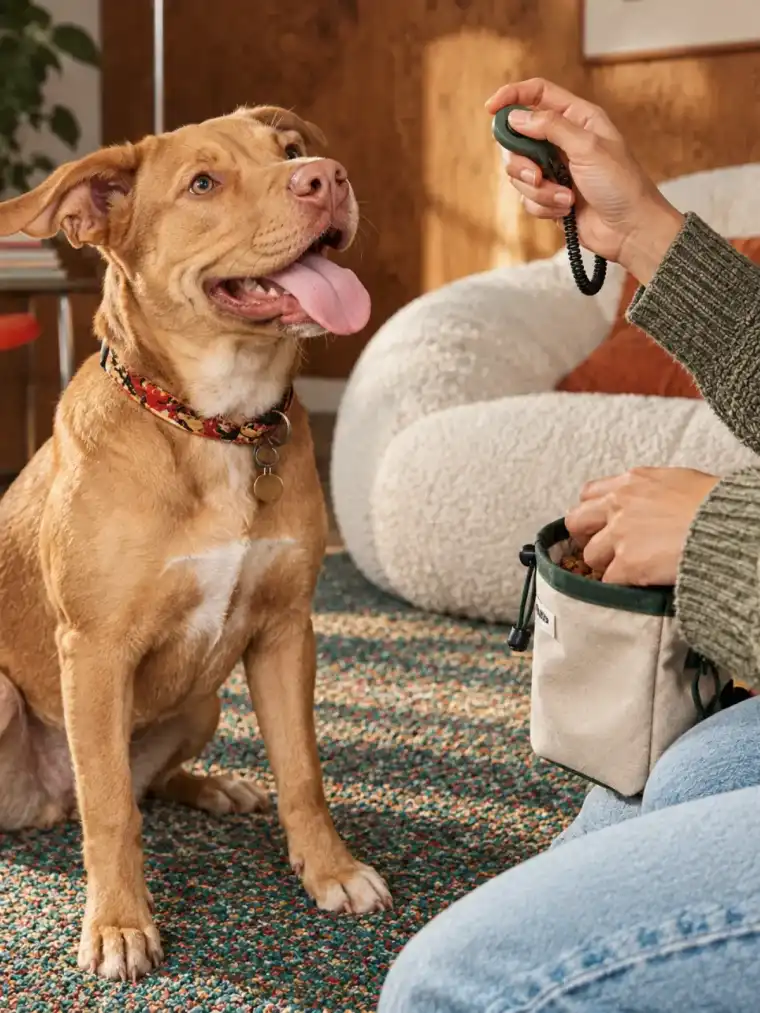
A marker: clicker or short word. A marker is a signal that tells your dog "yes, that exact thing, treat coming." Clickers are precise, cheap, and easy to carry on a wrist loop. A sharp verbal marker like "yes" or "yep" works too. A 2025 study found that clicker-trained detection dogs learned the target behaviour in fewer trials.
They also showed more accurate alert responses and greater resistance to extinction. Pick one marker and use it consistently. Don't switch mid-session or change it again next week. Our full clicker training guide covers the mechanics in detail.
A food puzzle or enrichment toy. Not a traditional training tool, but a cornerstone of behaviour management and household peace. A bored dog finds their own hobbies, usually the chewing kind. Twenty minutes with a stuffed Kong, snuffle mat, or lick mat (dogs love them) can drain more mental energy than an hour of back-garden fetch.
That helps new pups, high-drive breeds, and dogs stuck inside on rainy days. Enrichment and training are different, but they support each other. A dog with their needs met may find training easier.
Optional for puppies: a crate or playpen. A properly sized crate becomes a quiet, safe space your dog chooses, not a punishment room. It supports house training by using a dog's natural reluctance to soil the sleeping area. Build positive associations slowly, with treats and brief closed-door sessions, before you ever shut the door for a nap. Full guidance in our crate training article.
That's the kit. Collar, lead, long line, treats, pouch, marker, puzzle toy. Everything else is a specialist upgrade or a shiny distraction.
Walking Gear: When a Harness Earns Its Spot
Loose-lead walking is where owners buy the most stuff, often in the wrong order. Here's the honest ranking.
Back-clip harness. Fine for calm dogs that already walk nicely on a lead. If your dog pulls, a back clip can give them more leverage. That's similar to the body position used by sled dogs. They love it. Not a tool for the problem you have.
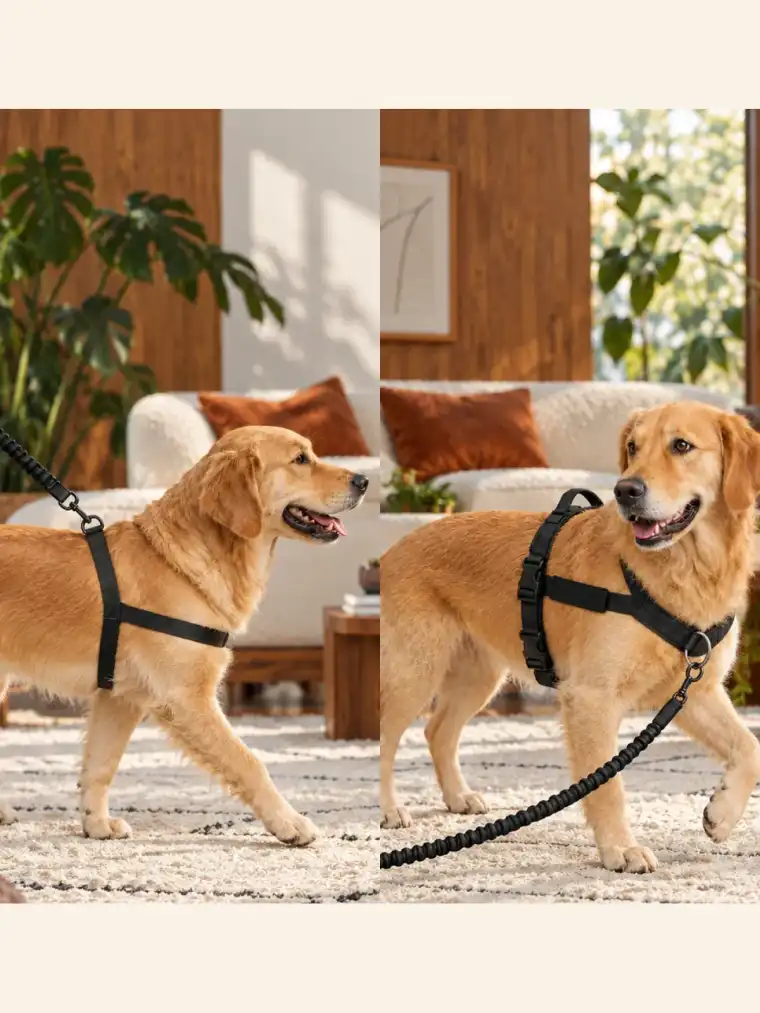
Front-clip harness. The lead attaches at a ring on the chest. Best Friends Animal Society explains that a chest attachment can redirect a pulling dog to the side. This makes it harder for the dog to lean forward and keep pulling. The result is a gentle, mechanical change of direction. It makes forward pulling less rewarding without pinching or shocking.
The front clip is a management aid, not a cure. You still have to teach the dog what you actually want. A front-clip option can help manage pulling while you teach better walking skills.
Head halter (Halti, Gentle Leader). Think of it as a horse halter adapted for dogs. The handler gets fine control of the head, which means fine control of the whole dog. Powerful tool. Also the one most dogs hate on first wear. If you buy one, spend the first week introducing it slowly with treats. Attach the lead only when your dog is comfortable wearing it. Rushing a halter onto a reluctant dog creates a dog that refuses to walk at all.
Stick with a plain flat collar if your dog walks nicely on a lead. Try a front-clip harness if they pull. Go for a head halter only when pulling creates a safety problem. Our leash training article covers what to actually do once the gear is on.
Fit matters. A loose halter slips off. A too-tight harness causes skin discomfort under the front legs and sours walks fast. Check the fit when you first put it on. Keep the lead loose while your dog moves. Check the fit again after a week. Release pressure on the lead the moment the dog steps beside you. That release is the reward.
What to Skip, and Why It Matters
This is the uncomfortable part. The tools below are heavily marketed, often by people who care about dogs, yet the evidence against them is strong.
Shock collars and remote e collars. A shock collar (sometimes rebranded "e collar," "stim collar," or "static collar") delivers an electric pulse through a remote control. Many modern models also offer vibration settings and different intensity levels. The sales pitch is control at distance. The research is unflattering.
The 2020 Lincoln e collar study found positive-reinforcement trainers matched or beat professional e collar trainers on recall. The study also reported fewer stress-related effects. AVSAB is unambiguous on this: aversive methods, which rely on application of force, pain, or discomfort, should not be used in canine training. Even on "low" settings, the Lincoln data showed dogs trained with e collars displayed stress signals the control dogs did not.
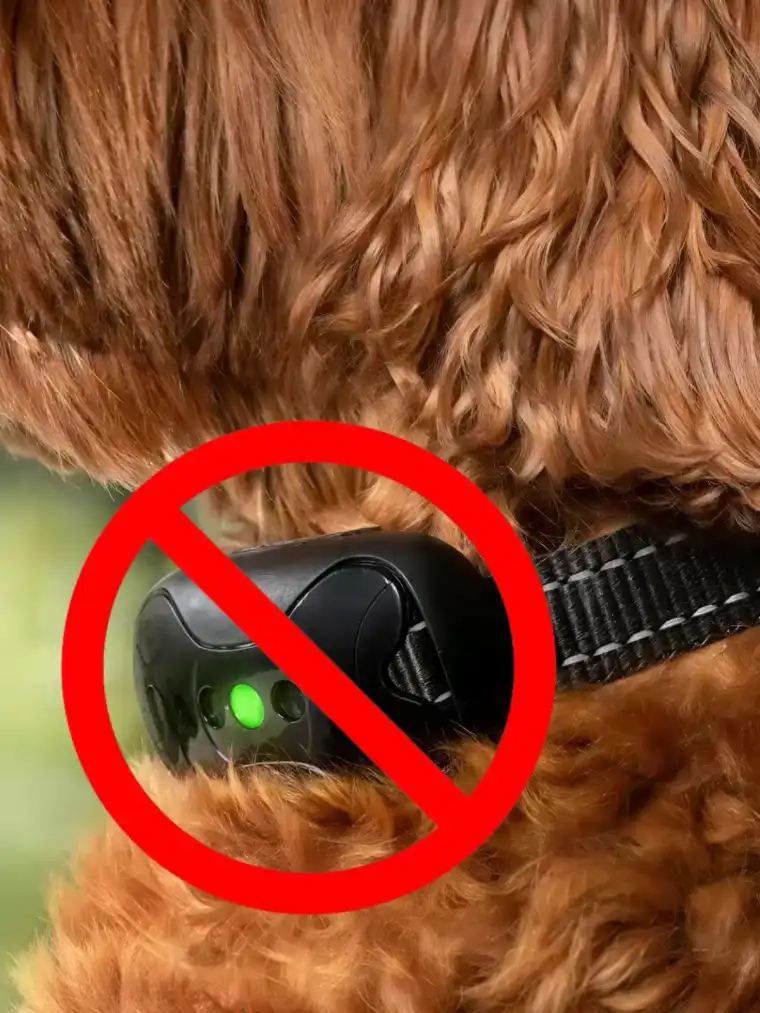
The law has moved on this too. Wales banned electronic shock collars on cats and dogs in 2010. England has not brought its proposed ban into force. The government is still considering future action on e-collars. France banned remote shock collars in January 2023. If you live elsewhere, understand what you're signing up for before you press the button. The dog does not understand why the collar fired. The dog only knows the environment just became painful.
Prong and choke collars. A prong collar tightens metal spikes against the dog's neck when the lead is tense. A choke chain tightens the loop around the neck. Both rely on discomfort or pressure, and AVSAB classifies them as aversive tools. You can teach loose-lead walking without them. People do, every day, with a front-clip harness and a patient plan.
Spray, vibration, and ultrasonic "bark stoppers." Anti-bark collars may respond to barking with citronella, vibration, or a high-pitched tone. The dog may not understand why the device activated. That is not good training.
Barking has reasons: boredom, fear, alarm, reactivity, pain, or wanting attention. Suppressing the symptom doesn't address the cause, and in anxious dogs it can make the underlying trouble worse. A dog that barks every time a stranger passes the window needs a thought-through plan, not a collar that fires at the window too.
If barking is the problem you're trying to solve, start by finding out why. A dog barking at the window may need more enrichment or a blocked line of sight. Frosted film on the lower window pane can remove that visual trigger. Not a device around the neck. If your dog acts out and reactivity is in the picture, our reactive dog article is probably a better starting point than any collar. The thought that a shock will "teach" the dog to stop reacting misses what reactivity actually is: a feeling, not a choice.
Specialist Tools: Use With Purpose, Not by Default
Some kit is genuinely useful once you understand what you're doing with it.
Head halters can help with large, strong pullers when physical control is difficult. They can also help redirect a reactive dog when safety matters. Build slow positive associations with treats and brief sessions before using the halter on walks. A dog who learns to love the halter at home tolerates it outside. A dog who learns to hate it fights it every time.
Target sticks and training mats can help teach behaviours like nose touches and "go to place." They are not daily essentials. They support shaping work and tricks (teaching a nose touch, for example). They can also make distance work easier without physically guiding the dog.
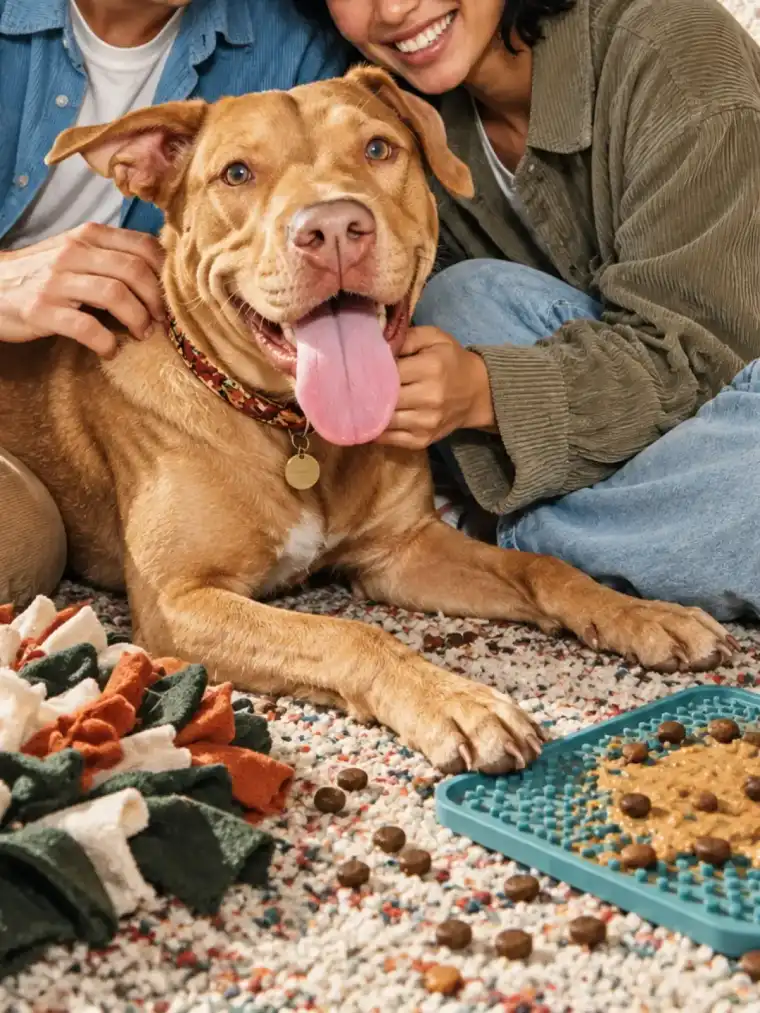
Treat-dispensing lick mats and snuffle mats hold food in gaps and turn mealtime into enrichment. Low cost, high value, especially for dogs who inhale their food in thirty seconds flat. These also give you a brief, calm activity to run on rainy days or when the garden is a mud bath.
Hand signals are a tool you already own. Most dogs read body language faster than they parse spoken words. Our list of hand signals for common cues is worth memorising, especially in a noisy household, if your dog is losing hearing with age, or if you want to continue to communicate at distance where your voice won't carry.
Dog sports gear. A quick note on sports kit (agility jumps, tug toys, dock-diving bumpers, flyball boxes). Great fun. It's useful if you and your dog take part in a dog sport. It's not needed for everyday training. Treat sports gear as a specialist upgrade for a specialist pastime, not a shortcut. If you dive into dog sports, you'll quickly meet a friend or two at the local club who can lend you kit before you buy.
Specialist equipment answers a specific question. If you can't name the question, you don't need the gear. The most expensive tool is the one that sits unused. It usually means you bought gear before solving the underlying problem.
A suggestion that costs nothing. Take a photo of each new piece of kit. Note what problem you bought it to solve, then check again a month later. If the dog is improving, the gear is doing its job. If not, rethink the approach before buying more equipment. If it does fail, remind yourself what you've already tried before buying the next thing.
A log beats a shopping habit, and it's the preferable way to learn what actually acts on your dog. Practice compounds quietly: a dog that performs "sit" today may start offering it unprompted later. Each completed rep is a valuable deposit, and your confidence grows with every one.
Real Multipliers: Time, Timing, and a Plan
The hard truth. The gap between the dog you have and the dog you want to live with is almost never a kit gap. It's a practice gap in your training loop. Dogs learn through brief, consistent reps, delivered at the right moment, over weeks. Not through a shiny device that arrives in a box tomorrow.
So where should your money and attention actually go?
- Time with the dog. Five minutes, three times a day, beats one 45-minute session on Sunday. Brief, consistent reps build a habit and visible progress.
- Timing. Mark the moment the behaviour happens, then reward within a second. A click half a second late teaches the wrong thing. This is the muscle to train in yourself before you train anything in the dog. Hold your marker finger ready. Press at the exact moment the dog is right. Release the treat straight after. Then release the dog from the cue with a clear release word, taught on day one and used consistently.
- A plan. Random tips from YouTube and group chats don't build a dog. A completely sequenced plan does. Start with the seven foundation commands and work through them in order before moving on to the fun stuff like tricks and sports. A dog taught "sit," "down," and "stay" solidly on week one has a scaffold for everything else you'll ever teach. A dog taught nothing solid is harder to work with no matter how much you've spent on gear.

If you'd rather not stitch the plan together yourself, take the Woofz quiz. You'll get a step-by-step training path based on your dog's age, breed, and goals. It won't replace a certified trainer or veterinary behaviourist for serious behaviour problems. We don't pretend it does. It gives you a sequenced plan and brief daily lessons. You can keep practising without planning each week from scratch.
That's the honest pitch. The equipment is cheap. The plan and the consistency are what move the needle. Buy a plain collar, a plain lead, a long line, treats, and a pouch. Pick a marker and hold onto it. Add a front-clip harness if your dog pulls. Skip the shock, the prong, the spray, and the ultrasonic bark gadgets. Spend the money you saved on better treats and the time you saved on more reps.
Your dog doesn't need fancy gear. Your dog needs you, five minutes at a time, every day this week.
Sources
American Veterinary Society of Animal Behavior. 2021 Position Statement on Humane Dog Training
ASPCA. Position Statement on Training Aids and Methods
China L, Mills DS, Cooper JJ. Efficacy of Dog Training With and Without Remote Electronic Collars vs. a Focus on Positive Reinforcement. Frontiers in Veterinary Science, 2020.
Lazarowski L, Rogers B, Collins-Pisano C, et al. Effectiveness of marker training for detection dogs. Frontiers in Veterinary Science, 2025.
Legislation.gov.uk. The Animal Welfare (Electronic Collars) (Wales) Regulations 2010.
The Kennel Club. Ban shock collars campaign and status
Best Friends Animal Society. 4 Best No-Pull Dog Harnesses to Stop Pulling on Leash.