


Dog Training Classes vs Training at Home: How to Choose

By
Woofz Team Updated on |Reviewed by
Woofz Team
Disclaimer: This article is for general information and isn't a substitute for professional dog-training or veterinary advice. Pricing and training options can vary by location, provider, and over time. Third-party products and services are mentioned for informational and comparison purposes only and do not imply affiliation or endorsement.
You've got a dog who needs training, and now you're stuck on the first question: sign up for a class or handle it at home?
Classes give you an instructor, a set schedule, and practice around other dogs. Training at home gives you more flexibility and lets you work short sessions into your everyday routine. The right choice depends on your dog, what you're working on, and how you actually want training to fit into your week. And sometimes, you don't have to choose just one.
What You Get From Dog Training Classes
Dog training classes put you and your pup in a room with an instructor and other owners. Many group classes run once a week for several weeks, with six-week programs as a common format. They teach basic training and obedience skills, sit, stay, come, and loose leash walking, with practice around distractions. PetSmart's classes follow that six-week structure and teach everyday manners.
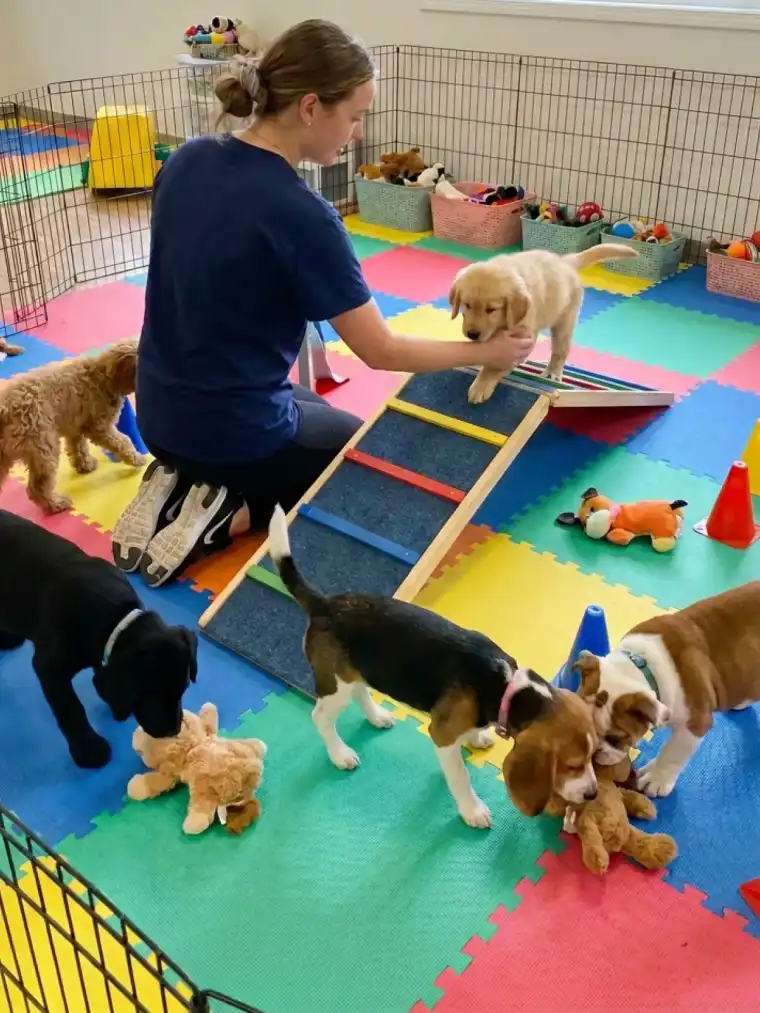
Puppy kindergarten is the entry track for a young puppy. Puppies can often join a well-run socialization class early, depending on their vaccination status and what their vet recommends. Those first few months are a great time to introduce them to new people, places, and experiences in a positive way.
As your pup builds the foundation, you can move on to intermediate and advanced classes, agility, or fun tricks.
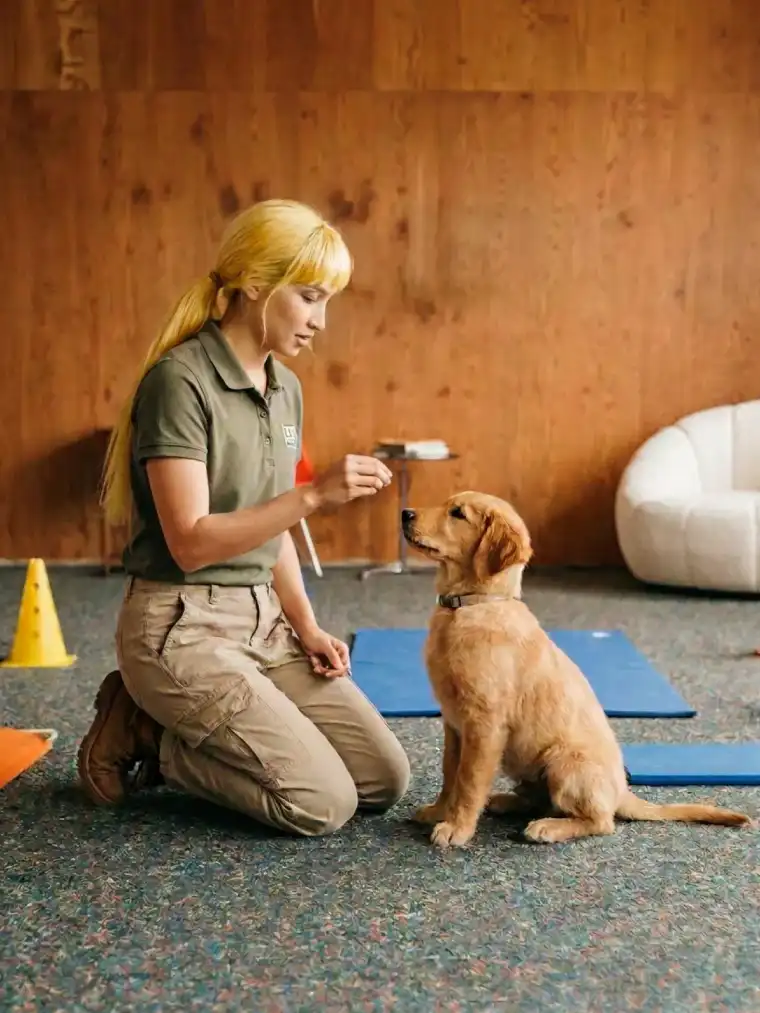
Private training is the other side. One trainer, your puppy, your concerns. Private training costs more per hour, but the one-on-one attention can be useful when you're working on a specific challenge or need more flexibility around a busy week. Some dog obedience classes let you mix group and private mid-course.
What Training at Home Looks Like
Training at home means you run the sessions. On the couch, in the yard, on a walk. No commute, no fixed class time. You practice in short bursts, most days, where your pet lives. Busy owners can create a routine around work and family.

Without a plan, home training drifts into random tips off the internet. A training app can give you more structure and help you figure out what to work on next. Woofz builds a personalized training plan around your dog's age and profile, adding more structure to training at home, with short lessons and guidance based on positive reinforcement. Explore holds commands, quizzes, and training programs for crate training, potty training, and impulse control. A free version covers a small set of basics. Advanced skills training takes a paid subscription.
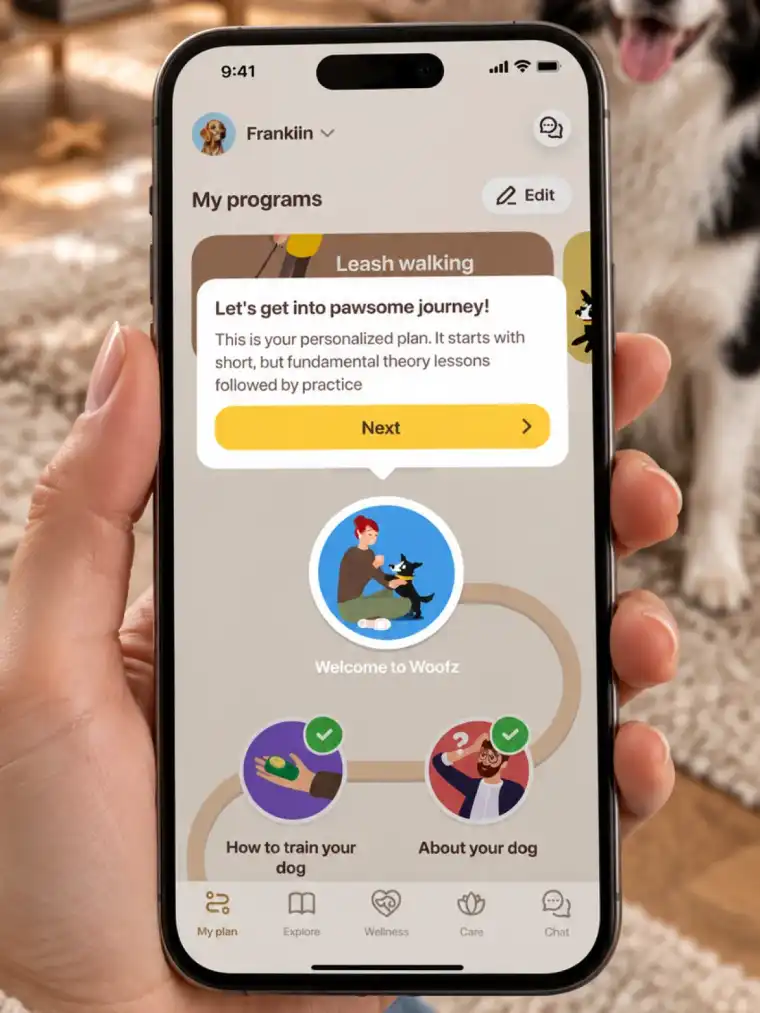
Honest limit. An app can't watch your dog and respond in real time the way a trainer or other qualified professional can. It's a useful place to start and keep going, but it can't replace professional help when you need it.
Training Classes vs Training at Home, Side by Side
Factor | Dog training classes | Training at home |
|---|---|---|
Typical cost | Higher, per course or session | Free or subscription-based |
Social time | Practice around other dogs | Limited unless you set it up |
Schedule | Set class times | Flexible, your own pace |
Coaching | Live feedback from a pro | Usually self-guided |
Good fit for | Puppies and practice around distractions | Daily practice and flexible budgets |
What to Think About: Cost and Social Time
Training at home can cost less, depending on how you do it. Group classes typically run around $30 to $80 per session, while private classes can cost $75 to $250 an hour. Board and train programs can run from $1,000 to $2,500 a week. A training app, by comparison, may cost around $10 to $30 a month.
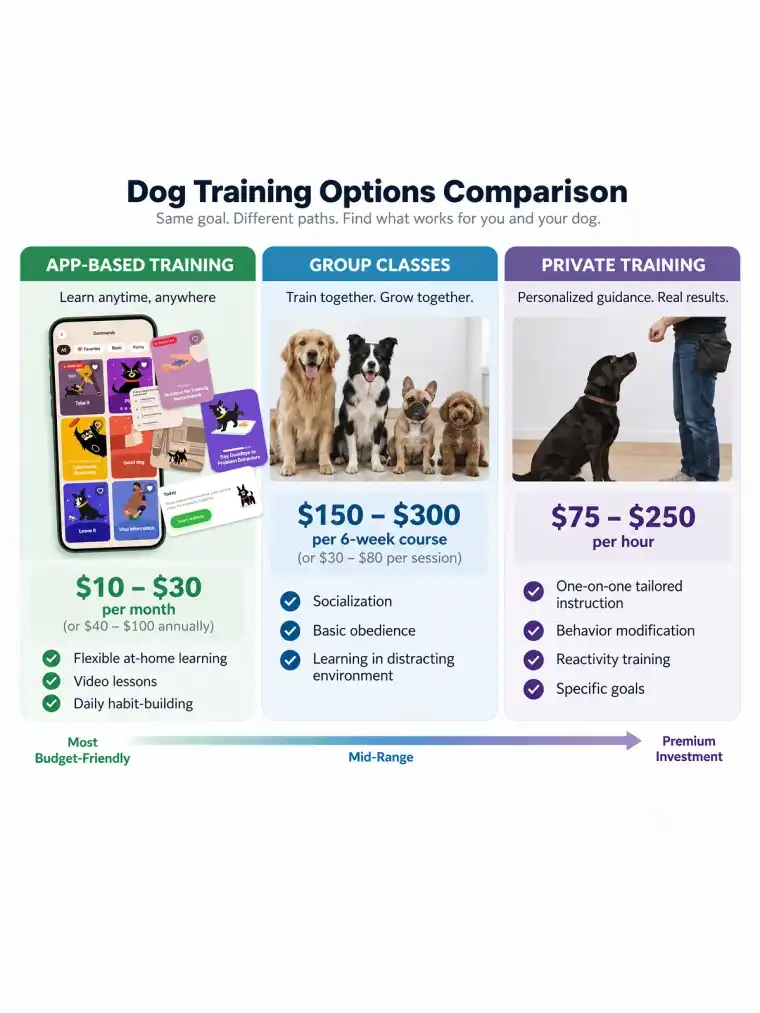
Group training classes can give your puppy a chance to practice around other dogs, people, and everyday distractions. That can be useful when the class is well run and your puppy is comfortable taking part. You can create those kinds of experiences outside class too, but it takes a little more planning.

How to Choose the Right Dog Trainers
Dog training isn't a regulated profession, so it's worth checking a trainer's education, experience, and credentials before you sign up. AVSAB recommends reward-based training for dogs and warns about the welfare risks that can come with aversive methods.
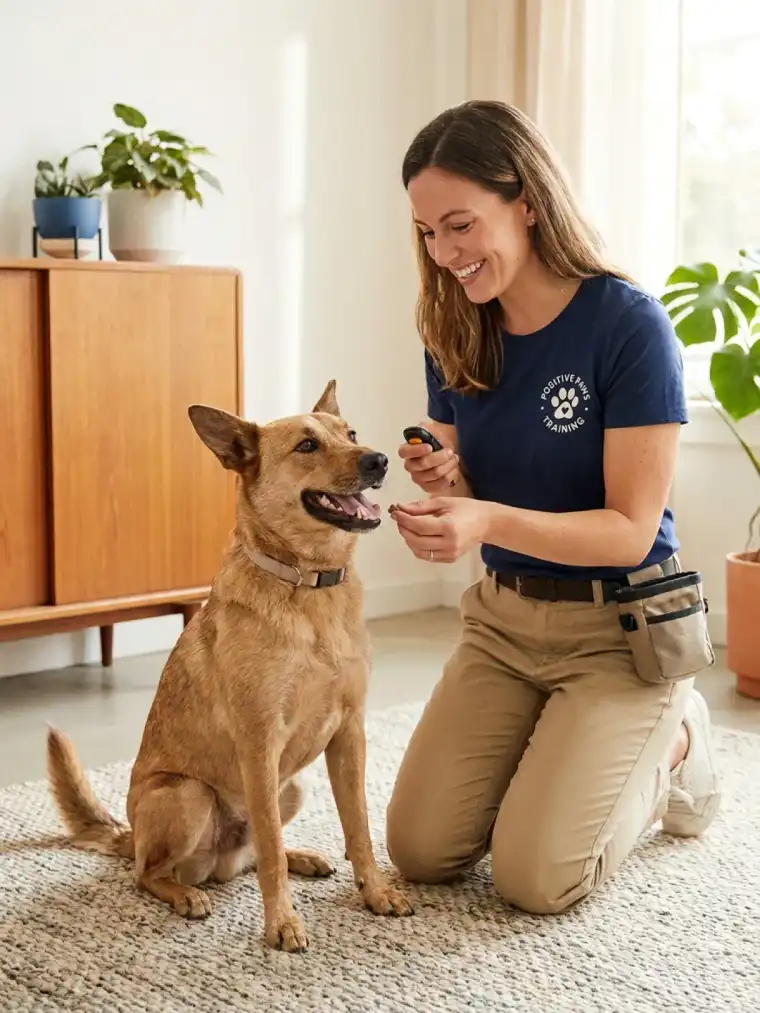
Green flags: force-free, positive reinforcement language and clear certifications. Contact a couple and attend a class first. Red flags: choke or shock tools, chain leashes, and anyone promising to fix behavior fast. Watch that first class for a complete picture.
Which One Fits Your Dog, or Both
A group class can be a good fit for a young puppy who's comfortable in that kind of setting and needs practice with basic skills around distractions. Start with a puppy kindergarten class and let them participate at their own pace. For aggression, severe anxiety, or other serious behavior concerns, look for one-on-one help from a qualified behavior professional instead of relying on a general group class alone.
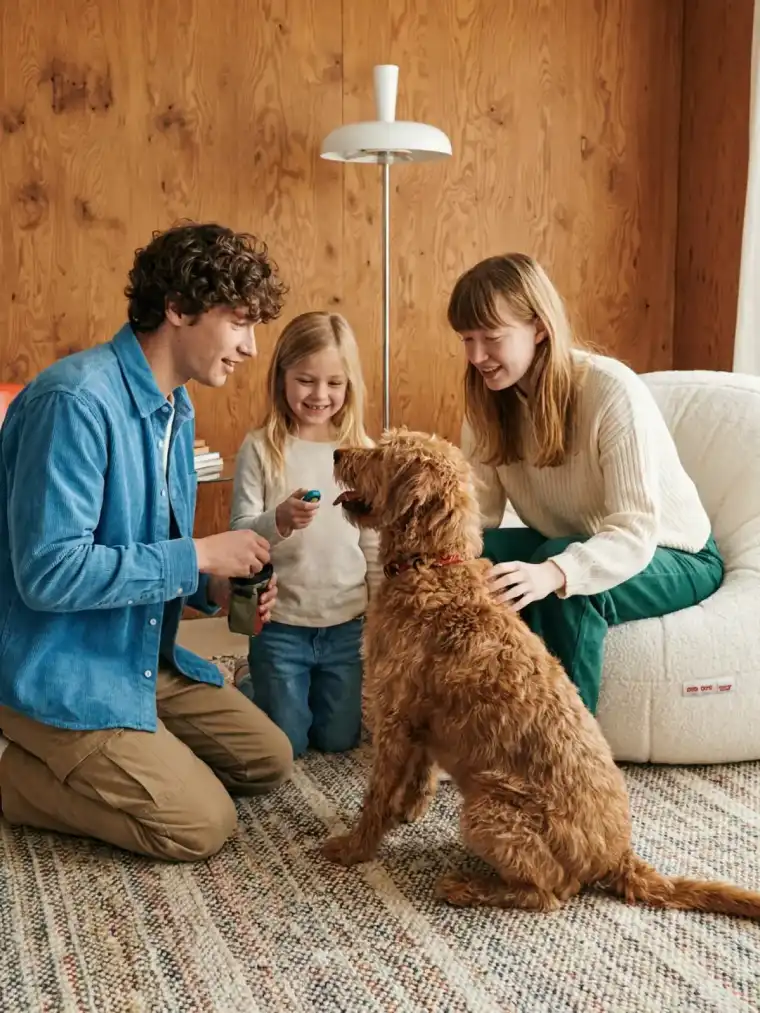
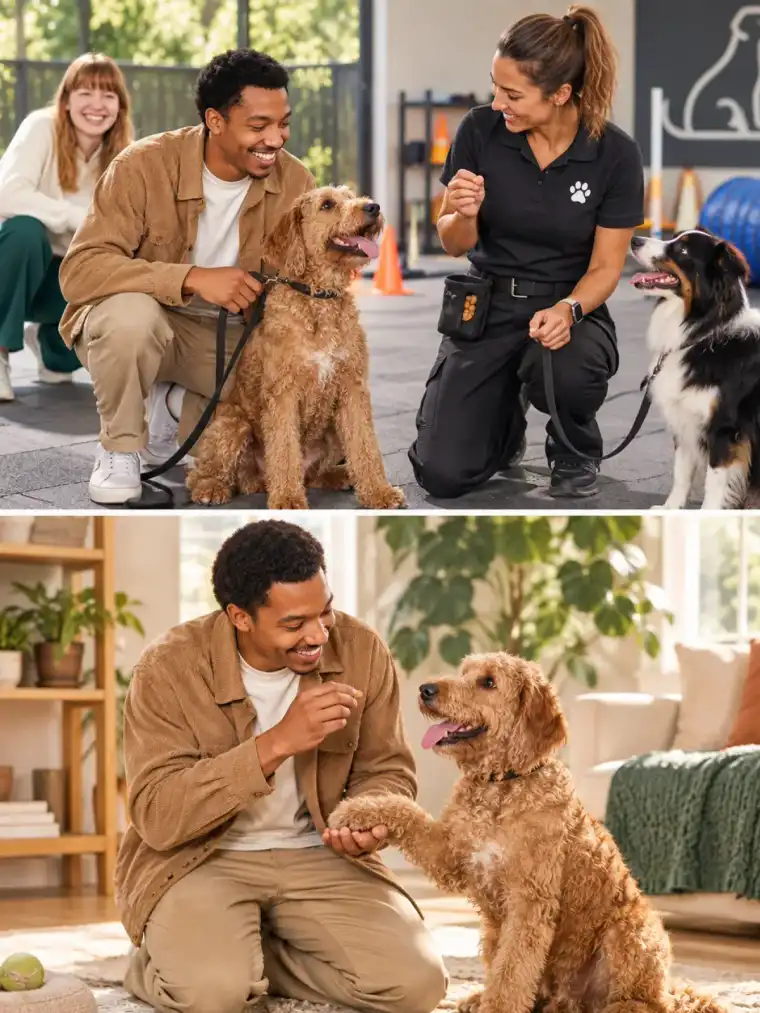
You don't always have to pick one. For some families, a mix of classes and home practice works best. A class for social time and feedback, an app at home for the daily reps, so a solid sit and good manners stick. A weekly class gives you the coaching. Short practice sessions at home help you between classes. Progress depends on the dog, and training takes time either way.

Want a plan built around your dog? Take the Woofz quiz and get a personalized training path in a couple of minutes.
FAQ

Sources
-
AVSAB, Humane Dog Training Position Statement (2021)
-
AVSAB, How to Choose a Trainer
-
ASPCApro, Pet Adjustment Periods: The 3 Days -3 Weeks -3 Months Guide
-
PetSmart, Dog Training pricing
Basic Obedience and Adult Dog Training
Basic obedience training: sit, stay, come, and leash manners, runs $150 to $300 as a group course or $75 to $200 an hour privately. Adult dog training costs about the same, though an older dog with settled habits might need extra sessions.
Starting from the 7 basic commands keeps early obedience training focused. Adult and older dogs can keep on learning new skills, though the pace and approach depend on the dog and the behavior you're working on.
Behavior Modification and Aggression Programs
Behavior modification is where costs climb. Reactivity, separation anxiety, barking, and serious behavior concerns may call for more specialized support. Aggression programs run $100 to $300 or more per session, or $800 to $3,500+ for a full training program. Most start with an evaluation, and severe behavioral issues can mean a referral to a veterinary behaviorist. This is specialized training, so professional dog training here usually costs more.

Service Dog Training
Service dog training is the most specialized training there is. A fully program-trained service dog from a group accredited by Assistance Dogs International can cost $15,000 to $50,000 or more because it takes months or years of professional training. Under the ADA, people with disabilities may train their own service dogs and are not required to use a professional training program.
Some handlers choose to work with professional trainers along the way, which can add to the overall cost, bringing the total to around $2,000 to $8,000 or more. Programs typically assess dogs for the health, behavior, and training qualities needed for the work, so not every dog is a fit for service dog training.
Therapy Dog and Agility Training
Therapy dog preparation costs vary. For example, Pet Partners' required initial fees total $190–$205+, with training costs extra.
Agility training is priced like group classes, roughly $100 to $200 per course, plus $10 to $30 per trial. Agility and advanced skills like off-leash work sit at the higher end.

Per-Session vs Package Pricing
Paying per session gives you flexibility, while packages can sometimes lower the per-session price. Most dog trainers offer packages, and buying five or ten private lessons up front usually saves 10% to 30% off the per session rate.
Compare the total package, the number of sessions, and what's included, not just the hourly rate. Package pricing is the simplest way to trim your dog training cost. Ask about multi-dog rates too.
How Much Will It Cost to Train a Dog?
For a typical pet dog learning good manners, plan on $200 to $600 total. That covers a group obedience course or a short private training program, plus a leash and daily practice. And add a training app for daily reps. For real behavior work, budget $800 to $3,500 or more. A service dog is a different universe. Your final training cost depends far more on your goals and the support you need than on how much you love your dog.

Is It Worth Sending Your Dog Away for Training?
Sometimes, with eyes open. A board and train program gives your dog an immersive routine with professional training built into the stay. For some owners and dogs, that can be a practical fit. The honest limits: it's a significant investment. Quality varies between facilities, and what happens after the program matters too. Your dog still needs to learn how those skills work with you and in everyday situations.
Your dog could shine at the facility and slide at home within weeks. Before you book, ask about the training techniques they use, whether they include transfer lessons, and what follow-up looks like. Look for programs that use reward-based methods. AVSAB recommends reward-based training for all dog training and behavior modification.
What Is the 3-3-3 Rule for Dogs?
The 3-3-3 rule is a rough way of describing how some newly adopted dogs settle into a new home. It isn't a training method or a rule for when training must begin. The ASPCA describes it as three phases: about 3 days to decompress, 3 weeks to learn your routine, and 3 months to feel at home. Keep things calm at first so your new dog doesn’t feel overwhelmed. Start building routines and practicing simple skills right away, then adjust the pace as you learn what your dog is comfortable with.
It's an informal guideline often shared by shelters and rescue organizations, not a research-based timetable. Every dog adjusts at its own pace. Our full guide to the 3-3-3 rule and to training a rescue dog walks through each stage.
What Is the 7-7-7 Rule for Dogs?
The 7-7-7 rule is a puppy socialization memory aid. The common version says a young puppy should meet 7 new surfaces, 7 new locations, 7 new people, and 7 new objects or challenges early on. The point isn't ticking boxes.
The idea is to give puppies safe, positive exposure to different parts of the world during an important early socialization period. Quality beats quantity: one calm meeting with a new surface beats seven rushed ones. It's a friendly checklist built on the science behind puppy socialization, not a rigid rule.

How to Train Your Dog on a Budget
You don't need the priciest option to raise a well-trained dog. A few moves cut the cost of dog training without cutting corners.
Start With Group Classes for the Basics
For sit, stay, recall, and leash manners, group classes can give you professional guidance at a lower price per session than many pivate options. Save private training for the one or two issues that need it.
Use a Training App for Daily Practice
A lot of your day-to-day practice happens at home, between classes. A dog training app turns those reps into short, guided steps, so you always know what to practice next. It's a lower-cost way to keep momentum between sessions. Want a plan built around your dog's age, breed, and goals? Take the free Woofz quiz and get a starting plan in a couple of minutes.
Ask About Packages and Multi-Dog Rates
Bundled lessons can often bring the per-session price down. With two dogs, ask for a multi-dog rate. Many dog trainers also run seasonal deals.
Check Community and Rescue Classes
Local shelters, rescue groups, and community centers sometimes offer lower-cost classes or training events. Check them out.
How to Choose a Trainer Without Paying for Things You Don't Need
Price and quality don't always match, so a little homework protects your money and the costs involved.
Questions to Ask Every Trainer
Ask what training techniques they use, what happens if progress stalls, and how they measure your training goals. Good dog trainers welcome the questions. Many offer an initial consultation before you commit, which tells you a lot.
Red Flags to Avoid
Walk away from anyone promising to fix your dog in a set number of days, or leaning on prong collars, shock, or intimidation. Aversive tools can cause stress and other welfare concerns, so veterinary behavior experts recommend reward-based training instead. The label a trainer uses matters less than the methods they actually rely on, so ask directly how they handle mistakes, fear, and unwanted behavior.
Vague guarantees are another red flag. A responsible dog trainer won't promise a perfect dog.

Looking Beyond the Upfront Cost
Training is just one part of caring for a dog, and its value isn't always something you can measure in dollars. Getting guidance early can help you build good routines, better understand your dog, and get support before a small issue becomes harder to handle.
Over your dog's life, weigh dog training, investing a little now against the bills a bolting dog racks up. The right time and level of training depend on your dog, your goals, and what support you need right now. Our cost of owning a dog calculator and full training guide put the numbers side by side.

Frequently Asked Questions
Train the dog in front of you, on the budget you actually have. That's the whole game.

Sources
-
American Veterinary Society of Animal Behavior. Position Statement on Puppy Socialization.
-
American Veterinary Society of Animal Behavior. Position Statement on Humane Dog Training (2021).
-
American Veterinary Society of Animal Behavior. Position Statements and Handouts (for the public)
-
ASPCApro. Pet Adjustment Periods: The 3 Days, 3 Weeks, 3 Months Guide.

What Is the Best Online Dog Trainer Course?
There's no single best, and any page that names one without asking about your dog is guessing.
The right pick depends on your goal (training your own dog or becoming a trainer), the topic you want to focus on, and whether the course uses humane, reward-based methods. Online training rewards the same thing in-person classes do: steady practice.
Look for reward-based training methods and techniques, clear progressions, the knowledge to read your dog, and real ongoing support. Instant access means nothing if the teaching is fear-based. For owners who'd rather follow a plan built around their dog, an app may be a natural place to start.
More Questions About Online Courses and Training Apps

Sources
-
Ana Catarina Vieira de Castro, Danielle Fuchs, Does training method matter? Evidence for the negative impact of aversive-based methods on companion dog welfare, PLOS ONE, 2020
-
Lucy China, Daniel S. Mills, Jonathan J. Cooper, Efficacy of Dog Training With and Without Remote Electronic Collars vs. a Focus on Positive Reinforcement, Frontiers in Veterinary Science, 2020
-
CPDT-KA certification requirements, Certification Council for Professional Dog Trainers
-
The 3-3-3 Rule for Adopted Dogs, Humane Society of North Texas