


Dog Training App vs Private Trainer: Real Cost and Results Compared

By
Woofz Team Updated on |Reviewed by
Woofz TeamA quick disclaimer: Training apps can be useful for basic skills and everyday practice, but they aren't a substitute for professional help with serious aggression, bite risks, severe anxiety, or other escalating behavior problems. Training costs and results vary depending on your dog, the trainer, and the type of help your dog needs.
You want a dog who actually listens, and you'd like to know what that's going to cost before you hand over a card. Fair. Dog training cost swings wildly, from a $30 group class to a board and train program that clears $5,000, and the price tag tells you almost nothing about whether the training will stick.
This guide lays out what each option really costs in 2026, what you get for the money, and where a dog training app fits next to a private trainer. No scare stories, no guarantees. Just the numbers and the trade-offs, so you can pick the route that matches your dog, your schedule, and your budget.

Short Answer on Dog Training Cost
Dog training can cost anywhere from a few dollars a month for an app to tens of thousands for a professionally trained service dog. For everyday obedience, most owners are looking at hundreds rather than thousands. The range is that wide because the format does most of the deciding. Group classes and a good app sit at the cheap end. Private lessons with local dog trainers land in the middle. Board and train programs, plus specialized work like service dog training, run into the thousands.
The biggest factor in your dog training cost isn't the trainer's talent. It's how much of the work a professional does for you versus how much you do yourself.
The good news if you're watching the budget: you can teach your dog the basics for very little if you're willing to put in the reps. The expensive routes mostly buy you time and expertise, not a different dog.
Who Each Option Fits Best
-
A dog training app fits owners on a budget who want to teach basics and everyday manners at home, on their own schedule.
-
Private lessons fit owners with a specific problem who want an expert set of eyes on their dog.
-
Board and train fits owners with little time and a bigger budget, usually for tougher behavior.
Dog Training Cost at a Glance
Here's the whole market on one screen. These are typical US ranges for 2026, but prices can vary quite a bit depending on where you live, the trainer's experience, and what your dog needs.
Training option | Typical cost (US, 2026) | Best for | Who does the training |
|---|---|---|---|
Dog training app | about $10 to $30 per month | Basics, manners, consistency | You |
Group classes | $30 to $80 per session, or $100 to $300 for a course | Puppies, socialization, basic obedience | You and a trainer |
Private lessons | $75 to $200 per hour | Specific behavior issues | You and a trainer |
Board and train | $1,000 to $3,000 per week | Busy owners, tougher cases | Trainer, then you |
Service dog training | $15,000 to $50,000 or more | Task work for a disability | A program, or you and a pro |
One pattern runs through the whole table. The more of the training you outsource, the more you pay, and the more the result hangs on what you do once the professional steps away.
How Much Does It Cost to Properly Train a Dog?
To teach a dog reliable everyday manners, sit, down, stay, coming when called, and walking without dragging you down the block, most owners spend $200 to $600 across a course of group classes or a handful of private lessons. That covers standard obedience training for a typical dog.
Add a training app and you can cover the same ground for the price of a couple of coffees a month. Send the dog away to a board and train program and the same "properly trained" dog costs $1,500 to $5,000 or more. Same obedience training, wildly different dog training cost.
Professional training does buy you something real. A skilled trainer spots what you're missing and fixes it faster than you'd figure it out alone. What it doesn't buy is a shortcut around the daily practice.
What "Properly Trained" Means
"Properly trained" is a fuzzy phrase that trainers and marketers stretch to fit their pricing. For most families it means a dog with solid basic obedience: the seven basic commands every dog should know, decent leash manners, no jumping on guests, and a reliable recall. That's a realistic goal for almost any owner, and it does not require a five-figure program.
Why the Same Result Costs $200 or $2,000
Two owners can end up with equally well-behaved dogs and pay ten times apart. The gap comes from format, not outcome. One owner runs weekly training sessions themselves with a bit of coaching. The other pays a facility to house and handle their dog around the clock. Same commands, very different invoice.

Group Classes Cost
Group dog training classes cost $30 to $80 per session, and most trainers bundle them into a multi-week course that runs $100 to $300 total. You train alongside six to ten other dogs, which is part of the point.
What You Get in a Group Class
You get a certified trainer running a structured obedience training program, plus something you can't recreate on your couch: your dog learning to focus with other dogs, strange people, and noise all around. That real-world distraction is exactly what a lot of dogs need for basic obedience to hold up outside the living room. Most dog trainers run these as a fixed six-week course, so you know the total dog training cost upfront.
When Group Classes Are Worth It
Group classes are a sweet spot for puppies, for socialization, and for owners who want basic training without a big spend. They're a weak fit if your dog is reactive or aggressive because a room full of other dogs is the wrong place to work through that.
Private Lessons Cost
Private lessons run $75 to $200 per hour, with a national average private session sitting near $90 and rates climbing in big cities. Many trainers sell a training package, and buying several lessons upfront in one training package usually shaves 10% to 30% off.
What One-on-one Buys You
Private training buys you a trainer's full attention on your dog and your specific mess. Leash pulling, door bolting, a dog who won't settle, the exact stuff a curriculum skips. A good trainer also coaches you, which matters more than most owners expect because you're the one who lives with the dog after the lesson ends.
When Private Lessons Pay Off
Private lessons pay off when you have one clear problem and the time to practice between visits. Private training is the most flexible option and the fastest for a targeted issue. It's also pricier per hour than anything except sending your dog away, which is why many dog trainers push their package deals hard. A package can make sense if you're genuinely committing to several sessions.
Board and Train Cost
Board and train programs, where your dog lives at a facility and trains daily, cost $500 to $1,650 per week at the accessible end, and $1,000 to $3,000 a week for intensive programs. Multi-week stays commonly total $1,500 to $5,000 or more. It's the priciest way to train a dog, and it's also the option where you need to look most carefully at what's actually included.
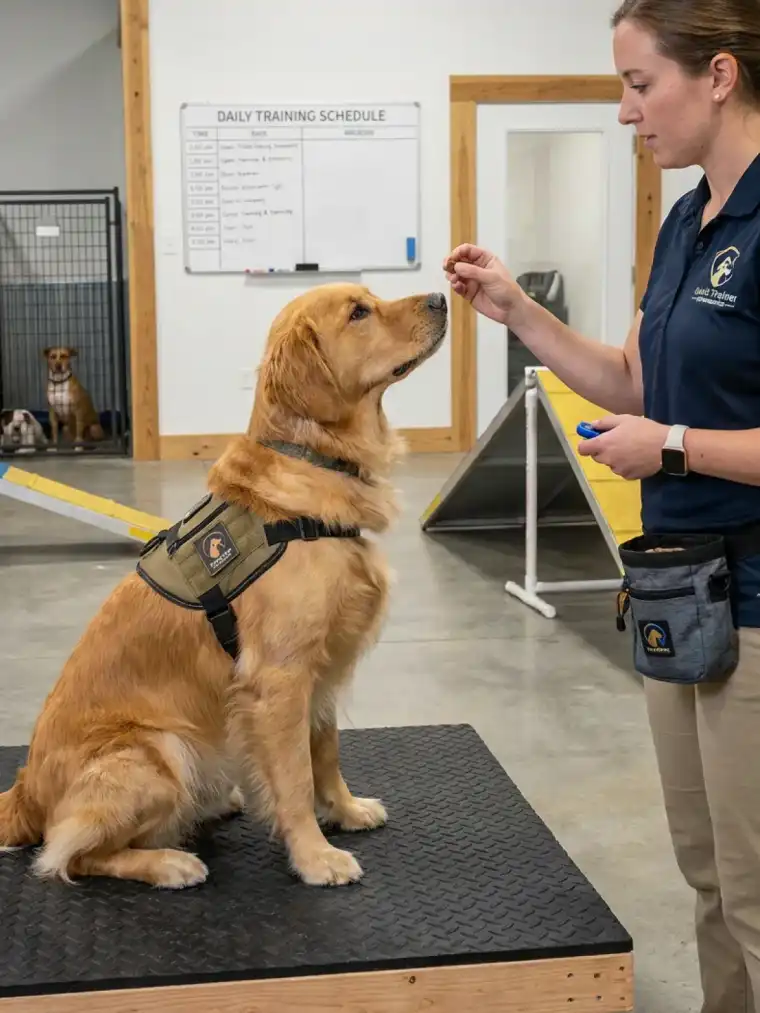
What Board and Train Programs Include
A typical board and train program covers boarding, several short training sessions a day, and a handover lesson at the end so you learn the commands your dog now knows. Many programs advertise lifetime support or free refresher sessions as part of the training.
Read the fine print on that lifetime support, because "free" often has conditions attached, and the promise of dog's lifetime support is one of the loudest selling points in board and train marketing. Ask what the lifetime support actually covers before it swings your decision.
The Transfer Problem Nobody Mentions
Here's the honest part most board and train marketing leaves out. A dog that behaves beautifully with a pro in a controlled facility may struggle once they get home if the new skills aren't practiced with their owner. The skills live with the trainer until you make them transfer to you. That's why the handover lesson and your follow-through matter as much as the training itself. You're not buying a finished, trained dog. You're buying a head start that you still have to maintain.
Is It Worth Sending Your Dog Away for Training?
Sometimes, but not as often as the price suggests. Board and train earns its cost when you genuinely have no time to run daily sessions, or when your dog needs foundations that daily professional handling at a training facility builds faster than one weekly visit. For most dogs with everyday manners issues, a course of private lessons or group classes, or a structured app you use consistently, gets you comparable results for a fraction of the money.
If you do go this route, favor a program whose lifetime support and follow-up sessions are spelled out in writing, not just implied in a sales call. The deciding questions are your dog's needs, your calendar, and your budget.
Puppy Training Cost
Puppy training typically costs the same as group classes at the low end, roughly $30 to $80 per session, with puppy classes bundled into short courses. A private puppy consultation to set you up right can run $75 to $150. Puppy training is worth starting early because you're shaping habits before bad ones have a chance to stick. Get potty training and crate training right in these early weeks, and you save yourself months of frustration later.
Puppy Classes and Consultations
Puppy classes mix basic obedience training with supervised play, which does double duty as socialization. A puppy consultation is a single session where a trainer builds you a plan around your dog's age and temperament, often including early potty training tips. Both are far cheaper than fixing a fearful or unruly adult dog later.
When to Start Puppy Training
Start now. The window that shapes a confident adult dog is short, roughly 3 to 16 weeks, and it closes fast. You can begin gentle training and house training the day your puppy comes home. Waiting for some perfect age is the one mistake that actually costs you later.

What Is the 7-7-7 Rule for Dogs?
The 7-7-7 rule is a puppy socialization checklist, not a training method. The idea is to give puppies a variety of experiences: different places, people, surfaces, sounds, objects, and small challenges during early development. The original version uses groups of seven and focuses on experiences around seven weeks of age. Breeders and shelters use it as a rough framework for early exposure.
Treat it as a loose guide, not gospel. Plenty of trainers find the strict version a little rigid, and real socialization keeps going well past seven weeks. The point is simply to give puppies plenty of safe, positive experiences early on. You don't need to hit exactly seven of anything to get that benefit.
Behavior and Aggression Training Cost
Aggressive dog training and serious behavior work cost more than basic obedience training, usually 25% to 50% more per session, and often more than that. Behavior modification for anxious or reactive dogs is typically kept to private lessons, so the trainer can work one-on-one, with follow-up sessions around $100 to $200 each. Aggressive dog training programs run higher still because the risk and the expertise required both go up.
Why Reactive and Aggressive Cases Cost More
A reactive dog or a dog with a bite history needs a trainer with real behavior credentials, careful management, and a lot more time. That's specialized work, and it's priced like it. Group classes and DIY approaches aren't the right tool here, and a cheap trainer working past their depth can make things worse.
When You Need a Veterinary Behaviorist
Some cases are better handled with a veterinary behaviorist involved. That can include serious aggression, a bite history, severe anxiety (including separation anxiety), or cases where medication may be part of the treatment plan.
For serious or escalating behavior problems, an app should be a supplement to professional help, not a substitute for it. That's the honest line, and a good trainer will tell you the same.
Service and Therapy Dog Training Cost
Service dog training is a different category and a different budget. A professionally or program-trained service dog costs $15,000 to $30,000, and up to $50,000 or more complex training because it includes one to two years of work, health screening, and care. The ADA allows people with disabilities to train their own service dogs, including with help from a professional, which can cost less than getting a program-trained dog.
Therapy dog work is cheaper and simpler. A therapy dog visits hospitals and schools with its handler, and therapy dog certification usually means passing a temperament and obedience test through an organization, plus a modest membership fee. You don't need a special training program for it. A well-mannered dog with solid basic obedience is most of the way there already.
What Makes Dog Training Cost Go Up or Down

Trainer Experience and Credentials
Certified trainers with real behavior education charge more, and for good reason. Dog training isn't regulated, so anyone can call themselves one of the local dog trainers. Certified trainers who fix the issue in six sessions can cost less overall than a cheap, uncredentialed one who takes fifteen and still doesn't solve it. When you're comparing professional training quotes, weigh credentials against price, not price alone.
Where You Live
Location moves the national average more than anything. Trainers in New York, Los Angeles, and San Francisco often charge 30% to 100% more than smaller markets, tracking the local cost of living. Rural rates tend to run below the national average.
Your Dog's Age and Starting Point
A puppy with a clean slate is cheaper to train than an adult dog with a few years of practiced bad habits. An older dog can absolutely learn, but unwinding an established behavior takes more sessions than building a new one from scratch.
How Many Sessions You Actually Need
Many dogs can pick up the basics in about four to six sessions, while others need more time. Behavior problems generally take longer. Ask any trainer for an honest estimate of session count before you commit because that number, not the hourly rate, is what sets your real bill.
The Dog Training App Option: What It Costs and What It Doesn't
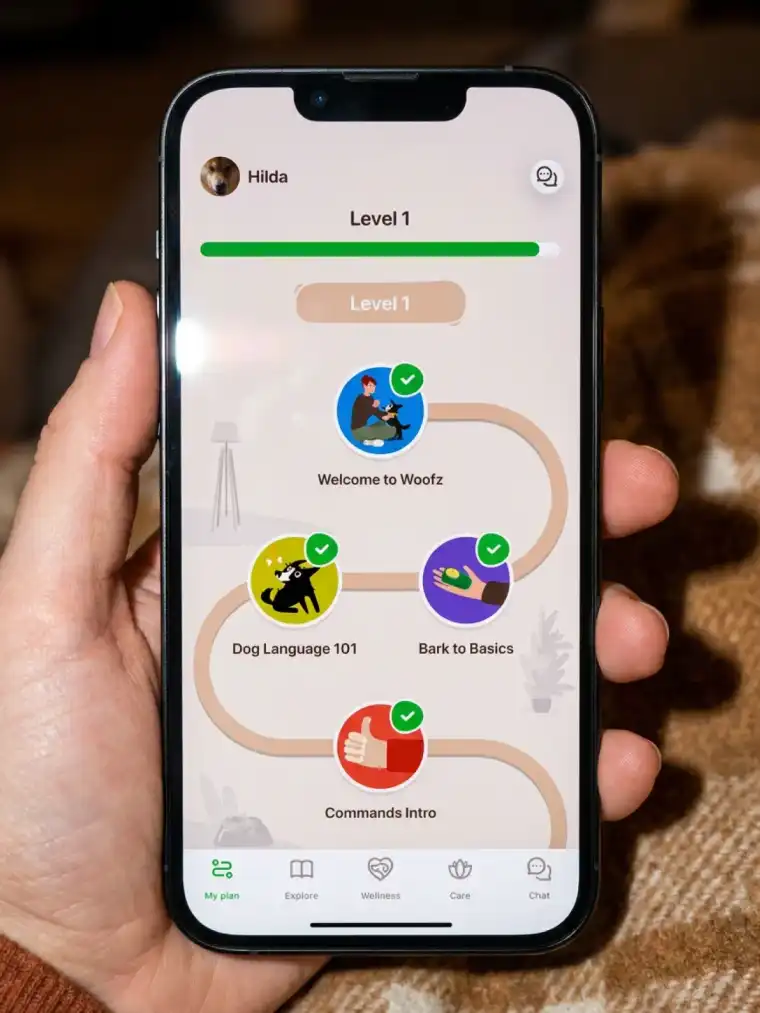
A dog training app is the low-cost end of this whole spectrum, usually around $10 to $30 a month, and it works on a simple trade: you do the training, the app tells you what to do and when. Woofz is built around that idea. No trainer to book, no drive across town. Just your dog, a handful of treats, and a few minutes on the couch.
What a Training App Actually Does
Woofz gives you a personalized plan built around your dog's age and profile, then breaks training into short, doable steps. You get a guided path for what to work on next, essentially a self-paced obedience training program, plus a library of commands and behavior programs you can pull from when a specific problem comes up, step-by-step command practice, and reward-based methods throughout.
It also covers the everyday care side, routines and wellness, not only commands. The whole point is to help you know what to practice next instead of guessing.
Where an App Fits
An app fits basics, manners, and consistency. Teaching basic commands like sit and stay, working on loose leash walking, building a recall, chipping away at jumping or crate training, staying on track week to week. For everyday obedience training, it can be a useful fit for busy owners, first-time owners, and anyone who wants a structured place to start without a big spend. A few minutes a day, done consistently, beats a perfect 30-minute session you never actually do.
Where an App Is Not the Answer
Here's an honest boundary. An app is not the tool for a dog who bites, for severe aggression or reactivity, or for training service dog tasks. It doesn't diagnose behavior problems, and it doesn't replace a trainer, a vet, or a veterinary behaviorist when your dog genuinely needs one. A training app like Woofz gives dog parents a structured place to start and helps keep practice on track. For hard cases, it points you toward the right kind of help rather than pretending to be it.
Not sure where your dog stands or what to work on first? Take the free Woofz quiz and get a training plan built around your dog in a couple of minutes.
App vs Private Trainer: Results Compared
Both routes can help you build a well-trained dog. They just cost different amounts and ask different things of you. Here's how a dog training app and hands-on dog trainers stack up on the three things that matter.

Speed
A private trainer is faster for a specific, stubborn problem because they read your dog in person and correct your timing on the spot. An app is slower for that one issue but keeps you moving on everything else, every day, without an appointment.
Cost Over a Year
This is where the gap gets loud. A year of occasional private lessons can run well past $1,000. A year of a training app can cost about as much as, or less than, a single private session. If your dog needs everyday manners rather than crisis intervention, that math is hard to argue with.
Who's Doing the Work
Here's the part nobody likes to say out loud: you're doing the training either way. Even a $3,000 board and train hands the dog back to you and expects you to maintain it. An app just skips the middle step and teaches you directly, for a lot less. What it can't do is stand in your kitchen and catch the thing you're doing wrong. A trainer can. That's what you're paying the extra money for.
Is It Worth Paying Someone to Train Your Dog?
Depends on the problem and your time. Paying a professional is worth it when you're stuck on a specific issue, when your dog's behavior is beyond everyday manners, or when you simply don't have the bandwidth to run consistent sessions and would rather buy expertise. For plain-vanilla obedience and manners, a good app or a group class gets most owners where they want to go for far less. Paying for a trainer buys speed, expertise, and hands-on feedback. It doesn't buy you out of the daily practice, and no format does.
The Cost of Not Training Your Dog
There's a real cost to skipping training, and it's not the scary-lawsuit version some trainers sell. It's quieter than that. Behavior problems are one reason dogs end up being surrendered to shelters. In a US study across 12 shelters, 40% of surrendered dogs had at least one behavioral reason cited by their owners.
Read that carefully, because it's self-reported and researchers still debate how much weight to put on it. The takeaway isn't "your dog will end up in a shelter." It's that everyday training, the jumping, the pulling, the not-listening, is exactly the stuff that erodes the bond when it's ignored, and it's cheap to work on early.
A little training now is the best lifetime support you can give your dog. Training is prevention. Curious what your dog costs you across their whole life? The dog cost calculator puts your dog training cost in context with everything else.
How to Choose Based on Your Budget and Your Dog
Match the format to your wallet and your dog's actual needs, not to whichever program has the slickest website.
Tight Budget
Start with a dog training app and group classes. For basic obedience, potty training, and manners, this combo covers most of what a typical dog needs. Add a single private consultation if you hit a wall on one specific thing.
Mid Budget
A short package of private lessons, five or so sessions, handles a clear behavior problem while a trainer coaches you. Keep an app running alongside it to stay consistent between visits. This is the best value for most owners with a real issue to solve.
Bigger Budget or Serious Issues
If your dog has aggression, a bite history, or severe anxiety, this is where a board and train program or a veterinary behaviorist earns the spend. This is professional training worth paying for. Look for dog trainers with real behavior credentials, a training program that includes owner sessions, and clear lifetime support terms. This isn't the place to choose on price alone, and don't send an app to do a specialist's job.
Red Flags When Choosing a Dog Trainer
Price isn't the risk. These are the warning signs to watch for when you're comparing dog trainers.

Guarantees That Sound Too Good
Walk away from anyone promising to fix aggression in a week, or guaranteeing a perfect dog. Behavior doesn't work on a countdown, and honest trainers don't pretend it does.
Aversive Tools and Dominance Talk
If a trainer leans on shock, prong, or "who's the boss" language, keep looking. Veterinary behavior experts recommend reward-based training methods for all dog training, including serious behavior problems, and find no evidence that aversive methods work better. That's the approach Woofz is built on too: teaching without fear.
No Credentials, No References
Since dog training is unregulated, credentials and references are your safety net. Ask what certifications a trainer holds, ask to speak to past clients, and ask exactly which methods and tools their training program uses. Good dog trainers welcome those questions. A pro who dodges them is answering them.
How to Save on Dog Training Without Cutting Corners
You can spend less without buying worse. A few honest levers most dog owners overlook.
-
Buy a training package. Bundling several sessions into one training package usually cuts 10% to 30% off the per-session rate, and dog owners who commit to a full block tend to save the most.
-
Choose group over private for basics. Group classes deliver solid basic obedience training, including everyday skills like loose leash walking, at a fraction of one-on-one prices.
-
Use an app for the everyday stuff and save the trainer for a specific problem you can't crack yourself. That single move can cut your dog training cost more than any coupon.
-
Pick a local trainer to skip travel fees and ask whether a free consultation is on offer before you commit to a training package.
Frequently Asked Questions
Train the dog you have, in the life you actually live. A few minutes today beats the perfect plan you start next month.
Sources
-
Rover, How Much Does It Cost To Train A Dog? Training Prices Explained.
-
Salman, M. D. et al. (2000), Behavioral Reasons for Relinquishment of Dogs and Cats to 12 Shelters, Journal of Applied Animal Welfare Science
-
American Veterinary Society of Animal Behavior (AVSAB), Position Statement on Humane Dog Training (2021)
-
SPCA of Wake County, The Rule of Sevens (puppy socialization).