


Crate Training and Potty Training a Puppy: How to Combine Them From Day One

By
Woofz Team Updated on |Reviewed by
Woofz TeamMost new puppy owners figure this out the hard way: crate training and potty training work better together than apart. A crate isn't just a cozy place for your puppy to rest. It can also make potty training easier by helping you build a consistent routine and prevent accidents when you can't keep an eye on your pup.
This guide shows you how to combine both from day one, without rushing your dog.
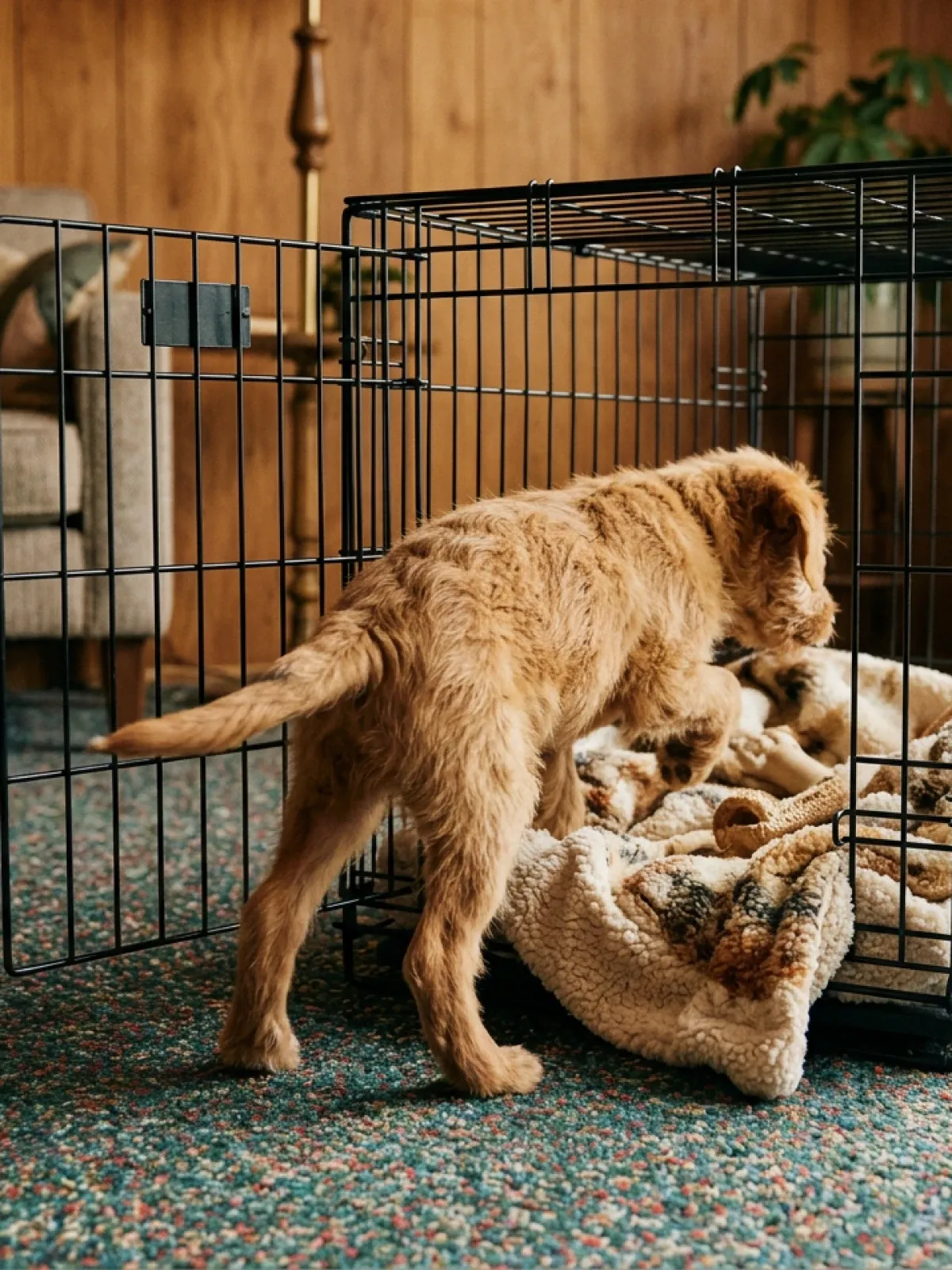
Why Combine Crate Training With Potty Training
Like most den animals, dogs have a built-in reluctance to soil where they sleep. That instinct is the engine behind using a crate for potty training. Give your puppy a dog crate big enough to stand, turn around, and lie down comfortably, and most dogs will wait rather than mess their own bed. Take them outside the moment the door opens, and the pattern forms. This clean-den instinct is a very useful piece of animal behavior for dog training.
A crate also gives you something free-roaming does not: the ability to predict the next potty break. You know when your puppy ate, when they drank, when they were just in the crate. That timing is a missing piece in many puppy training stories.
Expectations: potty training is not a seven-day sprint. The AKC says most dogs gain real bladder control around 16 weeks, and the full process takes four to six months. Some dogs get there sooner, some later. Your job: set the system up well, keep showing up, bring patience. Hope for progress in months, not days.
What You Need Before the First Night
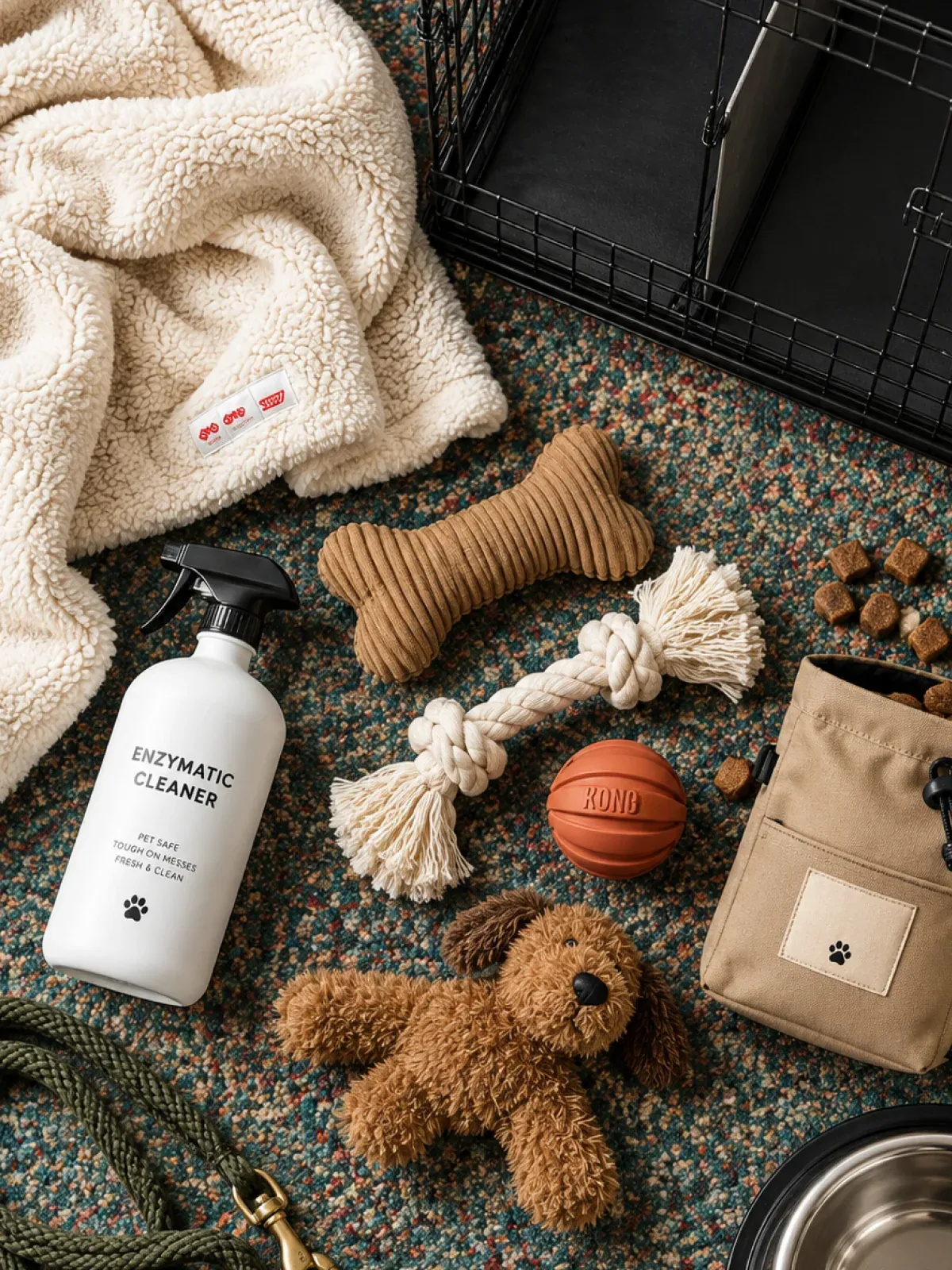
You do not need much, but the pieces that matter really do matter.
- A dog crate sized so your puppy can stand up, turn around, and lie down comfortably, fully stretched out. Dogs crated with too much room may start using one corner as a toilet and the other as a bed. That breaks the plan.
- A divider panel if you bought a dog crate sized for the adult dog your pup will become.
- A soft blanket, washable pad, or old t-shirt that smells of you for the bed.
- Keep a few safe chew toys just for crate time and switch them up to keep your puppy interested. Dogs will happily chew other things if their chew toys bore them, so swap often. They're also great for teething pups who need something to chew on.
- An enzymatic cleaner. Household sprays leave scent markers dogs can still smell, and dogs tend to re-pee in the same spot. The right cleaner breaks down the proteins so the smell actually goes.
- A leash for walks out to the potty area.
- Small training treats you can hand over fast. Soft treats work best because dogs eat them in one bite.
A baby gate or exercise pen helps too, especially early when you want to limit your puppy to one puppy-proofed room. It gives your dog more room than the kennel while protecting the house, the kids, and other pets, and adds a layer of safety when you cannot watch.
Before pickup day, do a safety sweep at puppy nose height. Tuck electrical cords behind furniture or into cord covers. Move shoes, remotes, and anything chewable off the floor. Puppies chew to explore and to soothe teething gums; electrical cords are the most dangerous thing in the house.
Making your home safe is easier than trying to train your puppy around every potential hazard. Our first-days checklist covers what to buy before your pup comes home.
Build Positive Association With the Crate
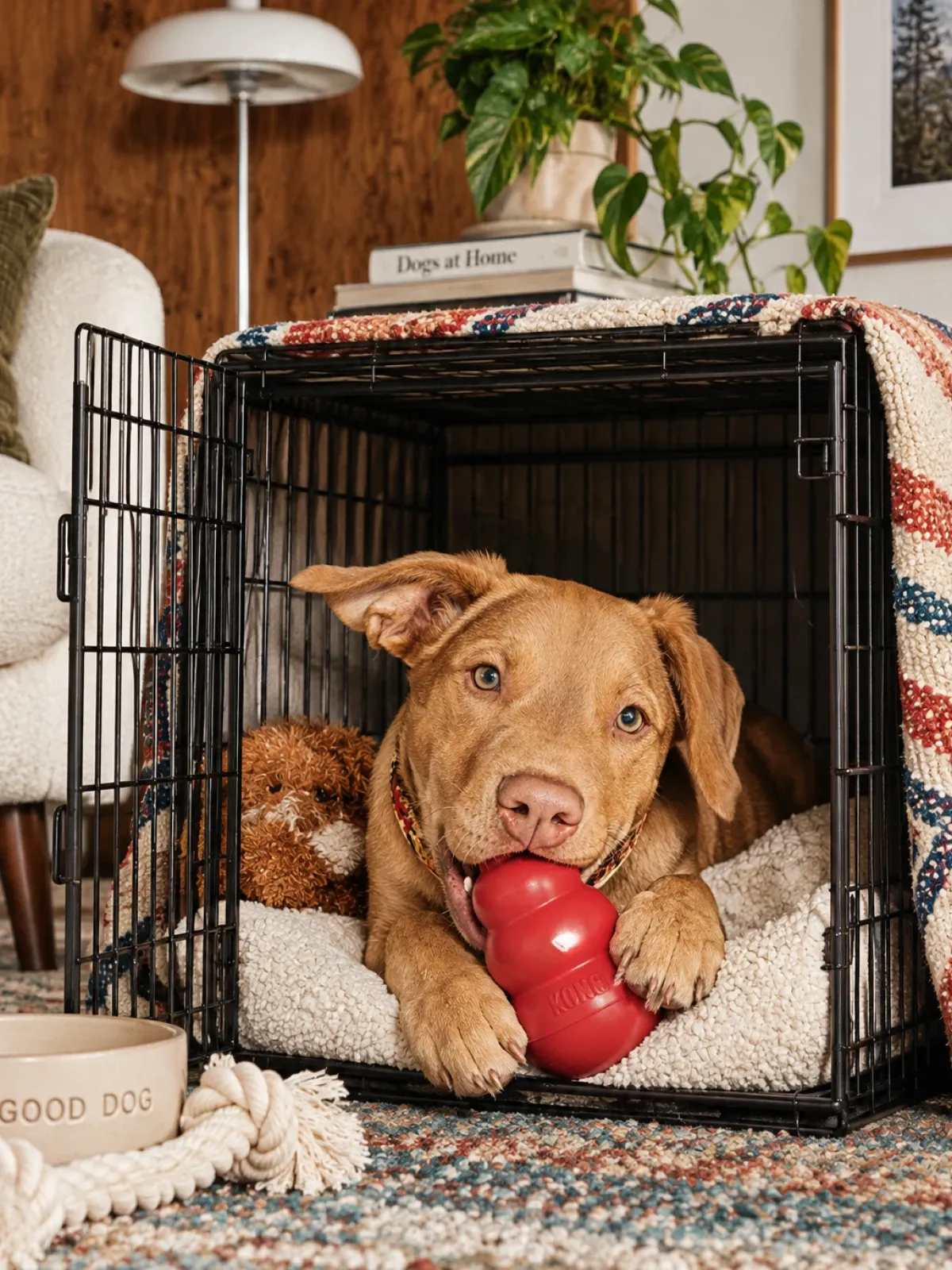
The crate has to feel like a safe place before anything else, not somewhere they're forced to stay.
Set the crate where you already spend time: living room, kitchen, somewhere your pup can watch household life. Dogs are social animals. Place the crate somewhere your puppy can feel part of the family. If they're easily overstimulated, choose a quieter spot nearby.
Day one, leave the door open and do nothing else. Let the puppy sniff, come, go, explore. AKC's crate guide recommends tossing treats inside, letting the pup walk in. Praise quietly, stay calm. Dogs read human mood faster than people realize. Nervous owners make nervous dogs.
After a day or two, start feeding meals in the crate. Place the bowl just inside at first, push it further back each feeding. Mealtime does most of the positive reinforcement work because your puppy already looks forward to meals. Pairing daily meals with the crate builds a calm, positive association. Dogs eating breakfast and dinner inside the crate stop seeing the door as a threshold.
Add one or two crate-only chew toys. A stuffed chew with soft treats frozen inside gives most puppies something to focus on, better than worrying about the door. Keeping toys consistent tells dogs this is their special place.
A few rules save weeks of regression.
- Never shove your puppy inside; let them walk in.
- Never use the crate as punishment. Punishment taints the whole positive association.
- Watch for stress behavior and stay calm; do not slam the door and walk out on day one. Dogs panic in a crate they link to being trapped. Dogs feel relaxed in one they link to food, rest, and good things, which makes it a safe place.
Our dedicated crate training tips for puppies article goes deeper on the first-week game plan.
Crate Training Step by Step
With a positive association forming, start building duration. Small jumps.
Start with short periods: closed for a few seconds while you stay in sight. Your pup is working on a chew toy. You sit nearby, calm. End the session before stress, not after. Short periods done well lead to longer periods done calmly.
Build up gradually. Move on only when your puppy is comfortable. If they get anxious, go back to a shorter session.
Add distance next. Once your pup is relaxed with you nearby, stand, cross the room, come back. Then leave for thirty seconds. Then two minutes. Then five. Always return before anxiety builds. Only after your puppy settles for ten to fifteen minutes with you out of sight do you stretch into longer periods.
AKC's step-by-step guide notes most owners get through this in weeks, but some dogs need up to six months before the crate feels fully normal. Faster is not better. Dogs you rush may fight crates for life. Most dogs settle when their humans slow down. Patience is the whole discipline.
How long is too long? A puppy is not a small adult dog. The Humane Society guidance, cited across AKC and shelter sources, lines up like this:
- 8 to 10 weeks: 30 to 60 minutes
- 11 to 14 weeks: 1 to 3 hours
- 15 to 16 weeks: 3 to 4 hours
- 17 weeks and above: 4 to 5 hours
- Healthy adult dogs: 4 to 5 hours, with about 8 hours as an upper limit, with real exercise before and after.
Night is a separate story. Puppy overnight stretches can be longer than daytime ones because sleep slows the system down.
Set up a Potty Training Schedule Around the Crate
Take your pup outside, on a leash, after each of these:
- Waking from any nap or overnight
- Eating a meal (dogs often go within fifteen minutes of eating)
- Drinking water (most dogs need to pee within fifteen to thirty minutes of drinking)
- Any burst of play
- Any time you let them out of the crate
Walk to the same spot every time. The scent builds up and teaches your dog what the spot is for. Stand still, hold the lead short, wait.
The moment they go potty, mark it with a quiet cue ("go potty" works, used consistently) and reward with a treat and warm praise within a second or two. Timing matters more than treat size. Rewards landing late teach dogs to link the treat to whatever happened next, not the good behavior you meant to catch. The crate makes this easier because you know where the dog just was.
If nothing happens after five to ten minutes, bring them back inside and put them straight into the crate or on-leash with you for ten more minutes, then try again.
A common rule of thumb is that puppies can hold their bladder for about one hour per month of age, plus one hour. AKC's guide to potty training a puppy sets the formula. Ten weeks (two months) means about three hours. Four months, about five. But this is only a rough maximum, and many puppies need more frequent breaks. Our read on how long dogs can hold their pee covers the whole age curve.
Watch the Signals and Handle Accidents
Puppies broadcast more than most people notice. Signs: focused floor-sniffing, circling, pacing, stopping play, whining at the exit, heading back to an old accident spot. Catch the behavior, move. Pick the puppy up, clip the lead, outside.
Accidents happen. Catch one mid-stream, interrupt with a soft clap, then carry them out to finish. Reward if they do. Never scold. Scolding can teach dogs to hide the next accident behind the couch, not to hold it longer. Punishment has no place in the house training process; it damages trust and slows the whole process down.
Clean every accident with an enzymatic cleaner. Dogs can still smell what their nose was built to smell, and the same place keeps calling them back if the scent lingers.
A sudden spike in puppy accidents after a stretch of success is a signal, not a failure, and the fix is almost never more crate time. Our puppy potty training regression guide covers common triggers: routine changes, fear periods, UTIs, too much freedom too fast. If your pup keeps peeing in the crate despite careful sizing, our stop a dog from peeing in the crate piece covers the fixes.
One honest limit. If your dog seems genuinely scared past the first few days or you suspect serious anxiety, do not push. Pause and work with a certified trainer or behaviorist. Using a crate should feel safe.
Overnight Crate Training
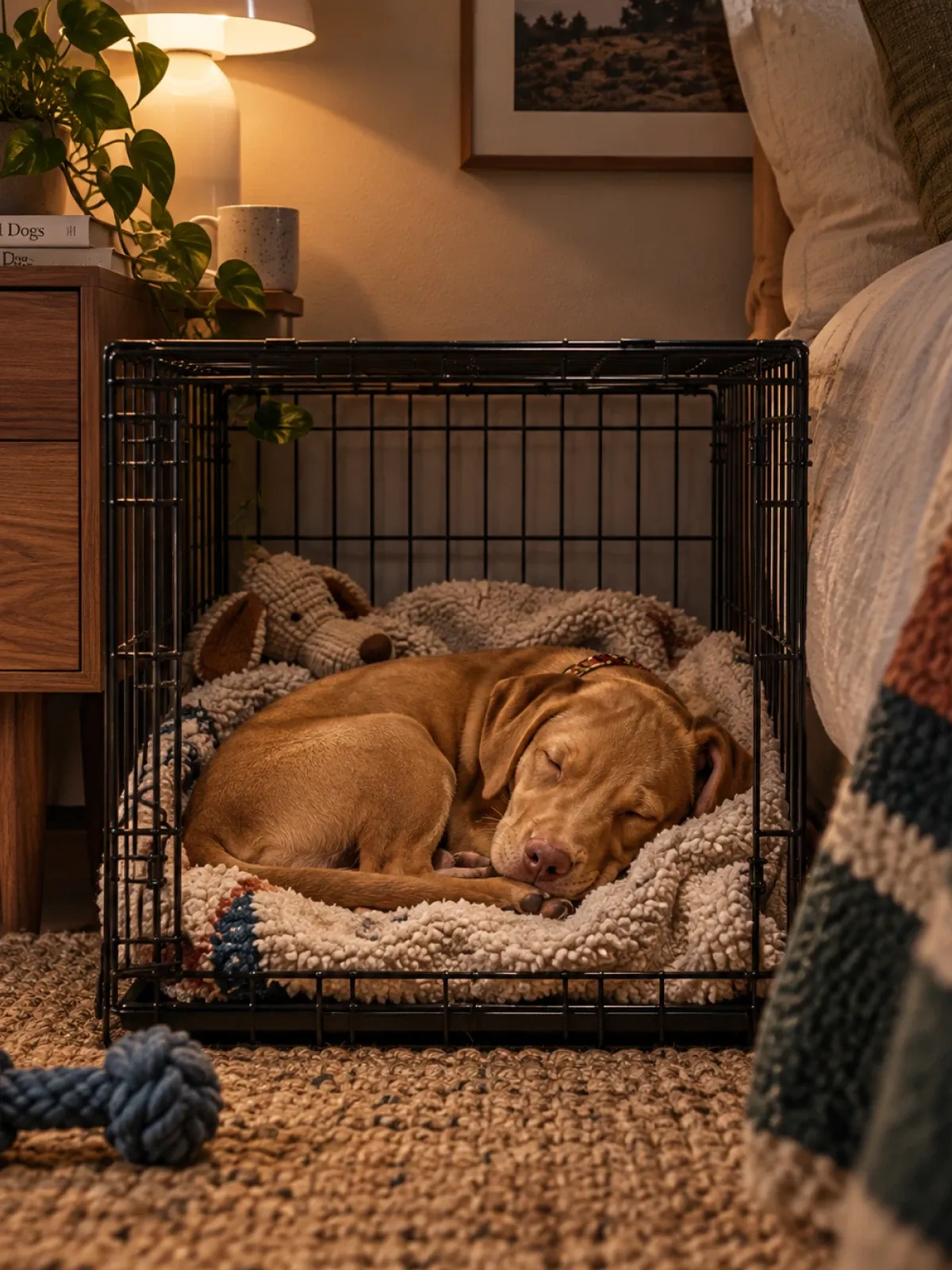
The first night is almost always the hardest. Your puppy has left the only family they know, and nothing in the new home smells familiar. The place sounds different, feels different, even smells different.
Put the crate in your bedroom the first week or two in the new home. Being near you lets your pup hear you breathing, which is likely to settle them faster. You also hear when they genuinely need out versus when they are just testing.
Young puppies often need one or more potty breaks overnight. Take your puppy out when they wake and seem to need to go. Carry them to the same spot, let them go, reward quietly, back to the crate. Boring is the goal. Dogs settle back faster when the behavior around them stays boring too.
If your puppy whines, first consider whether they need a potty break or feel uncomfortable. Take them outside if needed, keeping the trip quiet and focused. If they're simply asking for attention, wait for a brief pause before opening the door. Never ignore signs of panic or distress.
Most dogs can sleep through the night in the crate around four months of age, but some still need overnight potty breaks. Our first night with a puppy guide has the full prep list.
Where Owners Trip up
Common patterns across failed stories:
- Crate too big. Dogs will toilet in one end and sleep in the other. Fix with a divider.
- Too much freedom too fast. A dog reliable in one room is not yet reliable in the whole house. Open up one room at a time.
- Letting the pup out while barking. You just taught them that noise opens the crate.
- Punishing accidents after the fact. Dogs do not connect scolding with something five minutes ago; they just learn you are unpredictable, which erodes trust in crate training.
- Skipping potty breaks because the pup "looks fine." Puppies rarely ask until too late.
- An eight-hour workday with an eight-week-old inside. Beyond what young dogs can hold. Hire a walker, use a pen, or ask a neighbor.
For your new puppy's day, our puppy schedule guide layers potty breaks, feeding, play, and training into one flow.
Multi-Pet Households, Kids, and Family Use
If you share your home with cats, other pets, or small children, the crate earns its keep twice over. Homes with multiple dogs and other animals work when every animal has its own territory. The crate gives your pup somewhere no animals or kids bother them. Teach the kids early that the crate is off-limits when the puppy is inside; teach the other pets the same, cats included.
Family sharing matters on the human side too. Dogs pick up on inconsistency fast, and family dogs get the worst of it. Everyone needs the same potty cue, reward, and routine. One person breaking the pattern may undo days of work for everyone, dogs included. In Woofz, you share your dog's profile across the family so the schedule stays in one place.
FAQ
How do I keep my puppy from pooping in the crate?
Three fixes to try first. One, check the size: if your pup can walk to the far end and poop without stepping in it, check that the crate isn't too large. Two, check the food and feeding schedule: pups usually need to poop within fifteen to thirty minutes of eating, and most accidents start there. Three, rule out health and safety: loose stools, worms, or an upset stomach can override clean-den instinct. If sizing and schedule are tight and it keeps happening, call your vet.
How do you toilet train a puppy in 7 days?
Honestly, you usually do not. Seven-day promises make headlines but rarely match biology. You can lay a strong foundation in a week with consistent crate use, hourly breaks, and immediate rewards for outdoor wins. Full reliability without accidents takes most dogs four to six months.
What is the 10-10-10 rule for puppies?
No official 10-10-10 rule exists, but the version most trainers mean: take your pup outside for up to ten minutes, keep them in a small ten-foot area, give them full attention while you wait. If nothing happens, crate for ten to twenty minutes, try again. Think of it as a flexible routine, not a strict rule.
Make the plan stick with Woofz
Combining crate training and potty training is less about any one tip, more about keeping the routine going on tired days. The Woofz app gives you a step-by-step puppy training plan built around your dog's age and situation. With short lessons, reminders, and a daily routine, Woofz helps you fit puppy training into everyday life.
Take the two-minute quiz at Woofz and get a plan for your dog, with the next crate and potty steps this week.
No perfect puppy needed. Just a plan. Small steps add up.
Sources
- American Kennel Club, Potty Training a Puppy: Tips for House Training
- American Kennel Club, Why Does My Puppy Keep Peeing in the House?
- American Kennel Club, How to Crate Train a Puppy
- American Kennel Club, Crate Training Step-by-Step
- American Kennel Club, Dog Pees in Crate
- Texas A&M School of Veterinary Medicine, The Puppy Timeline: Physical and Mental Changes
- OodleLife (summarizing Humane Society and SPCA guidance), How Long Can a Dog Be in a Crate?