


Dog Training App Reviews: Are They Worth It? Honest Answer

By
Woofz Team Updated on |Reviewed by
Woofz TeamDisclaimer: This article is for general information and isn't a substitute for professional dog-training or veterinary advice. Product features, pricing, and availability are based on publicly available information and may vary by plan, platform, region, and over time. Comparisons are for informational purposes only. Please check the respective providers' websites for the latest information. Third-party trademarks and products are mentioned solely for comparison purposes and do not imply affiliation or endorsement.
You downloaded a dog training app at 11pm because your puppy shredded another shoe, and now you wonder whether the subscription will help or just quietly renew every week. Fair question. Here is a straight answer, grounded in what veterinary behavior organizations and the first research on training apps say, not in marketing copy.
Short Answer
For many everyday training goals, a good dog training app can be worth it. If you want basic obedience, potty training, calmer walks, or a way to prevent common puppy problems before they set in, structured app-based training can genuinely move the needle. Good apps can work like a coach in your pocket: they tell you what to practice next and help you keep going.
They are not worth it if you expect a phone to fix serious aggression, resolve severe separation anxiety, or stand in for a hands-on professional with a dog that has bitten someone. No app does that. Knowing which job you are hiring an app for is the whole thing.

What a Dog Training App Does
Strip away the branding and most apps offer the same core idea: they turn training into short, guided steps you can follow at home. You answer a few questions about your dog, and the app builds a personalized plan around that dog profile. Then you get lessons, command tutorials, quizzes, and reminders that pull you back when life gets busy.
Good training apps should focus on rewarding the behaviors you want rather than using punishment or unpleasant corrections.That matters, and we will come back to why. Many training apps offer short training videos, progress tracking, and some form of support, whether that is in-app chat, a community of other dog owners, or access to a dog trainer for feedback. For busy pet parents, that is the appeal: the app plans your training sessions so you do not have to.
What they are selling is structure. Not a magic trick, just a clear order of operations so you stop guessing and start practicing. In a dog training world full of conflicting advice, that alone has value.
What the Evidence Says About Dog Training Apps
Here is where honesty matters because the research on whether training apps actually help is still thin.
One of the first studies to examine the potential value of a dog-training app was published by researchers at the University of Lincoln, published in the journal Animals in 2025. They analyzed data from 367 owners of dogs aged three to 24 months who either reported no structured training or reported using the Zigzag puppy training app exclusively.
Owners whose dogs completed more of the app's early training modules reported lower odds of several more severe problem behaviors, with notable drops in aggression toward familiar people, house soiling, chewing, barking, escape attempts, and noise fear. The study didn't find that using the app more often was linked to more behavior problems.
Two honest caveats. This was an observational study, so it shows an association, not proof that the app caused the change. And two of the study's authors were affiliated with Zigzag, which the paper discloses. They call it the first evidence of the potential value of a well-designed app, not the final word. So: promising, real, early. Not a guarantee.
The mechanism underneath is on much firmer ground. Leading veterinary behavior bodies are clear that reward-based training is the way to go. The American Veterinary Society of Animal Behavior recommends in its position statement on humane dog training that only reward-based methods be used for all training, including behavior problems.
The American Animal Hospital Association's behavior guidelines say the same and warn against aversive tools like shock and prong collars. An app that uses reward-based methods is following the approach recommended by major veterinary behavior organizations. An app that relies on dominance or punishment goes against those recommendations, no matter how user-friendly it looks.
Where Dog Training Apps Genuinely Help
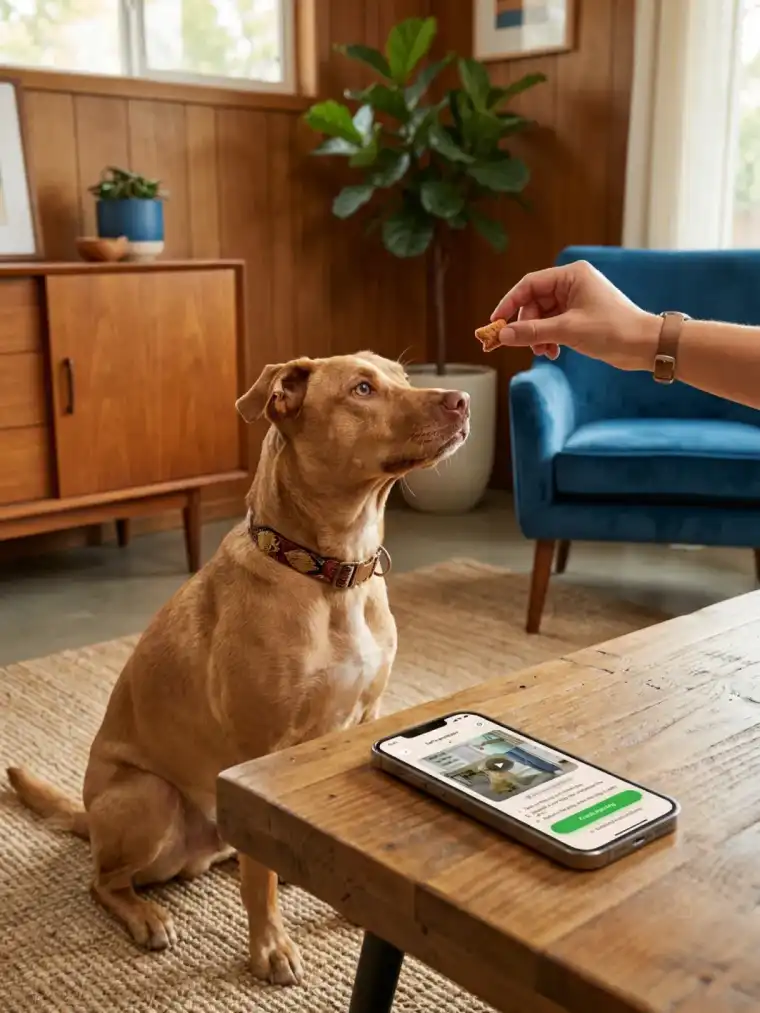
Apps shine at the ordinary stuff, which is most of what pet owners and busy dog parents actually need. For everyday goals, this is effective training made simple.
They are strong for teaching basic obedience: sit, down, stay, come, leave it. They can be especially useful for new puppies, since daily reminders and a roadmap can help you stay consistent during those early months. A structured puppy development plan helps new puppy owners cover the puppy basics in order instead of at random. Apps help with crate training, potty training (also called toilet training), and loose leash walking, all of which reward short, repeated practice.
A puppy training app is at its best here because it is easy to train puppies a little every day when the next lesson is already queued up. With puppy training, consistent reps beat marathon sessions. A good puppy training app gives owners a simple approach to follow, making it easier to stick with daily practice.

They also work for adult dogs. Teaching an older dog new skills is completely doable, and structured clicker training or a simple command plan translates well to a screen. If you are a first time dog owner staring at a puppy with no idea where to begin, an app's biggest gift is that it removes the paralysis. It gives you a next step.
The consistency piece is underrated. Reminders and a daily training routine turn "I should train the dog" into "here is today's five minute lesson." Short training sessions like that, repeated, are where effective training actually comes from. Training success is less about the app itself and more about whether you stay in the training process long enough to see change.
Good apps get you there by breaking big goals into small training plans you can finish. That steady rhythm is what helps turn all those small training sessions into real dog's progress. Over time, those small wins can add up to a well-trained dog who knows what you expect and feels confident in everyday situations.
Where Dog Training Apps Fall Short
This is the part sales pages skip, so read it twice.
An app cannot see your dog. It cannot catch your dog's subtle body language in real time or adjust the training based on what it sees. Personalization in training apps is real but imperfect, and no quiz fully captures a living animal. Treat the personalized plan as a smart starting point, not a diagnosis. Set realistic expectations from day one.
Apps are also a poor fit for serious cases. If your dog shows aggression, has a bite history, severe separation anxiety, or reactivity, seek help from a qualified behavior professional and involve your veterinarian when appropriate. AAHA and AVSAB both emphasize seeking qualified professional help for serious behavior problems. An app can support that work. It should not replace it.
And there is an obvious human limit: an app only works if you open it. Plenty of dog owners start a training journey with momentum, then drift once the novelty fades. The best plan in the world does nothing on a phone you never tap.
What Makes a Dog Training App Worth It
Most dog training app reviews rank apps like a horse race. A better question is whether an app fits your dog and your life. Here are the key points to check when you read any dog training app review, including this one.
Does It Use Positive Reinforcement?
This is one of the most important things to check. Reward-based training is endorsed by veterinary behavior organizations, and it can help you build a positive bond with your dog. If an app leans on punishment or "correction" tools, close it. You can read more on the dog training methods that hold up, and why reward-based training is recommended by veterinary behavior organizations.
Are Trainer Credentials Clear?
Dog training is an unregulated field. As the AAHA notes, anyone can call themselves a dog trainer, and that gap follows the industry onto your phone. Better apps make the professionals behind their content clear, including their qualifications and relevant experience.
If you cannot find who wrote the lessons or check their trainer credentials, that is a yellow flag. Look for apps that clearly identify the professionals behind their training content and explain their qualifications.
Does It Have the Key Features You Need?
The key features worth checking are simple: short lessons, a clean, user-friendly interface, progress tracking so you can keep track of your dog's training, and a plan that bends around your schedule instead of demanding a perfect 30-minute session. A few minutes on the couch still counts. So does one command practiced on a walk. Look at the training methodology too, from puppy basics up to more advanced skills, and make sure it is reward-based all the way through.
Is the Pricing Transparent?
Check the trial length, the auto-renew terms, and the cancellation flow before you commit. Screenshot the billing screen. The apps worth your money tend to be upfront about what is free and what sits behind the paywall.
Quick Glance at the Dog Training App Landscape
You do not need a ranked list to understand the field. Not all apps are built for the same owner, so match the tool to the job.
Some apps center on live coaching, pairing you with a dog trainer or even an in-person trainer for weekly video sessions. Great for accountability and behavior-focused work, pricier by design. Others walk you through a multi-week curriculum built around puppy development.
A puppy-training app can be great for those early months, while broader training apps can stay useful as your dog grows. Big-library apps offer a deep bank of training videos and dog tricks to browse, which is good for self-directed owners but can feel overwhelming.
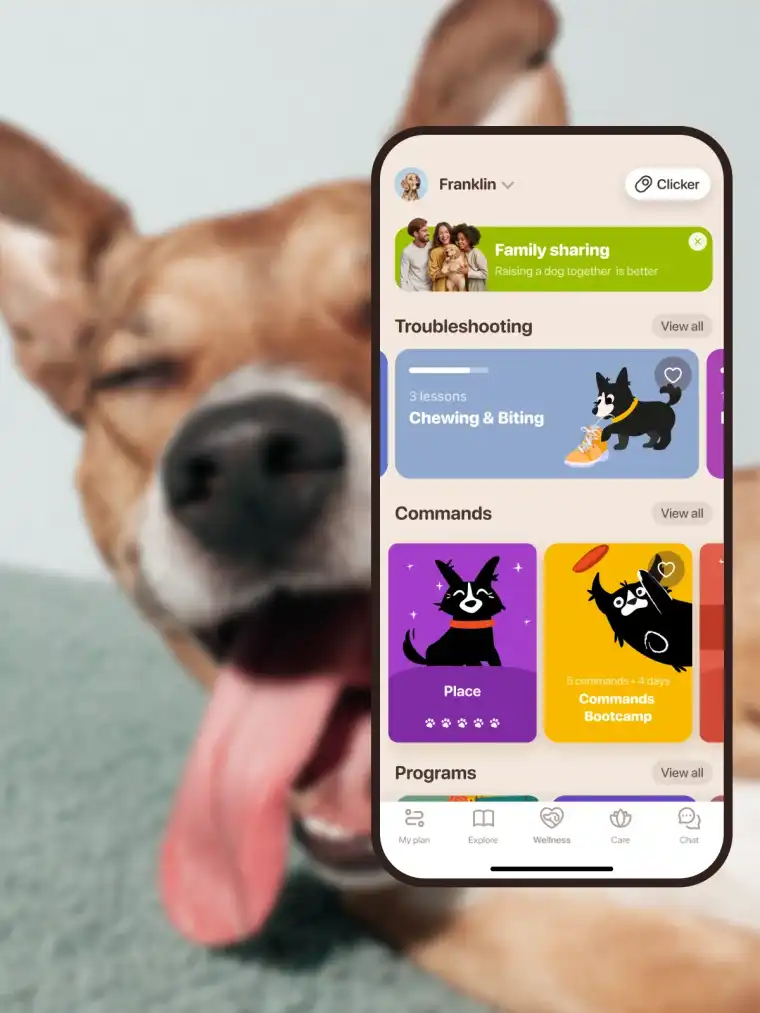
Then there are all-in-one apps that combine a guided plan, command practice, behavior programs, and wellness routines in one place. Woofz sits here. It builds a step-by-step plan around your dog, teaches commands through short practice flows, and adds daily care logging, so training and dog care live in one place rather than five apps. It will not promise to fix a serious behavior issue on a timeline, and you should be skeptical of any app that does.
Wherever you land, the honest read is that several apps do the core job well. The differences are about coaching, depth, and fit, not about one secret winner.

How Much Do Dog Training Apps Cost?
Most training apps run on a subscription, usually after a short free trial. You will typically see weekly, monthly, and longer plans. A few apps sell lifetime access instead. Many apps offer a free version so you can test the interface before you pay.
Real prices vary by region and platform and change often, so check the live price in the App Store or Google Play rather than trusting a number in an article. If an app offers a free tier, it's worth testing first, since you may not need the full library to get started. Even a free puppy training app can cover simple training plans before you pay for more. Two rules protect you: know when the trial ends, and know how to cancel before you are charged.
Frequently Asked Questions
Sources
-
American Veterinary Society of Animal Behavior. Position Statement on Humane Dog Training (2021).
-
American Animal Hospital Association. Behavior Management Guidelines for pet owners.
-
American Animal Hospital Association. Who's a Good Dog? 5 Expert Dog Training Tips.
-
Rowland T. et al. Educational Apps and Dog Behavioural Problem Prevention: Associations Between the Zigzag Dog-Training App and Behavioural Problems. Animals, 2025.
-
Study full text (open access, PMC).